When choosing a crosscut blade for table saws, the goal is clean, flat, and splinter-free surfaces with minimal waste. The right blade design, thin kerf, and tough carbide blend can dramatically improve finish quality and reduce vibration. Below, five top options commonly favored for fine finish crosscuts are highlighted. Each blade is evaluated for materials compatibility, tooth geometry, kerf, and overall performance to help you pick the best fit for your shop needs.
Summary of selected products
| Product | Brand | Teeth | Kerf | Bore | |
|---|---|---|---|---|---|
| FOXBC 10 Inch Fine Finish Crosscut | FOXBC | 60 | 0.087″ | 5/8″ | Thin kerf for fast, smooth cuts; ATB grind; high-density carbide |
| Freud LU88R010 Thin Kerf | Freud | 60 | 0.087″ | 5/8″ | TiCo Hi-Density Carbide; fast, smooth cuts; ATB |
| Freud LU83R010 Thin Kerf Combo | Freud | 50 | 0.087″ | 5/8″ | Combination blade; ripping and crosscutting; thin kerf |
| CMT 256.050.10 ITK XTreme | CMT ORANGE TOOLS | 50 | 0.098″ | 5/8″ | ATB + flat tooth; versatile for solid wood and laminates |
| WEN BL1080 80T | WEN | 80 | 0.100″ | 5/8″ | Ultra-fine finish; high tooth count for glass-smooth cuts |
Note: The table above summarizes representative features. Individual performance depends on your saw, stock type, and feed rate. The links below provide product pages with detailed specifications.
FOXBC 10 Inch Fine Finish Crosscut Blade

FOXBC’s 10-inch blade features 60 teeth with a 5/8-inch arbor and a 0.087-inch kerf. The ATB grind excels at fine finish crosscuts, delivering smooth surfaces with minimal feathering. Built from high-density tungsten carbide, it offers wear resistance and extended life for repetitive cut jobs. The design reduces noise and vibration while maintaining rigidity suitable for table saw applications alongside miter saws.
Freud LU88R010 Thin Kerf Fine Finish

The Freud LU88R010 uses a Premium TiCo carbide blend for improved edge retention and durability. Its 60-tooth ATB grind is designed for fast feeding and smooth, clean crosscuts. The thin kerf reduces horsepower demands on the saw, enabling efficient operation on standard household or shop-grade equipment. This blade is well-suited for fine cabinetry work and delicate wood types where finish quality matters.
Freud LU83R010 Thin Kerf Combo

This combination blade merges ripping efficiency with crosscut precision. It uses a flat tooth for ripping followed by four alternate top bevel teeth for crosscutting, plus a large chip-breaking gullet for effective debris clearance. The TiCo carbide blend enhances durability and edge life, while the thin kerf design minimizes power draw, making it favorable for lower-powered saws or to reduce waste.
CMT 256.050.10 ITK XTreme

The ITK XTreme blade from CMT ORANGE TOOLS features a large-gullet design ideal for deep cuts and chip clearance. It’s suitable for solid wood, melamine, laminates, and plywood, and can be used in radial arm saws, miter saws, and table saws. With 0.098-inch kerf and 5/8-inch bore, it balances aggressive cutting performance with a manageable kerf size for crosscuts requiring clean, precise results.
WEN BL1080 80-Tooth Ultra-Fine Finish
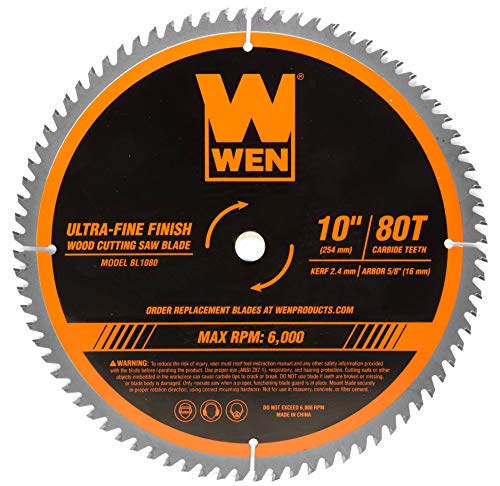
WEN’s BL1080 blade offers an 80-tooth configuration, delivering ultra-fine finish suitable for crosscutting intricate work. It runs on a 5/8-inch arbor and supports speeds up to 6000 RPM, which helps in achieving glass-smooth cuts in both softwoods and hardwoods. The high tooth count reduces tear-out on delicate materials, making it a strong choice for cabinetry, trim, and fine furniture components.
CMT 255.080.10 ITK Industrial Fine Finish

This 80-tooth blade from CMT is designed for fine finish crosscuts, delivering a glass-smooth result on miters. Its 0.098 kerf and 0.071 plate thickness contribute to precise cuts with minimal waste. The 5° hook angle and 40° alternate teeth grind work together to balance clean edges and efficient debris removal across various materials used in cabinetry and panel work.
Buying Guide
- Teeth count and grind: Higher tooth counts like 60–80 teeth yield smoother finishes; ATB (Alternate Top Bevel) and TIG/ITK grinds improve edge quality and reduce tear-out on difficult woods.
- Kerf and blade thickness: Thin-kerf blades (around 0.087–0.100″) require less motor power and reduce waste, but may wear faster on tough stock. Thicker kerfs offer durability for aggressive cuts.
- Bore compatibility: Most table saws use a 5/8-inch arbor; verify your saw’s arbor size to ensure compatibility with the blade’s bore.
- Material and carbide: TiCo and high-density carbide blends extend blade life, particularly on hard woods and laminates. Anti-vibration features help with quieter operation and cleaner edges.
- Application fit: For fine cabinetmaking and finish work, prioritize blades labeled as “Fine Finish” or “Ultra-Fine” with ATB or similar tooth geometry. For mixed stock, consider combination blades with a balance of ripping and crosscut abilities.
- Compatibility with your saw: Some blades are marketed as universal for miter, radial arm, and table saws; check the blade’s compatibility notes and the saw’s motor power.
When selecting a crosscut blade, consider the primary stock you work with, the level of finish required, and your saw’s power. Blades with advanced carbide blends and precision-ground teeth tend to deliver more predictable results and longer life, especially in cabinetry and furniture applications. Pairing the blade with proper feed rate and cut setup will further enhance the finish quality without compromising safety.