Finding the right circular saw blade for fine, precise cuts can elevate project quality. This guide reviews five top-performing blades designed for clean finishes on plywood, OSB, MDF, and similar woods. Each option emphasizes true cuts, sharp teeth, and durability, helping you choose the blade that best fits your saw and project needs.
| Product | Tooth Count | Arbor Size | Key Strengths |
|---|---|---|---|
| CRAFTSMAN CMAS2725140 | 140 | ½ in | Fully-hardened plate, precision-ground teeth, extended life |
| FOXBC 6-1/2″ Ultra Fine Finish | 60 | 5/8 in | Ultra-thin kerf, smooth crosscuts |
| Diablo D0760X Ultra Finish | 60 | ½ in | Fine finish performance, durable construction |
| Echo Corner 6-1/2″ Fine Finish | 60/48 (combo pack options) | 5/8 in | Clean edge, durable carbide tips |
| FOXBC 7-1/4″ Ultra Fine Finish | 60 | 5/8 in | Tungsten carbide, long life, precise cuts |
These selections cover standard 7-1/4″ and 6-1/2″ blades commonly used on many table and circular saws, focusing on fine finishes for woodworking projects that demand accuracy and a smooth surface. The blades vary in tooth count, kerf width, and arbor compatibility, so ensure your saw accepts the chosen model before purchasing.
CRAFTSMAN 7-1/4″ 140-Tooth Fine Finish Blade

The Craftsman CMAS2725140 blade is designed to maintain true cuts with a fully hardened plate and precision-ground teeth. Its high-carbon steel construction aims to deliver extended life under frequent use, particularly for plywood, OSB, and plastics. This blade is well-suited for finish carpentry where a smooth edge and accurate dimensions matter. When pairing with a quality saw, it helps minimize chipping and splintering on crosscuts and miters.
FOXBC 6-1/2″ Ultra Fine Finish 60-Tooth
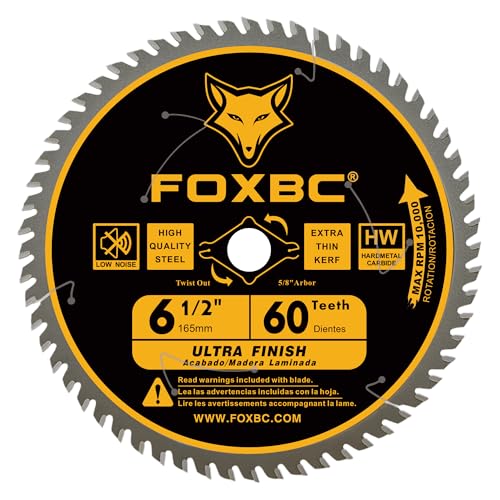
FOXBC’s 6-1/2″ blade pairs a 60-tooth configuration with an ultra-thin kerf for fast, clean crosscuts. The 5/8″ arbor matches many standard saws, and the thin kerf reduces effort while delivering an exceptionally smooth edge. This blade is a solid choice for finish work in softwoods and plywood, where minimizing tear-out is important and where quick, precise cuts help maintain project momentum.
Diablo Ultra Finish Circular Saw Blade – 7-1/4″ 60T

Diablo’s D0760X blade is a dedicated finish-cut blade built for clean, refined edges. Its 60 teeth deliver a smooth surface with reduced chatter during crosscuts on plywood and MDF. The blade is designed to be robust for daily workshop use and integrates well with common 7-1/4″ power saws, helping users achieve a high-quality finish on visible surfaces without additional sanding.
FOXBC 7-1/4″ Ultra Fine Finish 60-Tooth
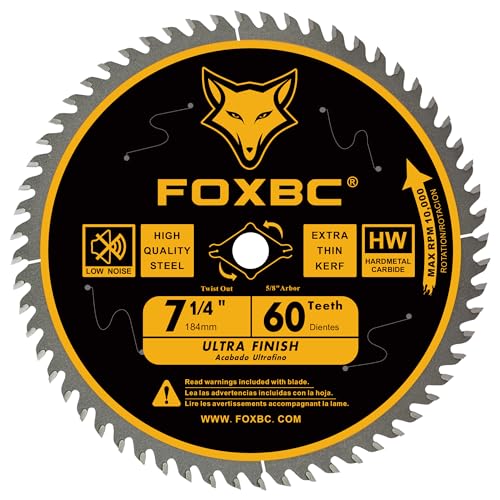
This FOXBC blade is engineered for ultra-fine finish cuts on longer crosscuts and framing tasks. With a 60-tooth ATB configuration, a 5/8″ arbor, and a kerf designed to reduce resistance, it helps produce clean faces on softwood, plywood, and related materials. Its tungsten carbide construction supports long blade life in a busy shop environment, making it suitable for finish carpentry and cabinetry work.
Echo Corner 6-1/2″ Fine Finish Wood Blade
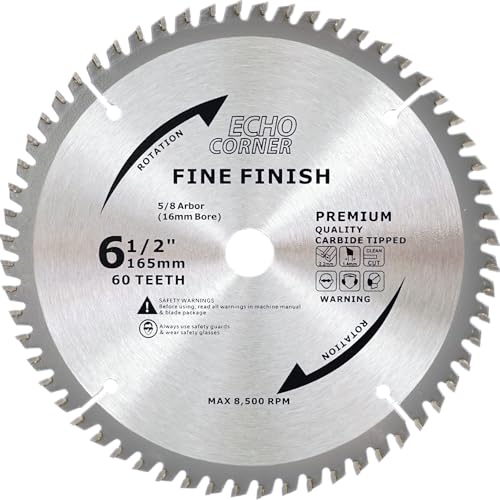
Echo Corner’s 6-1/2″ blade emphasizes a fine finish for crosscuts, framing, and plywood applications. With a 60-tooth design and a 5/8″ arbor, this blade aims to deliver clean edges and a smooth cut through wood-based panels. The carbide-tipped design supports durability in a typical workshop setting, reducing the need for frequent blade changes during finish work.
Buying Guide: Key Considerations for Fine-Cut Circular Saw Blades
When selecting a blade for fine cuts, consider the following factors to optimize performance for your projects:
- Tooth count and geometry: Higher tooth counts (48–60T) provide smoother finishes and reduce tear-out on plywood and laminates. ATB tooth geometry is common for refined cuts in wood and veneer.
- Kerf width: Thin kerf blades (0.059″–0.063″) require less power and produce less resistance, enabling faster, smoother cuts with less wandering.
- Arbor size: Match your saw’s arbor (commonly ½” or 5/8″). Some blades are dual-compatible, but verify compatibility to ensure proper seating and performance.
- Material and coating: Carbide-tipped blades offer longer life and durability, especially under repetitive cuts. Hardened plates help maintain true cuts over time.
- Project type: For plywood and MDF, focus on blades marketed as fine finish or ultra-fine finish; for hardwoods, ensure the blade is rated for tougher woods and has robust carbide teeth.
- Durability vs. cost: High-quality blades often cost more upfront but deliver better finishes and longer life, reducing sanding and rework in the long run.
- Safety and setup: Ensure proper blade height and alignment, wear protective gear, and observe manufacturer guidelines for RPM compatibility with your saw.
In practice, if your main tasks involve finish carpentry, cabinets, or trim, blades with 60 teeth and thin kerfs tend to deliver the cleanest edges with minimal post-processing. For mixed-use projects, a combination blade—such as a 60T crosscut blade paired with a ripping blade—can offer flexibility while preserving finish quality on face cuts.
These five options cover common sizes (6-1/2″ and 7-1/4″), with emphasis on blades that maintain edge quality while resisting wear. When choosing, consider the typical materials you work with, your saw’s compatibility, and the level of finish required for your project portfolio.