Best Angle Grinder Belt Sander Attachments for Metalwork and Pipes
Angle grinder belt sander attachments turn a common grinder into a versatile finishing tool for rust removal, deburring, and pipe polishing. The right adapter expands your capabilities without buying a separate belt sander. This guide reviews five top options and compares their fit, belt variety, and ease of use to help you choose a model that suits metalworking, woodworking, and pipe projects.
| Product | Brand | Thread | Belt Belts | Best For |
|---|---|---|---|---|
| VEVOR Belt Sander Adapter | VEVOR | 5/8-11 | 60/120/240/400/600 (10 belts) | Pipe and tube finishing |
| Belt Sander Attachment Grinder YSJWAER | YSJWAER | 5/8-11 | Mixed sanding heads (as listed) | All-purpose grinding, rust removal |
| Rocsuk Belt Sander Adapter | Rocsuk | 5/8-11 | Included belts (15Pcs) | Heavy‑duty rust removal |
| Belt Sander Polisher Attachment, Kakalote | Kakalote | Common 10mm/14mm heads | Sand belts included (model dependent) | Home workshop mods |
| Ritammi Belt Sander Adapter | Ritammi | 5/8-11 | Included belts | Quick tool conversion |
VEVOR Belt Sander Adapter for Angle Grinder

The VEVOR belt sander adapter is designed for 5/8-11 thread angle grinders and includes multiple pipe grinding adapters to fit common pipe sizes. It ships with a set of 10 sanding belts ranging from coarse to fine (60/120/240/400/600 grits), enabling quick progression from material removal to finish. The triangular design and lightweight construction support fast, thorough pipe work, whether in rust removal or finishing cylindrical surfaces.
Key features include a universal fit with six pipe adapters and a belt size of 1.5 x 30 inches. Its lightweight build helps reduce operator fatigue during long sanding sessions, and the 5/8-11 imperial thread ensures compatibility with many standard grinders. This model is well-suited for metalworking tasks that require aggressive material removal followed by smoother polishing.
While the grinder itself is not included, the adapter focuses on stable belt tracking and simple installation. Users who frequently work on tubes or pipes will appreciate the variety of adapter sizes and the ready-belt set for ongoing projects.
Belt Sander Attachment Grinder YSJWAER
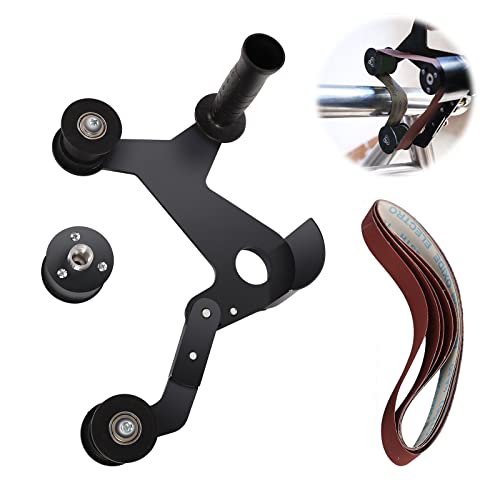
The YSJWAER belt sander attachment adds belt-sanding capability to any compatible angle grinder. It replaces the head attachment to convert grinding power into belt sanding performance, expanding the tool’s versatility beyond cutting and grinding. The kit adheres to US 5/8-11 threading and recommends grinders under 42 mm in diameter for optimal fit. UL certification is suggested for safety and reliability.
With this attachment, operators can tackle rust, welds, paint imperfections, and deburring tasks more efficiently. The device emphasizes quick changeover and improved control, enabling users to move from aggressive metal removal to finer finishing without switching tools. It is designed to help DIY enthusiasts and professionals save time on small and mid-sized projects.
The YSJWAER unit emphasizes practical use, aiming to reduce bottlenecks in workflows. Its design supports stable belt tension and precise sanding, though performance depends on selecting the correct grinder size and adhering to safety practices during operation.
Rocsuk Belt Sander Adapter for Angle Grinder

The Rocsuk adapter focuses on adaptability for 5/8-11 thread grinders and includes various thickness gaskets to match spindle lengths. It provides four adapter sizes to fit 4″, 4-1/2″, and 5″ angle grinders, enabling belt sanding on pipes and tubes with a maximum diameter of about 7 inches. The rigid stainless steel construction and triangular design contribute to stable operation and uniform belt contact.
Its safety-conscious design features drive wheels with protective covers and springs that maintain belt tautness. The result is controlled sanding with reduced belt slippage even under pressure. The kit emphasizes rust removal and pipe finishing, offering a professional option for metalworking shops and serious hobbyists.
Overall, the Rocsuk model balances durability and versatility. The included belts support immediate project starts, while the flexible adapter setup helps users tackle curved surfaces and pipe contours with confidence.
Belt Sander Polisher Attachment by Kakalote

The Kakalote belt sander polisher is designed to modify an angle grinder into a belt sander. It emphasizes convenience and cost savings by avoiding a separate sand belt machine. The setup features a double-bearing design for stability and a grooved pulley to extend belt life. It targets home workshops with compact, transferable sanding capability.
Installation is straightforward: swap the head, attach the belt, and secure the guard. The unit supports efficient pipe and flat-surface sanding, making it a practical choice for quick rust removal or surface preparation in small-scale projects. The design aims to deliver reliable performance without specialized equipment.
As with other adapters, performance hinges on selecting the correct grinder size and belt width. The Kakalote accessory provides a balance of practicality and value for hobbyists who want more tool flexibility without major purchases.
Ritammi Belt Sander Adapter for Angle Grinder

The Ritammi adapter offers a straightforward conversion from angle grinder to belt sander with a 5/8-11 thread. It emphasizes precise belt guidance and tight belt tracking to minimize wandering during sanding. The kit includes belts suitable for rust removal and deburring tasks, supporting quick transitions between surface preparation and finishing.
Installation notes highlight that the angle grinder must be under 42 mm in diameter to install properly, and the design prioritizes safe operation with guided pulleys. It is a practical option for users who want efficient rust removal on pipes or flat surfaces and value dependable track through varied sanding tasks.
Oubit Electric Belt Grinder Attachment
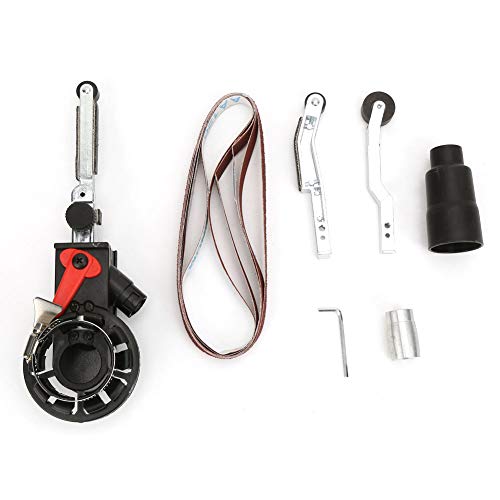
The Oubit adapter supports multiple acknowledgment types (M10, M14) and provides a belt width of 15 mm with a circumference of 452 mm. The kit includes exchangeable working heads, enabling the tool to function as both a belt sander and a grinder. It outlines a step-by-step installation procedure to convert a grinder into a belt sander and emphasizes compatibility with grinders featuring a 10 mm spindle.
With two working faces—flat and curved—this attachment helps address larger surfaces and contoured pipe shapes. The ergonomic design aims at comfortable control during extended use, making it suitable for rust removal, smoothing, and light deburring. This model highlights flexibility for users who need a multipurpose conversion kit in a single package.
OCTAOR Angle Grinder Belt Sander Adapter

The OCTAOR adapter converts a grinder into a belt sander with a triangle design for pipe and tube sanding. It emphasizes rust removal on cylindrical surfaces and claims a precise guide pulley to maintain belt alignment during sanding. The unit is designed for 5/8-11 thread grinders and focuses on efficient pipe finishing with a compact footprint.
Operators can use it to tackle rust, paint removal, and deburring on curved surfaces. The adapter’s design aims to provide stable belt contact and predictable results, making it a practical option for metalworking shops and home workshops focused on pipe-related finishing tasks.
Saker Belt Sander Adapter for Angle Grinder

The Saker adapter is designed for versatility with a 5/8-11 thread and includes five sanding belts. It promotes a multifunction approach—beyond rust removal, it supports glazing, texturing, polishing, and smoothing pipes. The base is a cast iron and aluminum alloy construction to ensure stiffness and durability under load.
It emphasizes quick changes and an integrated approach to pipe finishing, making it a practical choice for metal and wood projects that require gentle shaping as well as aggressive material removal. The included belts provide an immediate start for common finishing tasks in a workshop setting.
Buying Guide: Key Considerations for Selecting a Belt Sander Attachment
- Grinder compatibility: Most adapters use 5/8-11 threads; confirm your grinder’s thread size and maximum diameter to ensure a proper fit.
- Pipe and tube suitability: If you work on pipes, look for a triangular or curved design that provides stable contact on curved surfaces and a wide belt path for even wear.
- Belt options: A broader belt assortment (coarse to fine) saves time by covering rough material removal and finishing in one kit.
- Durability and materials: Stainless steel or cast iron components improve longevity, especially in rust-prone environments.
- Safety features: Look for protective covers, secure belt tensioning, and easy belt changes to minimize slips and injuries during operation.
- Weight and balance: Lighter adapters reduce user fatigue during extended use; balance affects control on curved surfaces.
- Installation simplicity: Some kits require specific grinder models or blade guards; confirm ease of assembly and alignment guidance.
- Use cases: Align your choice with intended tasks—rust removal, deburring, polishing, or finishing pipe interiors—and match belt grits accordingly.
When evaluating options, consider how often you’ll switch between grinding and belt sanding, the sizes of pipes or surfaces you’ll tackle, and whether you need a kit with included belts for immediate projects. Prioritize adapters that offer stable tracking, multiple adapter sizes, and a robust build to withstand regular use in metalworking and maintenance tasks.