Choosing the right metal cutting circular saw blade can dramatically improve speed, accuracy, and blade life on ferrous projects. The blades listed below are designed for thick metal, mild steel, angle iron, and other ferrous materials. They feature advanced carbide or ceramic-tipped compositions, optimized kerfs, and stabilizing vents to reduce heat, noise, and vibration. This guide highlights five top options with practical notes to help you pick the best blade for your shop:
| Product | Brand | Teeth | Diameter | Arbor | Notes |
|---|---|---|---|---|---|
| Diablo D0842CF | Diablo | 42 | 8″ | 5/8″ | Cermet II teeth for longer life and cooler cuts |
| Evolution 8BLADEMS | EVOLUTION | 50 | 8″ | — | Designed for mild steel; virtually no sparks and heat |
| Milwaukee 48-40-4515 | Milwaukee | 42 | 8″ | 5/8″ | Cold cuts with clean finish |
| CRALY C0842MC | CRALY | 42 | 8″ | 5/8″ | Carbide tipped with thin kerf for durability |
| FOXBC 8 Inch 42 Teeth | FOXBC | 42 | 8″ | 5/8″ | TCG blade with improved stability and precision |
Introduction notes: The following sections provide concise, objective details on how each blade performs on common ferrous-metal tasks, and what to consider when selecting a blade for a given project.
Diablo D0842CF: Thick Metal Performance
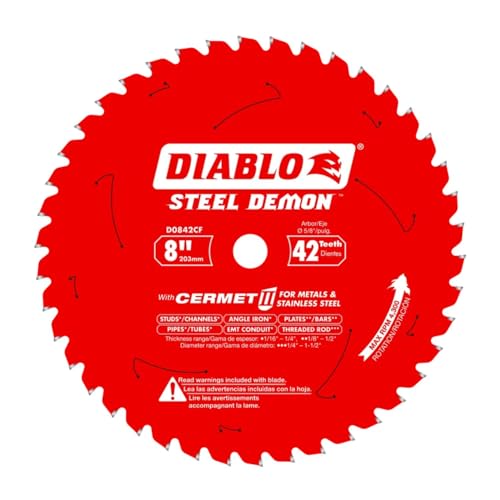
The Diablo D0842CF uses Cermet II teeth, combining ceramic and metallic materials to resist heat and wear during heavy metal cutting. This design helps extend blade life up to 25 times longer than standard grinding discs and reduces the risk of heat-related discoloration in steel. Its advanced laser cut stabilizer vents minimize noise and vibration, supporting smoother, straighter cuts. The blade handles thick steel and similar ferrous materials, delivering a cooler, more productive cut compared with traditional grinding discs.
Evolution Power Tools 8BLADEMS

Evolution’s 8BLADEMS is a mild steel blade featuring 50 teeth. It is crafted for cutting mild steel and ferrous metals with high-quality Japanese carbide. The blade advertises minimal heat generation, burr-free finishes, and virtually no sparks, enabling immediate handling of cut sections. This makes it suitable for projects requiring clean edges and safer post-cut handling, especially when working with lighter rails or framing components in ferrous applications.
Milwaukee 48-40-4515: Fast, Clean Cuts

The Milwaukee 48-40-4515 is a Cermet blade with 42 teeth. Its design emphasizes clean cuts and reduced finishing work, with fast cutting speeds for metal. This blade is well-suited for professional settings where rapid throughput is essential, and it provides stable cutting while minimizing edge damage and heat buildup that can affect downstream operations.
CRALY C0842MC: Durable Carbide Blade

CRALY’s 8 Inch 42 Teeth blade uses carbide-tipped metal-cutting technology and a thin kerf to minimize material removal waste while maintaining durable performance. The blade features an industrial rust-proof E-coating and laser-cut expansion slots to reduce heat and vibration. High-density carbide provides longer life and cooler, more productive cutting, particularly with stainless and other ferrous metals requiring precision and less rework.
FOXBC 8 Inch 42 Teeth: Precision and Stability

The FOXBC blade combines 42 teeth with a 5/8″ arbor and a 0.075″ kerf. Its 8-inch size suits common metalworking saws, and the 4300 MAX RPM rating accommodates typical shop speeds. The blade is designed to minimize wandering and deflection, producing precise cuts with reduced need for rework on studs, angle irons, and channels, while offering a longer blade life through improved wear resistance materials.
8-Inch Replacement Blade for Diablo D0842CF (Xmnbl)

This option provides a compatible 8-inch, 42-tooth replacement blade with a 5/8″ arbor and tungsten carbide tip. It emphasizes sharpenability and effective cutting performance through brazing technology and a titanium carbide ceramic alloy head. The design focuses on balance, hardness, and precision to maximize both speed and accuracy in metal cutting.
Buying Guide: Key Considerations
When selecting a metal cutting blade, consider material compatibility, thickness and type of metal, and desired finish. Kerf width affects material waste and cutting speed; thinner kerfs reduce waste but may require sharper sharpening. Tooth geometry (rake, chip load) influences cut quality and heat. Carbide-tipped or ceramic-tipped blades excel in heat resistance and longevity, especially for thick or hard ferrous metals. Arbors must match your saw’s arbor size to ensure safe operation. For high-volume jobs, blades with stabilizers and vents help maintain accuracy and reduce heat transfer that can degrade both blade and material.
Performance Scenarios and Comparisons
– For heavy thick metal cuts, blades with Cermet II teeth (like Diablo D0842CF) offer up to 25X longer life and cooler operation, reducing downtime for blade changes. – For mild steel and ferrous projects with minimal sparks, Evolution 8BLADEMS emphasizes low heat and burr-free finishes, enhancing safety and handling. – For fast, consistent cuts with clean edges, Milwaukee 48-40-4515 focuses on rapid throughput with reduced finishing work. – For durable carbide performance with thin kerf and rust protection, CRALY C0842MC balances longevity with cutting efficiency. – For precise cuts with stable performance across steel studs and channels, FOXBC 42-Tooth blades offer improved control and wear resistance.
Buying Guide: Final Considerations
– Blade compatibility: Ensure the blade fits your saw’s diameter and arbor size (8″ and 5/8″ are common for many metal saws). – Material and purpose: Choose carbide-tipped blades for ferrous metals and high heat scenarios; consider ceramic-ceramic blends for extended life. – Kerf and tooth count: A thinner kerf increases material savings, while more teeth improves cut quality for thinner sections; for thick metal, mid-to-high tooth counts balance speed and finish. – Stall and heat management: Blades with stabilizers, vents, and coatings reduce heat buildup and vibration, extending life and improving accuracy. – Safety and handling: Select blades with lower heat and burr profiles when edge quality matters for subsequent assembly and welding. – Maintenance: Sharpening and correct mounting are essential; follow manufacturer guidelines to maximize blade life and performance.