Best 5000 Watt Portable Generators for Home Backup and RVs
5000 watt portable generators combine robust backup power with portability for home, RV, and outdoor use. The options below highlight popular 5000-watt units that balance peak power, runtime, fuel options, and noise levels. Each model shown supports essential tools, appliances, and electronics during outages or off-grid adventures while offering features like CO protection and inverter technology for clean power.
| Product | Brand | Power Rating | Fuel | Notes |
|---|---|---|---|---|
| 5000W Inverter Generator Gas Powered | Oxseryn Store | 5000W peak / 4000W running | Gas | RV port, ECO mode, 2 gal tank |
| DF475T Dual Fuel Portable Generator | WEN Store | 4750W surge / 3800W run (gas); 4350 surge / 3500W run (propane) | Gas/Propane | Electric start, wheels |
| A-iPower 4600W Inverter | A-iPower Store | 4600W peak / 3600W running | Gas | CO sensor, lightweight |
| 5000W Dual Fuel Inverter | Redact Store | 5000W peak / 3800W run (gas); 4500W/3500W (propane) | Gas/Propane | CO protection, parallel capable |
| 5000W Portable Inverter With Electric Start | PowerSmart Store | 5000W peak / 4000W run | Gas | 30A output, quiet operation |
Below you will find detailed sections for five top options. Each entry highlights the core power specs, start methods, and features that matter for reliability, safety, and convenience in real-world use.
Oxseryn 5000W Inverter Generator

This open-frame inverter generator delivers 5000 peak watts with 4000 running watts, making it suitable for RV use, home backup, and construction sites. It provides essential outlets: 1×12V DC, 2×120V AC, and 1×30A RV. The 223cc engine provides a balance of power and portability, while ECO mode helps optimize fuel efficiency. The built-in fuel gauge on a two-gallon tank supports monitoring to reduce unexpected shutdowns. Its inverter technology ensures clean power with low total harmonic distortion (THD), protecting sensitive electronics like laptops and phones during outages.
Key benefits include reliable start-up and steady output suitable for mid-range appliances and power tools. The unit is well-suited for storm outages, weekend camping trips, and remote work on job sites. The trade-offs include a modest fuel capacity relative to longer outages and a need for more frequent refueling at high loads. Overall, it provides robust peak power with the conveniences of RV and backup-ready features.
WEN 4,750-Watt Dual Fuel Generator

The WEN DF475T offers a versatile dual-fuel setup, letting you switch between gasoline and propane as fuel sources. It provides 4750 surge watts and 3800 running watts on gasoline, with 4350 surge and 3500 running watts on propane. The generator features a 120/240V switch for broader compatibility with household transfer switches and emergency power needs, and it comes with an electric start for quick ignition. The wheel kit enhances portability for transport to campsites or job sites.
Users benefit from flexible fuel options in emergencies or when gasoline is scarce. The dual-fuel design broadens access to fuel sources during outages. Noise levels and runtime are typical for this category, with practical power for essential appliances and mid-size tools. It’s a strong all-around choice for homeowners seeking dependable backup power with flexible fueling and easy mobility.
A-iPower 4600W Inverter Generator
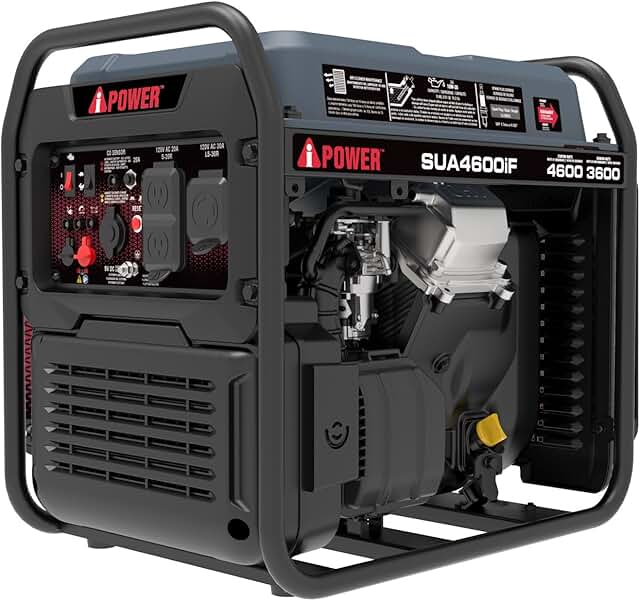
With 4600 starting watts and 3600 running watts, this A-iPower model is designed for RV setups and home backup where clean, stable power matters. It weighs around 56 pounds, aiding portability for camping and off-grid use. The unit emphasizes clean power with inverter technology and a 3% THD rating, protecting sensitive electronics such as laptops and cameras. Its CO sensor adds a safety layer by monitoring emissions and shutting down if carbon monoxide levels rise.
For users prioritizing safety and quiet operation, this generator offers a balanced blend of weight, performance, and features. The compact form factor is a plus for those who need to move power around a campsite or small worksite. The main considerations include ensuring adequate fuel availability and understanding that higher continuous loads may require refueling or staged power use across appliances.
Redact 5000W Dual Fuel Inverter Generator

This dual-fuel inverter generator targets reliability and flexibility with up to 5000W peak power. On gas, it delivers about 3800W running, and propane offers around 3500W running. It supports 120V 20A/30A outlets, a 12V DC port, and parallel ports for expanded capacity. The CO sensor adds critical safety for outdoor use and home backup. The unit supports remote, recoil, or electric start options, giving flexible ignition methods for various scenarios.
Its strongest selling points are fuel flexibility, safe power delivery for sensitive devices, and the potential to pair with a second unit for higher output. Users should consider ensemble power management and the cost of fuel choices when planning longer outages. Parallel capability is a plus for substantial power needs, such as a full home backup or larger RV setups.
PowerSmart 5000W Inverter Generator

The PowerSmart option delivers 5000 starting watts and 4000 running watts with a quiet operation profile. It is designed for home use, camping, and emergency scenarios where low noise and stable power matter. The unit emphasizes portability with a wheel and handle kit, making it easier to move and store. Expect performance that balances run time with a reasonable fuel consumption rate for 25% to 50% loads at moderate noise levels.
For buyers, this model provides a compelling combination of reliability, reasonable weight, and quiet operation suitable for evening outages or quiet camping. The 30A outlet expands compatibility with larger circuits and transfer switching. When evaluating, consider the intended runtime, fuel sources, and whether the generator will often need to be wheeled around a yard or campsite.
Buying Guide: Key Purchase Considerations
- Power needs and peak vs running watts: Choose a unit with a higher running watt rating than your typical load, and ensure it can handle surge requirements for startup of appliances like refrigerators, air conditioners, or tool motors.
- Fuel type and availability: Gasoline, propane, and dual-fuel options provide flexibility. Consider fuel storage safety, availability, and runtime at typical loads to meet outage durations.
- Efficiency and run time: Inverter generators offer cleaner power and better efficiency, often delivering longer run times per tank. Look for units with fuel gauges and ECO modes to optimize consumption.
- Safety features: CO sensors and automatic shutoff add protection, especially when used in enclosed spaces or near sleeping areas. Consider low-THD power for sensitive electronics.
- Portability and setup: Wheel kits, compact design, and handle ergonomics matter for frequent movement. Parallel capability can dramatically increase total output when needed.
- Outlets and transfer readiness: Ensure the unit provides the outlets you need (120V/240V, 30A RV outlets, USB or DC ports) and compatibility with transfer switches or home backup systems.
- Noise levels: Quieter models are preferable for residential outages or camping to minimize disturbance. Look for dBA ratings at a fixed distance to compare.
- Warranty and service: Review the manufacturer’s warranty terms and local service availability. Reliable support can reduce downtime during outages.
When selecting a 5000-watt portable generator, align the model with your primary use—home backup, RV camping, or job-site power. Consider if you prefer single-fuel simplicity or dual-fuel flexibility, the importance of safety features like CO sensors, and whether you will need to parallel units for higher output. The five models above demonstrate a range of configurations suitable for various American households and outdoor lifestyles, emphasizing safety, efficiency, and practical portability.