When selecting a 3000-watt class power solution, durability, portability, and charging speed matter as much as peak surge performance. This guide highlights five top Amazon options that fit the “3000-watt” category, with a focus on indoor and outdoor reliability, quiet operation, and runtime efficiency. Each product is evaluated for emergency backup, recreational use, and off-grid living, helping you compare core specs and use cases at a glance.
A quick overview table presents key details to aid quick comparisons. The table lists the five selected models, their rated output, surge capability, battery type or fuel, approximate runtime notes, and best-use scenarios.
Overview Of Featured Models
| Product | Rated Output | Surge | Power Source | Best For |
|---|---|---|---|---|
| Anker SOLIX C1000 Gen 2 | 2000W | 3000W | LiFePO4 Battery (1024Wh) | Home backup, camping, off-grid |
| Champion 4000-Watt RV Ready | 4000W | — | Gas inverter | Backup power, camping |
| MaXpeedingrods 3500W | 3000W | 3500W | Gas inverter | Home backup, outdoor use |
| OUPES Mega 1 | 2000W | 4500W | LiFePO4 Battery (1024Wh) | UPS, expansion to higher capacity |
| Jackery HomePower 3000 | 3600W | 7200W | Battery + solar ready | Home backup, RV, emergencies |
Anker SOLIX C1000 Gen 2 Portable Power Station
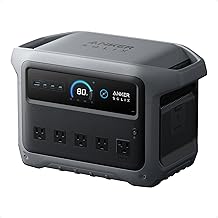
The Anker SOLIX C1000 Gen 2 is designed for rapid recharging and flexible power delivery. It provides 2,000 watts of continuous output with a 3,000-watt peak, supporting up to ten devices at once. A standout feature is UltraFast recharging at up to 1,600 watts, enabling a full recharge in about 49 minutes in typical scenarios. The unit uses a 1,024Wh LiFePO4 battery, known for longevity and safety, making it suitable for home backup, camping, or remote work setups. With a compact footprint, it’s 14% smaller and 11% lighter than many comparable models, improving portability for travel and temporary setups.
Key considerations include recharge speed, battery chemistry, and device compatibility. LiFePO4 cells offer longer cycle life and improved thermal stability, which is beneficial for frequent outages or long-term off-grid use. The ability to power ten devices concurrently makes it versatile for a small home office, essential electronics during outages, or a campsite where several appliances run simultaneously. The 1,024Wh capacity balances portability with usable energy for multiple days of moderate demand, depending on device mix.
Champion Power Equipment 4000-Watt RV Ready Portable Inverter

Champion’s 4000-watt inverter offers a strong balance between output and portability. Weighing under 49 pounds, this model emphasizes lightweight design for easy transportation and setup. It operates at a relatively quiet 64 dBA from 23 feet, making it a suitable choice for camping, tailgating, or home backup with minimal noise disruption. It delivers 4000 starting watts and 3000 running watts, with a runtime up to about 10 hours under typical loads. The built-in CO Shield carbon monoxide auto shutoff system adds safety for enclosed spaces. An optional parallel kit lets you combine this unit with another 4000-watt Champion inverter to double output power, offering expansion for larger loads.
MaXpeedingrods 3500 Watt Portable Inverter Generator

MaXpeedingrods emphasizes a versatile, compact design with 3,000 running watts and a 3,500-watt peak, enabling the operation of a small home backup, RV, or outdoor setup. The unit weighs about 47 pounds, aiding portability for camping or travel. Eco mode extends runtime, delivering up to around 8.3 hours at 25% load or 4.5 hours at 50% load, helping balance fuel consumption and energy needs. It provides essential outlets, including a 120V 30-amp RV outlet, two 120V 20-amp outlets, and two USB ports, supporting a range of appliances and devices.
OUPES Mega 1 Portable Power Station

The OUPES Mega 1 is geared toward rapid charging and modular expansion. It offers 2,000 watts of continuous output with a 4,500-watt surge, and a 1,024Wh LiFePO4 battery. A standout feature is fast recharge, reaching 0-80% in approximately 36 minutes via AC, and as quick as 26 minutes with a combined AC and solar input. Notably, it supports modular expansion by connecting up to two B2 Extra Batteries to scale capacity up to 5,120Wh without extra inverters or complex wiring. This makes it a strong option for growing power needs, including UPS functionality for essential electronics and professional equipment, plus compatibility with solar input for off-grid use.
Jackery HomePower 3000 Portable Power Station

The Jackery HomePower 3000 combines strong output with practical backup features. It delivers 3,600 watts of continuous power with a surge capability up to 7,200 watts, making it suitable for essential appliances during outages. The 3,072Wh LFP (Lithium Iron Phosphate) battery supports a robust energy reserve for longer outages and better cycle life. The unit emphasizes UPS-like performance with a seamless ≤20 ms transition to backup power for critical devices, ensuring minimal interruption for security systems, routers, and medical equipment. It includes a mix of AC, USB-C, USB-A, and DC ports, plus TT-30 RV compatibility to support RV use, emergencies, and home standby scenarios. Solar input readiness is noted, allowing for extended off-grid usage with solar panels.
Buying Guide: Key Purchase Considerations
When evaluating 3000-watt class power solutions, consider these core factors to match your needs:
- Power Output And Surge: Distinguish between continuous running watts and surge capacity. For household appliances, a higher surge margin helps accommodate startup loads for refrigerators, air purifiers, and power tools.
- Battery Type And Capacity: LiFePO4 batteries provide longer cycle life and safer chemistry, which is advantageous for frequent cycling. A larger watt-hour (Wh) rating extends runtime for off-grid use and outages.
- Recharge Speed: Fast charging reduces downtime between outages or camping sessions. Some models support very rapid AC charging, or mixed AC/solar charging for even quicker replenishment.
- Port Selection: Look for a mix of AC outlets, USB-C PD ports, USB-A ports, and RV-ready outlets. Compatibility with a wide range of devices improves versatility in homes and campsites.
- Portability And Weight: If you plan frequent transport, weigh the unit and note dimensions. Compact or lighter models enable easier use in vehicles, campsites, or tight spaces.
- Safety Features: Auto shutoff for CO when applicable, short-circuit protection, and safe battery chemistry reduce risk in enclosed environments.
- Expandability: Some systems offer modular expansion or parallel capabilities, allowing future capacity growth without replacing the core unit.
- Mobility Versus Home Use: For RVs, consider outlets like RV-ready sockets and UPS-like behavior for critical loads. For home backup, seamless switch-over and multiple device support matter more.
- Warranty And Support: A solid warranty and accessible customer service add confidence when relying on a power station for emergencies or remote living.
In sum, the best choice depends on your primary use—home backup, camping, RV living, or off-grid scenarios. Units with LiFePO4 batteries and rapid recharge strike a balance between longevity and convenience. For expanding power needs over time, some models offer modular growth, making them future-ready without replacing the entire system.