Best Three-Phase Air Compressor Motors and Starters for Upgraded Power
Choosing the right three-phase air compressor components can improve startup reliability, efficiency, and overall uptime. This guide spotlights five compatible options from reputable brands, spanning magnetic starters and robust motors designed for 208-230V three-phase systems. Each product is evaluated on horsepower, voltage, and build quality to help facility managers, electricians, and hobbyists select parts that align with typical American shop and industrial needs.
| Product | Brand | Voltage / Phase | Key Feature |
|---|---|---|---|
| SQUARE D Magnetic Starter 10HP | EDGE INDUSTRIAL | 208-230V / 3-Phase | Three overloads, NEMA 1 enclosure |
| SQUARE D Magnetic Starter 5HP | EDGE INDUSTRIAL | 208-230V / 3-Phase | Three overloads, compact control |
| HPDAVV 10HP Rotary Screw System | HPDAVV | 230V / 3-Phase | Spin-on oil separator, industrial grade |
| HPDAVV 20HP Rotary Screw System | HPDAVV | 230V / 3-Phase | 81 CFM, 125 PSI, robust base mount |
| VEVOR 2HP 3-Phase Electric Motor | VEVOR | 230V / 3-Phase | 56C frame, CW/CCW rotation |
Note: All five selections are compatible with typical 208-230V three-phase air compressor systems and emphasize reliability, ease of installation, and long service life in clean, dry environments or industrial settings.
SQUARE D 10HP Magnetic Starter For 3-Phase Motors
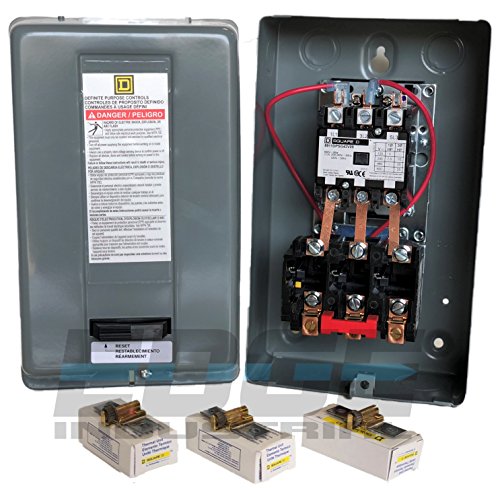
EDGE INDUSTRIAL presents a square D definite purpose magnetic starter designed for 10HP three-phase 208-240V electric motors. It includes three thermal overloads/heater elements and a 40A contactor housed in a NEMA 1 general purpose enclosure. This configuration is tailored for air compressor motors that require reliable, factory-wurnished protection plus straightforward wiring. The device is specifically designed to support 10HP three-phase motors, delivering dependable starting and overload protection for mid-to-large air compressor systems.
SQUARE D 5HP Magnetic Starter For 3-Phase Motors

This EDGE INDUSTRIAL magnetic starter covers 5HP 3-phase motors at 208-240V in a compact NEMA 1 enclosure. With three thermal overloads/heaters and a 20A contactor, it offers robust protection for small-to-mid sized air compressors. The unit’s magnetic start approach provides fast, reliable motor engagement while protecting windings from overload conditions. It’s well suited for industrial or workshop compressors that demand dependable motor control without complicated wiring.
HPDAVV 20HP Rotary Screw Air Compressor System
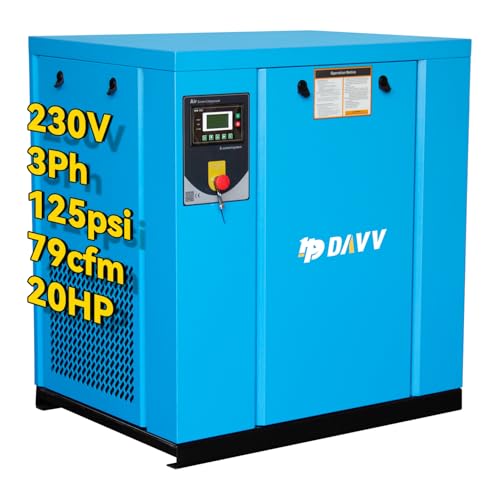
HPDAVV’s 20HP three-phase rotary screw compressor delivers up to 81 CFM at 125 PSI, designed for industrial applications requiring high airflow and steady pressure. The system includes a spin-on air oil separator for reduced oil carryover and easier maintenance. With a 3-phase 230V input and a robust base-mount design, this unit is intended for continuous operation in factories, workshops, or large automotive facilities. The integrated controller simplifies operation, while the oil separator ensures cleaner compressed air for downstream tools.
VEVOR 2HP 3-Phase Electric Motor

This VEVOR 2HP motor is rated at 230V and 3-phase, with a 56C frame and a 5/8″ keyed shaft. It supports CW/CCW rotation, enabling flexible wiring and compatibility with various compressor setups. With a light yet durable rolled steel shell, the motor is suited for smaller air compressors or as a component in a larger multi-mocket system where compact size and reversible rotation are advantageous. The open drip-proof design suits clean, dry environments, contributing to longer motor life in typical shop settings.
Buying Guide: Key Considerations For Three-Phase Air Compressor Upgrades
When selecting three-phase components for air compressors, balance performance with reliability. Consider the following aspects to ensure an informed purchase that aligns with your system’s needs.
- Horsepower and duty cycle: Match the motor or starter rating to the compressor’s horsepower and expected load. Undersized protection can cause nuisance trips; oversized units may waste energy.
- Voltage and phase compatibility: Ensure all devices are rated for 208-230V three-phase service common in American facilities. Confirm enclosure type and environmental ratings if used in workshop or industrial environments.
- Protection and overloads: Magnetic starters with thermal overloads protect motors from overheating. Verify the number of overload elements and whether the enclosure provides adequate protection for the installation location.
- Enclosure and installation: NEMA 1 enclosures are common for indoor, dry spaces. For humid or dusty environments, consider higher protection ratings and seals to minimize dust ingress and moisture exposure.
- Oil separation and maintenance (rotary screw systems): Rotary screw compressors often include spin-on oil separators. A reliable separator reduces oil carryover and simplifies maintenance, extending compressor life and air quality.
- Rotation direction and wiring flexibility: Motors that offer CW/CCW rotation can simplify wiring, especially in retrofit scenarios. This flexibility supports easier installation in existing piping layouts.
- Footprint and mounting: Base-mounted units with solid frames reduce vibration and movement during operation. Confirm mounting hole patterns and torque requirements for secure installation.
- Maintenance and parts availability: Opt for brands with broad distribution and readily available spare parts, such as magnetic starters, contactors, and overloads. Local support accelerates service and reduces downtime.
- Energy efficiency and runtime: While three-phase systems can be more efficient at scale, evaluate energy use based on duty cycle and runtime. Properly sized equipment minimizes energy waste and heat generation.
In summary, a well-chosen three-phase motor or starter can improve startup reliability, reduce downtime, and extend the life of your air compressor system. Use the product profiles above as a starting point, and consult with a licensed electrician or compressor technician to confirm compatibility with your specific equipment and electrical panel.