Best 24 Volt Generator Motor Solutions for DIY Projects and Small Systems
Finding reliable 24 volt generator motors is essential for DIY generators, wind turbines, and small machinery. This guide highlights five compact, high-torque DC motors that operate at 12V or 24V and deliver solid performance in CW/CCW configurations. Each option balances speed, torque, and noise for everyday applications—from hobby projects to lightweight industrial tasks. Read on to compare specifications, setup considerations, and practical use cases to choose the right motor for your 24V power system.
Summary of selected products:
| Product | Voltage Range | Power | Speed | Torque (approx.) |
|---|---|---|---|---|
| High Torque DC Motor 12V/24V Permanent Magnet Motor Mini DC Motor DIY Generator Motor 30W | 12V-24V | 30W | 3500/7000 RPM | 1-2 kgf.cm |
| 24V Permanent Magnet Electric Motor Generator 250W Small Brushed Permanent Magnet | 24V | 250W | Not specified | Not specified |
| High Torque DC Motor 12 V/24 V Permanent Magnet Motor Mini DC Motor DIY Generator Motor 30W CW/CCW | 12V-24V | 30W | 3500/7000 RPM | 1-2 kgf.cm |
| High Torque DC Motor 12V/24V, DIY Project Quiet Motor Permanent Magnet Motor with Cable Connector | 12V-24V | 30W | 3500/7000 RPM | 1-2 kgf.cm |
| MAKERELE High Torque DC Motor 12V/24V 30W | 12V-24V | 30W | 3500/7000 RPM | 1-2 kgf.cm |
High Torque 12V/24V Permanent Magnet Generator Motor (30W)

The motor is a compact, permanent magnet DC unit designed for both 12V and 24V operation. It supports CW/CCW rotation and delivers around 30W of output with speeds of 3500 RPM at 12V and 7000 RPM at 24V. Its mounting and shaft dimensions align with common DIY generator builds, making it suitable for small-scale Wind/DIY generators, micro-machining tools, and hobbyist projects. Consider torque requirements and voltage availability when pairing with a drive system and power electronics.
24V Permanent Magnet Electric Motor Generator 250W Small Brushed Motor

This larger, brushed motor model is geared toward higher power applications within a 24V framework. With a 250W rating, it provides a robust option for compact generator projects, small wind turbines, or backup power setups. Brushed construction offers straightforward control and compatibility with simple driver circuitry. When implementing a 24V generator system, evaluate heat dissipation, load consistency, and electrical integration to maximize efficiency and longevity.
High Torque DC Motor 12V/24V Permanent Magnet Motor With Mount

XD-3420 style motors are designed for versatile 12V/24V operation with CW/CCW capabilities. The package includes a mounting option and a threaded shaft, aiding quick integration into DIY generators or compact mechanical systems. Key specs include 30W nominal power, 12V/24V compatibility, and a torque range around 1–2 kgf.cm. This makes it a practical choice for hobbyist builds that require a reliable, mountable motor with adjustable rotation direction.
High Torque DC Motor 12V/24V, Cable Connector, 30W

This motor emphasizes low-noise operation alongside high-speed performance at 12V and 24V. A dual-ball bearing arrangement supports axial loads and reduces friction for smoother operation up to 7000 RPM. The inclusion of a cable connector facilitates easy wiring and integration with controllers or generators. Ideal for projects requiring compact size, quiet operation, and reliable torque generation in a 24V system.
MAKERELE 12V/24V 30W Permanent Magnet Motor with Mount
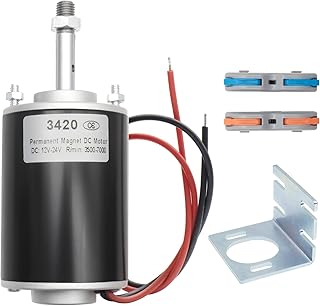
The MAKERELE unit mirrors the common 30W, 12V-24V design with a threaded shaft for secure mounting. It highlights noise reduction technology and a dual-ball bearing system to minimize friction and sustain performance at high speeds (up to 7000 RPM). This combination makes it suitable for precise DIY generator builds, small wind turbines, and compact power tools where consistent speed and torque matter.
Buying Guide: Key Considerations For 24V Generator Motors
- Voltage and compatibility: Ensure the motor supports your intended 12V or 24V supply. Some models operate at both voltages and adjust speed accordingly.
- Speed and torque balance: Higher RPMs (e.g., 7000) offer faster response, but torque matters for generator loading. Match motor torque to your load and shaft coupling.
- Mounting and shaft: Look for threaded shafts, mounting flanges, and shaft length that fit your chassis or generator housing.
- Noise and vibration: Dual-bearing designs and precision assemblies reduce friction and noise, improving efficiency in continuous operation.
- Control and drive electronics: Consider compatibility with motor controllers, PWM drivers, and feedback options if precise speed control is required.
- Thermal management: 30W class motors can heat up under load; ensure adequate cooling and ventilation in enclosed spaces.
- Durability in DIY contexts: Prefer motors with robust construction and readily available replacement parts, especially if your setup will run for long periods.
- Application fit: For small DIY generators, choose a motor with CW/CCW capability and a shaft suitable for couplings to a rotor or rotor-stator assembly.
When evaluating options, compile a hands-on comparison of voltage compatibility, RPM at target voltage, shaft dimensions, mounting options, and noise levels. This helps ensure you pick a motor that integrates smoothly with your energy system, controller, and battery or generator load. Consider sourcing from reputable stores offering clear specifications and replacement parts to minimize downtime and maintenance concerns.