Best 220 Volt Gas Generator Options for Home Backup
When choosing a 220 volt gas generator, reliability, wattage, fuel options, and ease of use matter most for reliable power during outages or outdoor events. This guide highlights five top models that balance dual-fuel capability, portability, and safety features. Each entry includes core specs, what to watch for, and practical considerations for American households and RV setups. Use the buying guide at the end to compare key factors side by side and identify which generator best fits your needs.
| Product | Brand | Watt Range | Fuel Type | Key Feature |
|---|---|---|---|---|
| DF475T | WEN | 3800-4750 running/3800-4750 surge | Gasoline / Propane | Electric start; 120V/240V transfer readiness |
| 12500W Dual Fuel | Westinghouse | 8500-12500 running/specific to fuel | Gasoline / Propane | Remote start; transfer switch ready |
| 4600W Inverter | A-iPower | 3600 running/4600 surge | Gasoline | CO sensor; lightweight portability |
| 4400W Inverter | Oxseryn | 3400 running/4400 surge | Gasoline | Multi-output; ECO mode; RV ready |
| 4400W Inverter | Oxseryn | 3400 running/4400 surge | Gasoline | Inverter technology; EPA compliant |
These options cover a range of budgets and needs—from portable inverter models suitable for tailgating or camping to higher-output home backup units with remote start. Read through each product section to compare features, and use the buying guide to weigh your priorities such as noise, fuel economy, and transfer switch compatibility.
WEN 4,750-Watt Dual Fuel Generator With Electric Start

The WEN DF475T offers versatile dual-fuel capability, allowing a switch between gasoline and propane using a simple dial. It provides 4750 surge watts and 3800 running watts on gasoline, with propane delivering 4350 surge and 3500 running watts. It supports 120V and 240V outputs for typical home appliances and transfer switches. An electric key-start powers a robust 224cc OHV engine, simplifying startup during emergencies. The unit includes a wheel kit for portability, making it suitable for RVs or job sites where maneuverability matters.
When using this model, consider fuel availability and the preference for quick startup. Dual-fuel capability can increase flexibility during extended outages, but propane tanks may be less energy-dense than gasoline for the same duration. Noise level and runtime will vary with load, but the 4-stroke engine is designed for steady operation and reliability in heating or cooling outages.
Westinghouse 12,500-Watt Dual Fuel Backup Generator

The Westinghouse dual-fuel model is designed for serious home backup, offering 12,500 peak watts when running on gasoline and up to 11,200 peak watts on propane, with substantial running wattage. It features remote electric start via key fob, plus both recoil and electric starting options for flexibility during outages. The unit includes a 6.6-gallon tank and a digital hour meter, with real-time output data shown on a VFT display. It supports transfer switches and RV-ready outlets, and comes with a durable 457cc four-stroke OHV engine. All outlets have rubber covers for added safety.
Consider this model if you need substantial running watts for household essentials, sump pumps, and HVAC during outages. Remote start is convenient in cold weather, and the presence of a transfer-switch-ready outlet simplifies integration with a home panel. However, larger size and fuel consumption should be planned for in advance during extended outages.
A-iPower 4600W Inverter Portable Generator
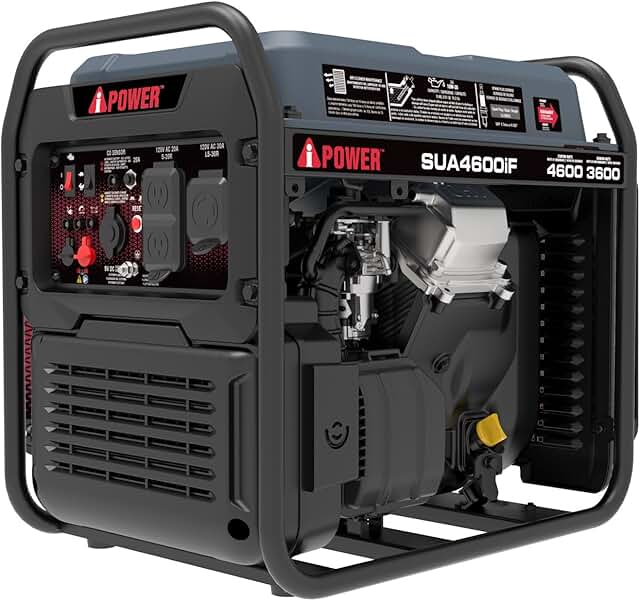
The A-iPower 4600W inverter focuses on lightweight portability and clean power. It delivers 4600 starting watts and 3600 running watts, with 120V/60Hz output suitable for RVs and sensitive electronics thanks to a low total harmonic distortion (THD) of around 3%. Weighing roughly 56 pounds, it is easy to transport for camping or emergency use. The unit emphasizes stable power for electronics like laptops, TVs, and chargers, making it a strong choice for those prioritizing sensitive equipment safety in outages or outdoor activities.
When evaluating this model, assess the balance between wattage needs and travel convenience. Inverter technology typically yields better fuel efficiency and quieter operation but may have lower surge capacity compared to traditional open-frame generators. Battery-like startup features and CO sensors add safety for regular use in occupied spaces.
Power Equipment 4400 Watts Inverter Generator

This 4400-watt model provides solid power for RV camping and home backup, combining 3400 running watts with 4400 peak watts. It includes multiple outlets: two 120V AC ports, a 12V DC port, and a 30A RV outlet. The long runtime is notable—up to 14 hours at 25% load thanks to an efficient fuel system. A 2-gallon fuel tank and ECO mode help balance performance and fuel economy, while the design emphasizes portability and practical use in off-grid settings and emergencies.
Consider the balance between continuous load needs and runtime. Inverter technology supports stable, clean power for sensitive devices, while the RV connection remains handy for campers or mobile setups. Fuel capacity and noise levels should be weighed against anticipated outages and usage patterns to determine if this model fits your routine.
Oxseryn 4400-Watt Inverter Generator (EPA Compliant)
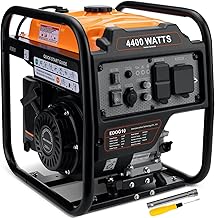
This Oxseryn model mirrors a 4400-watt inverter approach, offering 3400 running watts and 4400 surge. It provides two 120V outlets, a 30A RV connection, and a 12V DC port. The unit emphasizes inverter technology with ECO mode and EPA compliance, designed for efficiency and reduced emissions. It also features typical safety and startup protections like overload prevention and low oil shutdown, providing steady power for home backup and travel use.
When choosing between these Oxseryn units, key factors include noise level, external safety features, and compatibility with your existing electrical setup. Inverter systems generally deliver higher-quality power with lower noise output, making them suitable for indoor use and evening outages. Ensure you have adequate fuel access and confirm that your essential devices are within the unit’s running wattage capacity.
Buying Guide: Key Purchase Considerations
- Power needs: Assess your critical loads and total wattage. For essential home backup, aim for a unit that can sustain required running watts with some headroom for surge.
- Fuel options: Dual-fuel units offer flexibility, but propane may be easier to store long-term, while gasoline can provide higher energy density. Consider local fuel availability and storage space.
- Portability vs. capacity: Inverter models are compact and fuel-efficient, ideal for RVs and camping. Open-frame generators often deliver higher peak power but are heavier and louder.
- Transfer switch readiness: If you plan to feed a home panel, ensure the generator supports a transfer switch connection and has the appropriate outlets (L14-30, RV, etc.).
- Safety features: Look for CO sensors, automatic shutdown on low oil, rubber outlet covers, and sturdy enclosures to protect occupants and equipment.
- Runtime and fuel capacity: Longer runtimes reduce fuel management during outages. Compare tank sizes and run-time at typical loads to estimate usefulness.
- Noise and emissions: Inverter generators typically run quieter and cleaner, which matters for residential use and in noise-restricted areas.
- Maintenance and warranty: Favor brands with accessible parts, clear maintenance intervals, and substantial warranty coverage to minimize downtime.