Best 220 Generator Cord Male to Male Options for Safe Power Transfer
Finding a reliable 220-volt generator cord male-to-male setup is essential for safe, temporary power transfers between generators, transfer switches, and heavy appliances. This guide highlights five dependable options with locking, weatherproof features and clear safety benefits. Each entry provides practical considerations for compatibility, current capacity, and outdoor use so you can choose the right cord for your backup power needs.
Product Overview
- Miady NEMA L14-30P Generator Plug — 30A, 125/250V, locking design
- UL Listed 25 Feet 50 Amp Generator Extension Cord — NEMA 14-50P to SS2-50R, twist-lock
- Kanayu L14-30P to 6-50R Adapter — 30A locking to 50A welder receptacle
- 50FT 30 Amp Generator Extension Cord — L14-30P to L14-30R, twist lock
- UL Listed 50 Amp Generator Cord & Inlet Box Combo — 15 ft, 14-50P to SS2-50R
Note: All products listed are designed for 125/250V operation and focus on locking connectors to minimize accidental disconnections in outdoor or high-current scenarios. When connecting cords, ensure both ends match the appropriate NEMA configurations for your generator and load.
Miady NEMA L14-30P Locking Plug — 30A Up to 7,500W

The Miady NEMA L14-30P is a heavy-duty locking plug designed for 125/250V operation with a 30-amp rating. It uses a 4-wire grounding configuration and is compatible with 10-gauge cords for up to 7,500 watts. The design focuses on moisture protection and safe wiring practices, with individual tube terminations to reduce short circuits and stray strands. This makes it a strong choice for generators that require a secure, weather-resistant connection in outdoor environments.
Compatibility and safety are emphasized through a rubber grommet within the housing that helps resist moisture intrusion for various cord sizes. The plug’s internal construction promotes safe handling by keeping conductors properly isolated and tightened, reducing the risk of loose connections or arcing.
Ideal use cases include portable generators connecting to transfer switches or remote power loads where a robust, weather-resistant locking connection is needed. The plug supports a reliable, high-current connection for mid-range generator setups.
UL Listed 25-Foot 50A Generator Extension Cord

This 25-foot extension cord provides a robust 50-amp option suitable for larger backup power needs. It features a twist-lock NEMA SS2-50R masculine/feminine interface, ensuring a secure fit and reduced risk of unplugging in adverse conditions. The cord supports a 6/3+8/1 AWG construction for durability and reliable conductivity, with 125/250V capability for versatile generator-to-load connections. The design also supports dual-purpose use as a generator extension when needed for RV hookups or transfer-switch configurations.
Key safety elements include ergonomic grips on both ends to facilitate safe plugging and unplugging, and a heavy-duty outer jacket that resists weather, abrasion, and outdoor wear. The ETL-listed build provides extra confidence in compliance and electrical safety standards for residential and light commercial use.
Users should verify compatibility with their generator’s outlets and confirm that inlet and outlet connectors match the load requirements. This cord strikes a balance between length, power handling, and rugged outdoor performance.
Kanayu L14-30P to 6-50R Welder Adapter
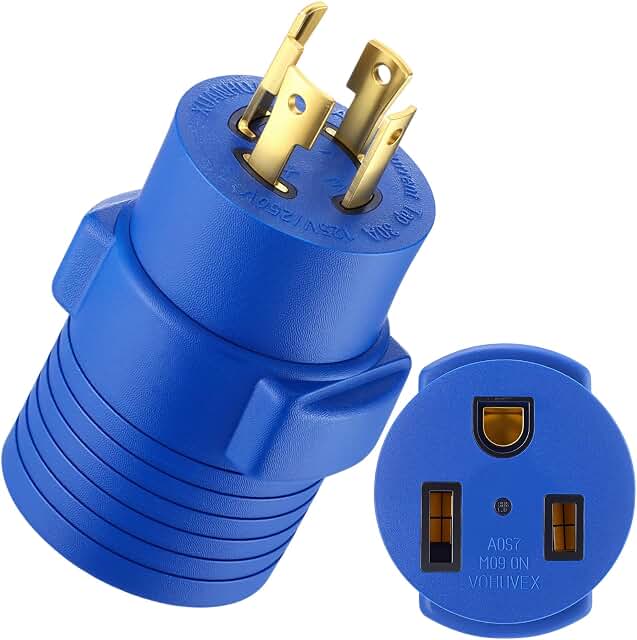
The Kanayu adapter bridges a locking NEMA L14-30P plug to a NEMA 6-50R receptacle, enabling welder-grade or higher-current loads from a generator. It supports up to 30 amps at 250V, making it suitable for welding equipment and other high-demand loads that share the same grounding scheme. The L14-30P male side locks securely, while the 6-50R female side accepts compatible hardware for safe, continuous operation.
The device features a strain-relief structure to maintain a secure connection and reduce inadvertent disconnections. It is frequently used with generators, welders, and even certain heavy appliances that require a 50-amp outlet but prefer or require a 30-amp generator source. The adapter’s versatility extends to dryers and other high-power devices when used within safe, rated limits.
When selecting this adapter, ensure that the total load does not exceed the generator’s maximum capacity and that the receiving equipment is compatible with NEMA 6-50R or other connected devices. This option supports flexible configurations for temporary power needs and workshop setups.
50FT 30A Generator Extension Cord — L14-30P to L14-30R

This 50-foot extension cord is designed for serious outdoor generator tasks, offering a 30-amp rating with L14-30P to L14-30R functionality. The 10-gauge construction provides robust electrical capacity while maintaining flexibility for long runs. The STW insulation improves heat resistance, making it suitable for repeated use under variable weather conditions.
Key features include weather resistance, a twist-locking design to prevent accidental disconnections, and ergonomic grips to simplify plugging and unplugging in outdoor environments. The cord’s length supports remote setups, allowing generators to be placed further from homes or work sites while maintaining a secure 125/250V connection.
Practical considerations include evaluating the distance to reduce voltage drop over long runs and ensuring compatible locking connectors on both ends, especially if the generator or transfer switch uses a different locking configuration.
UL Listed 50 Amp Generator Cord & Inlet Box Combo

This combo kit pairs a 15-foot 50-amp generator cord with a pre-drilled NEMA SS2-50P twist-lock inlet box. The cord is rated 125/250V and uses STW 6/3 + 8/1 AWG conductors, enabling a maximum wattage around 12,500 W when matched with an appropriate generator and load. The inlet box provides a secure, accessible point for connecting power to a home or transfer-switch setup, with convenient knockouts and safe enclosure for weather exposure.
UL and ETL certifications reinforce reliability and safety. The system is designed for residential backup power or small commercial scenarios where a dedicated connection to a transfer switch or power inlet is preferred. When wiring, confirm clearance and mounting requirements for the inlet box and ensure the generator’s outlet matches the SS2-50P configuration for a snug, lockable fit.
Buying Guide: Key Considerations For 220 Generator Cords And Adapters
- Current rating and voltage: Match the cord or adapter to your generator’s output (30A or 50A at 125/250V is common). Exceeding the rating risks overheating and failure.
- Locking connectors: Locking L14 and SS-series connectors reduce accidental disconnections during operation, especially outdoors or during adverse weather.
- Cable gauge and length: Use appropriate gauge (6/3 or 8/1 AWG typically) for length and load. Longer runs can cause voltage drop; choose the shortest practical length.
- Weather resistance: Look for outdoor-rated jackets, weatherproof gaskets, and grommets. IP ratings and flame-retardant materials add resilience for outdoor use.
- Safety certifications: UL/ETL listings indicate adherence to electrical safety standards and testing.
- Inlet boxes and transfer switches: When connecting to home circuits, an inlet box or transfer-switch-compatible kit helps ensure a safe and code-compliant setup.
- Compatibility: Confirm that both ends use compatible NEMA configurations (P to R, locking versus non-locking) to avoid mismatches and unsafe connections.
- Use cases: Distinguish between generator-to-load cords, extension cords, and adapters. Adapters add flexibility but must be used within rated capacities.
- Durability and flexibility: Materials like copper conductors and heat-resistant jackets improve longevity under heat, UV exposure, and outdoor conditions.
When choosing a solution, evaluate your typical load, distance from the generator, outdoor exposure, and whether you need a simple extension or a full inlet box configuration for a home backup system. Balancing safety, compliance, and practicality will guide you to the best 220-volt cord or adapter for your setup.