Finding the right 14-inch circular saw blade depends on the material you’re cutting and the finish you expect. This guide highlights top 14-inch blades suited for metal, wood, and mixed-material tasks, with a focus on durability, heat management, and precision. Each option below is linked to its Amazon product page for quick reference, and a buying guide follows to help you pick the best blade for your setup.
| Product | Material Focus | Teeth | Arbor | Highlights |
|---|---|---|---|---|
| Mild steel and ferrous metals | 66 | 1 inch | No heat, no burrs, virtually no sparks | |
| 80 | 1 inch | |||
| 72 | 1 inch | |||
| 120 | 1 inch | |||
| — | — |
Evolution 14BLADEST Blade For Cutting Mild Steel
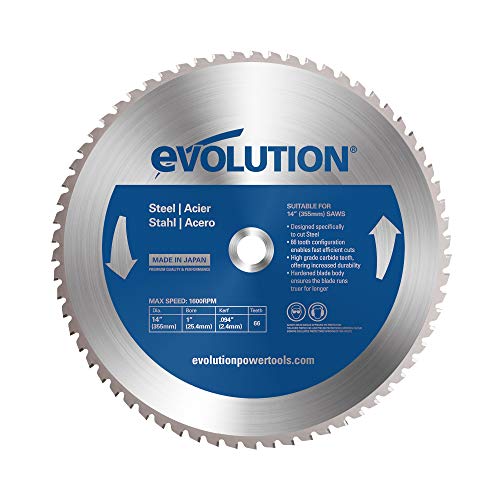
Designed to cut mild steel and ferrous metal, the Evolution 14BLADEST uses Japanese carbide and is heat-treated for durability. The blade claims no heat, no burrs, and virtually no sparks, enabling safer handling after cutting. It is specifically intended for mild steel and should not be used on galvanized, hardened, or high-carbon steel. The 14-inch blade features 66 teeth and is compatible with chop saws and circular saws that accept standard 1-inch arbors.
SUNFUL 14 Inch 80T Wood Cutting Blade

This 14-inch blade is built for wood, featuring 80 carbide tips designed to deliver cleaner cuts and longer life in common wood applications. The blade stresses durability and cut efficiency, with claims of up to 50% longer life than typical blades. It is compatible with 1-inch arbors and 14-inch saws, offering a balance of speed and finish quality for woodworking projects, including crosscuts and rips.
Diablo Steel Demon D1472CF, 14″ Metal Blade

The Diablo Steel Demon Cermet II blade is engineered for metal cutting, with a triple-chip grind (TCG) for burr-free cuts. It’s designed to deliver longer life under heavy use, with higher heat tolerance and faster cutting compared to standard metal-cutting discs. The blade aims to provide precise, clean cuts with reduced sparking and cooler operation, suitable for 14-inch metal cuts at lower RPM ranges.
CRALY 14 Inch 120 Teeth Aluminum Blade

The CRALY blade is designed for aluminum and non-ferrous metals, featuring a carbide tip and a thin kerf of 3.0 mm. It uses a laser-cut expansion slot and stabilizer vents to manage heat and help prevent warping during metal cutting. The 120-teeth configuration supports smoother finishes on aluminum and lighter alloys, with a 1-inch arbor standard for common 14-inch machines.
DEWALT 14″ Chop Saw Blade (DW8001)

The DEWALT DW8001 blade is built for durability in metal cutting, utilizing a high-performance aluminum oxide grain for long life and aggressive cutting action. Its blade design emphasizes a durable wheel with a concentrated grain mix for smooth operation and extended blade life, making it a practical option for metal cut-off tasks on 14-inch chop saws.
PRETEC 14BLADEST 14-Inch, 72-Tooth Blade
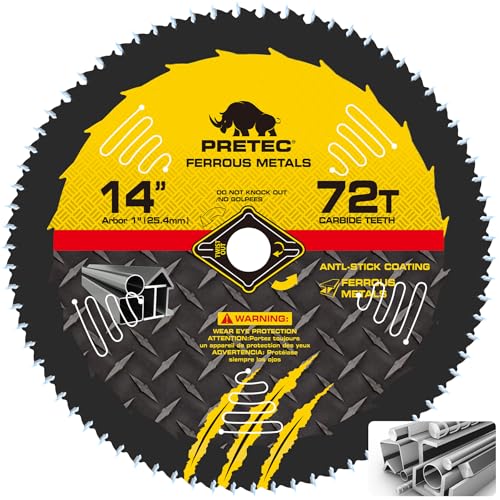
The PRETEC 14BLADEST is a 14-inch, 72-tooth blade with a carbide-tipped construction designed for cutting mild steel and similar ferrous materials. It emphasizes a durable titanium carbide ceramic alloy, a thin kerf for reduced waste, and a design intended to minimize heat buildup and burr formation. It is compatible with various low-RPM metal-cutting saws and supports faster, cleaner cuts in metal workpieces.
Buying Guide: Key Purchase Considerations
- Material compatibility: Match blade type to the material you cut most—mild steel, ferrous metals, aluminum, or wood. Metal blades prioritize heat resistance and carbide teeth; wood blades maximize clean crosscuts and rip cuts.
- Teeth count and kerf: Higher tooth counts yield smoother finishes (Wood: 60–80T; Metal: 60–72T or more), while a thinner kerf reduces waste and friction but may wear faster under heavy metal cutting.
- Arbor size: Ensure the blade’s arbor matches your saw (commonly 1 inch for 14-inch blades). Some high-end blades support safe, quicker mounting with consistent alignment.
- Chip load and chip management: Blades designed for metal cutting reduce heat and sparking, improving operator safety. Coated or ceramic carbide tips enhance durability in ferrous metals.
- RPM compatibility: Check the blade’s maximum RPM against your saw’s rating. Running a blade beyond its rated RPM can cause warping or failure.
- Finish quality vs. speed: For metal, prioritize cooler operation and burr-free cuts; for wood, prioritize fast, clean rips and crosscuts. Some blades excel at mixed-material tasks but may compromise finish in a single material.
- Brand and warranty: Reputable manufacturers often provide better heat resistance, precision, and after-sales support. A warranty can indicate expected blade longevity under typical use.
- Safety and maintenance: Regularly check for dull teeth, worn carbide tips, and warping. Use proper feeds and speeds to prolong life and reduce hazards.
- Price-to-performance: Higher-priced blades often deliver longer life and cleaner cuts, but evaluate total cost per cut, not just upfront price.