Best 120 Gallon Air Compressor Options for Pros
When tackling heavy-duty shop tasks, a 120-gallon air compressor can deliver sustained power for painting, sanding, and running large air tools. This guide compares top models, highlights key specs, and helps you pick a unit that fits demanding workflows without frequent refills. Below is a practical overview followed by in-depth reviews of five strong candidates, plus a buyer’s guide to help you compare tank size, duty cycle, and maintenance needs.
| Product | Brand | Tank Size | Max PSI | Notes |
|---|---|---|---|---|
| Industrial Air Horizontal Receiver Tank with Platform – 120 Gallon | Industrial Air Contractor | 120 Gallon | 200 PSI | ASME certified weld flanges |
| 2545E10-V 10hp 120 gal Two-Stage | Ingersoll Rand | 120 Gallon | 175 PSI | Long-life, 15,000+ hours, continuous duty |
| Campbell Hausfeld 80 Gallon Vertical | Campbell Hausfeld | 80 Gallon | 140 PSI | 2-cylinder cast iron pump |
| DEWALT 80 Gallon Vertical | DEWALT | 80 Gallon | 155 PSI | Oil-lubricated, quiet operation |
| California Air Tools 8010 8 Gallon | California Air Tools | 8 Gallon | 60 PSI | Ultra-quiet, oil-free |
Industrial Air Horizontal Receiver Tank With Platform

The Industrial Air 120-gallon horizontal receiver combines a large storage capacity with a robust 200 PSI working pressure. ASME-certified weld flanges enhance safety and reliability for heavy, continuous-duty tasks. The horizontal layout is designed to maximize floor space, while the included platform improves accessibility and stability in a busy shop. This model is well-suited for painters, fabricators, and workshop crews that rely on a steady, high-volume air supply.
Key considerations include its duty cycle, run-time capability, and how often you’ll need to drain condensation. A 120-gallon tank minimizes interruptions during lengthy operations, but matching the compressor’s pump capacity and motor to your toolset remains essential. Maintenance should emphasize regular drain and tank inspections, along with seals and gaskets on flanges.
Pros: Large capacity for long runs, sturdy ASME-certified components, platform for stable mounting. Cons: Heavier unit requiring solid floor support and proper mounting; initial install may be more involved due to plumbed connections.
Ingersoll Rand 2545E10-V 120-Gallon Two-Stage
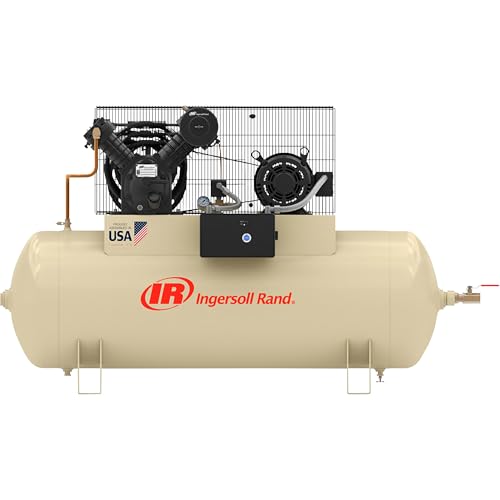
The Ingersoll Rand 2545E10-V is a heavy-duty two-stage compressor designed for 100% continuous duty. With a 120-gallon ASME receiver and a maximum operating pressure around 175 PSI, it delivers dependable power for demanding applications. The unit emphasizes long life through durable cast-iron components, an overhung crankshaft, and a modular design that simplifies service and replacement of parts. This model supports high-output tools and industrial settings where downtime costs money.
Considerations for selection include the balance between two-stage efficiency and upfront footprint. Two-stage systems typically provide greater efficiency at higher pressures, but they require more space and a more capable electrical supply. Maintenance is focused on pump alignment, belt drive (if equipped), and ensuring oil levels and air inlet filters are clean and properly lubricated.
Pros: High-duty capability, long service life, strong performance for demanding tasks. Cons: Higher upfront cost; larger footprint and more complex service needs.
Campbell Hausfeld 80-Gallon Vertical
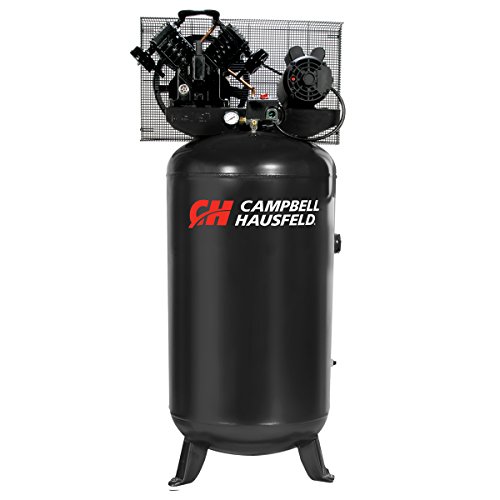
This Campbell Hausfeld unit offers a robust 5 HP motor and an 80-gallon vertical tank. It delivers 140 PSI and 16.0 CFM at 90 PSI, making it suitable for shop tasks that require steady air flow without the higher capacity of a 120-gallon unit. The vertical design optimizes floor space in smaller shops while maintaining reliability with a cast iron two-cylinder pump. It’s a practical option for environments that need substantial air output but have limited floor area.
Key considerations include space constraints, duty cycle, and the balance between tank size and pump capacity. The unit’s single-stage design is generally easier to service but may require more frequent rest periods for continuous, heavy use.
Pros: Good power for mid-range workloads, compact footprint, reliable cast-iron pump. Cons: Smaller tank limits long continuous runs compared to 120-gallon models.
DEWALT 80-Gallon Vertical

The DEWALT 80-gallon vertical compressor pairs a durable oil-lubricated system with a 4.7 HP motor and a 155 PSI max. With 16.1 CFM at 40 PSI and 14.1 CFM at 90 PSI, it maintains strong airflow for heavy tools. The vertical tank saves space, and the unit’s quieter operation—around 62 dB—helps reduce shop noise without sacrificing performance. This model is a solid choice for pros who need reliable power in a moderately compact footprint.
Important considerations include noise tolerance, maintenance needs (oil-lubricated systems require periodic oil checks and changes), and electrical requirements. The unit’s height may influence where it can be placed, and accessibility for service is a factor in busy shops.
VEVOR 13-Gallon, 2HP Oil-Free

Though smaller, the VEVOR 13-gallon model offers a compact option with a 2HP motor and an oil-free tank. It delivers 4.6 SCFM at 90 PSI and features a quiet operation profile with a durable design intended for higher-frequency, lower-output tasks. The unit is highly portable thanks to integrated wheels and a compact footprint, making it suitable for small workshops or as a portable backup compressor for light-to-moderate jobs.
Key considerations include its lower tank capacity and PSI ceiling, which are limiting for continuous use with heavy air tools. However, its oil-free design reduces maintenance needs and overall operating costs, adding value where space and noise are concerns.
Nessxa 10-Gallon Ultra Quiet

This Nessxa model emphasizes quiet operation with a 70 dB noise profile and a 2HP motor delivering 8.76 CFM at 115 PSI. While it’s a smaller tank, the combination of oil-free design, portability, and dual couplers makes it a good option for automotive work, tire inflation, or light spray applications in a shared workspace. Users should consider the trade-off between tank size and the need for more frequent cycling during extended sessions.
Pros: Ultra-quiet and portable; quick fill times for smaller tasks. Cons: Not suitable for long, continuous use with high-demand tools; limited tank capacity for heavy air tools.
California Air Tools 8010 8-Gallon

The California Tools 8010 is an 8-gallon, ultra-quiet option with a 1.0 HP motor. It runs at a low 1680 RPM for quieter operation and offers 3.10 CFM at 40 PSI and 2.20 CFM at 90 PSI. While not a 120-gallon unit, it is highly portable and well-suited for indoor use, light automotive work, and tasks where space and noise are primary concerns. Its oil-free pump reduces maintenance time and increases reliability in temperature-variant environments.
Considerations center on noise tolerance, task scale, and whether oil-free operation aligns with your maintenance preferences. It’s a practical choice for casual hobbyists or as a lightweight backup for a larger system.
Buying Guide: Key Purchase Considerations
- Tank Size and Duty Cycle: A 120-gallon tank offers extended run times with minimal interruptions. Check the duty cycle (often expressed as a percentage) to ensure the compressor can sustain tool usage without overheating.
- PSI and CFM: Match max PSI and CFM ratings to your most demanding tools. Two-stage units typically provide better efficiency at higher pressures, but require more space and power supply.
- Motor Type and Power: Larger tanks require robust motors and appropriate electrical service. Consider the electrical circuit availability and any needed upgrades for permanent installations.
- Maintenance and Longevity: Oil-lubed designs often deliver longer life with stronger lubrication but require oil management. Oil-free models reduce maintenance but may have different wear profiles.
- Noise and Footprint: Large tanks can be noisy; look for models with quieter operation or sound-dampening features. Floor space and mounting requirements matter for shop layouts.
- Portability vs. Stationary Use: Heavy 120-gallon units are typically stationary. If mobility is a priority, evaluate wheeled carts or modular accessories.
- Brand and Warranty: Reputable brands offer better service networks and longer warranties, which can reduce downtime and maintenance costs over time.
When choosing among these options, consider your primary applications, the number of tools you’ll run simultaneously, and your workspace constraints. A 120-gallon model is a solid backbone for a high-demand shop, but pairing it with a compatible compressor pump and reliable maintenance plan will maximize uptime and productivity.