Best 12 Volt Angle Grinder Options for Small Jobs
Compact 12V angle grinders are ideal for tight spaces, light metalwork, and DIY projects where full-size grinders are unwieldy. The following selections emphasize brushless motors for efficiency, compact design for control, and multiple speed options to match different materials. Each option below highlights key features to help you compare performance, battery life, and ergonomics across popular models from trusted brands.
| Product | Brand | Key Benefit |
|---|---|---|
| Milwaukee M12 FUEL 12V Right Angle Die Grinder | Milwaukee | Powerful 0.3 HP, 3-mode RPM |
| Bosch GWG12V-20SN 12V Max Brushless | Bosch | Five-speed, user-friendly interface |
| BOSCH GWS12V-30N 12V Max | Bosch | Compact, high no-load RPM for fast cuts |
| DEWALT Angle Grinder 4.5 In, 11 Amp | DEWALT | Dust Ejection System, rugged power |
| Bosch Professional 12V System GWS 12V-76 | Bosch Professional | Extremely compact with brushless motor |
Note: The selections focus on 12-volt class tools with circle-brushless designs, suitable for battery-powered projects where weight and maneuverability matter most. Ergonomics, guard adjustability, and battery compatibility are considered to help you choose a model that fits your workflow.
Milwaukee M12 FUEL 12V Right Angle Die Grinder
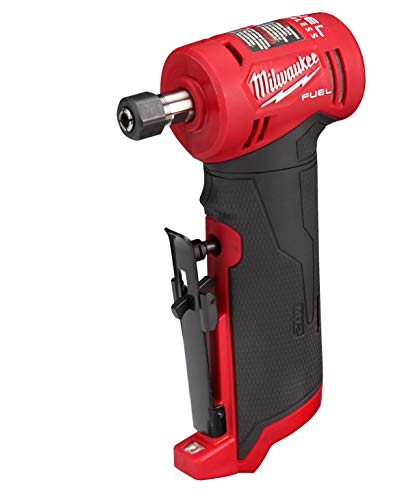
The Milwaukee M12 FUEL right-angle grinder leverages a 0.3 HP motor output, delivering noticeable power for its class. It is designed for right-angle tasks and tight spaces, with 3-mode RPM control to adapt speed to material and task complexity. This model emphasizes a balance of weight reduction and performance, suitable for grinding small fasteners, deburring, and light metal finishing where a corded tool would be impractical.
Key details include a high-power density in a compact package and the ability to switch between modes to optimize material removal and control. The tool is part of Milwaukee’s M12 system, which helps ensure battery compatibility with a broad ecosystem of tools for longer projects. Operators should weigh the trade-off between kick-in power and battery life, particularly on extended sessions.
Bosch GWG12V-20SN 12V Max Brushless Right Angle Die Grinder

The Bosch GWG12V-20SN emphasizes an innovative user interface and five speed options with a variable speed trigger, placing control in the user’s hands across various grinding applications. Its compact design and grip size are tailored for precision work in tight areas, such as metal fittings or corner deburring. The brushless motor enhances efficiency and reduces maintenance, making it a strong choice for pro and serious DIY use where multiple speeds improve material compatibility.
Practical considerations include the intuitive speed status indicators and the ease of switching speeds mid-task. While it excels in agility and control, operators should assess whether the five-speed range aligns with their typical materials and the types of accessories they plan to use. Battery management and ergonomics are central to extended sessions in confined spaces.
BOSCH GWS12V-30N 12V Max Brushless 3 In. Angle Grinder

This Bosch 12V model aims to handle quick cuts in tight spaces with a compact form factor. Its optimized gear structure supports nearly 19,500 no-load RPM, enabling rapid material penetration for threaded rod, conduit, tile, and similar hard-to-reach tasks. The ergonomic build is designed to feel balanced in the hand for precise control, especially when grinders are used for extended periods in construction or renovation scenarios.
Considerations for this grinder include the balance between compactness and the need for higher RPM in demanding tasks. It pairs well with Bosch’s 12V ecosystem, but users should verify accessory compatibility and guard adjustments for individual use cases. The lack of included battery and charger in bare-tool variants may influence overall cost and readiness for immediate work.
DEWALT 4.5 Inch 11 Amp Angle Grinder

DEWALT’s 4.5-inch model delivers robust motor power with an 11-amp rating and an 11,000 RPM motor, optimizing the power-to-weight ratio for efficient grinding. A Dust Ejection System helps protect internal components from debris, potentially extending tool life in dusty work environments. Oversized brushes contribute to longer brush life, reducing maintenance across heavy workloads. The paddle switch design provides straightforward control, with a reliable safety profile for frequent on/off use in professional settings.
Users should weigh the balance of airflow and dust management against the weight and size of the unit for prolonged sessions. While it’s not a 12V system, this DEWALT model remains a common benchmark for compact, high-performance grinders, often chosen when higher power is needed within a compact footprint and when dust management is a priority on job sites.
Bosch Professional 12V System GWS 12V-76

The Bosch Professional GWS 12V-76 stands out for its extremely compact design and brushless motor, designed to support quick disconnections and easy handling on construction sites. Its guard protection can be adjusted with minimal tooling, aiding fast adaptation to different tasks and angles. The high-performance brushless motor contributes to efficient cutting and grinding, especially on metal and masonry-related projects where space constraints are critical.
When evaluating this tool, consider how the tiny footprint translates to control in tight corners and whether the lack of included battery/charger affects your immediate readiness. Users should also assess battery life in relation to their typical workloads and whether the compact, modular Bosch 12V system aligns with other tools in their kit.
Buying Guide: Key Considerations For 12V Angle Grinders
- Power and speed: Look for brushless motors for efficiency and multiple speed settings for different materials. Higher no-load RPM helps with fast cuts but may reduce control on softer materials.
- Size and ergonomics: A compact head and slim grip improve access in tight spaces. Ensure the tool weight is balanced with the battery you plan to use for comfortable extended work.
- Guard and accessory compatibility: Quick-adjust guards and a broad range of compatible discs improve versatility for metal, tile, and wood applications.
- Battery ecosystem: If you already own a brand ecosystem (Milwaukee M12, Bosch 12V, etc.), stay within it to maximize battery interchangeability and charging efficiency.
- Dust management: Models with protective features or dust ejection help prolong tool life in dusty job sites, especially on metal grinding tasks.
- Durability and maintenance: Consider reports of brush life, motor heat, and impact resistance for work in rough environments. A model with longer brush life can reduce downtime.
- Included accessories vs. bare tool: Bare tools are usually cheaper upfront but require you to supply batteries, chargers, and guards separately. Confirm what’s included to avoid hidden costs.
These considerations help balance mobility with performance. For professional tradespeople, selecting a model with robust guard adjustability, effective dust management, and compatibility with existing battery systems yields the best long-term value. For DIY users, prioritizing ease of use, lighter weight, and straightforward maintenance often provides the most practical experience, even if power is modest.