Choosing the right 12-inch table saw blade can dramatically improve finish quality, reduce tear-out, and speed up workload. This guide highlights five strong options across reputable brands, with attention to tooth design, kerf width, and compatibility with common table saws and mitre saws. Whether you’re doing fine furniture work, cabinetry, or hardwood crosscuts, these blades are built to balance clean finishes with durable construction. Below is a quick comparison to help you pick a blade that matches your projects and workflow.
| Product | Tooth Count | Kerf | Arbor | Best For |
|---|---|---|---|---|
| WEN BL1280 | 80 | Thin (1/10″) | 1 inch | Fine finishes on soft and hardwoods |
| DEWALT DWA112100 | 100 | Standard | 1 inch | Ultra-sharp carbide with long life |
| OA-BRES 100T | 100 | Thin kerf | 1 inch | ATB design for smooth cuts |
| WEN BL1200 | 100 | Thin (1/10″) | 1 inch | Ultra-fine finish on woods |
| Diablo D1280X | 80 | Thin kerf | 1 inch | High-density carbide for durability |
Summary notes: The blades above share a common 12-inch diameter and a 1-inch arbor, aligning with most 12″ table saws. Bodies use carbide for durability, with many opting for ATB or fine-finish geometries to minimize tear-out on hardwoods and plywood. When selecting, consider the kerf width (thinner kerf reduces waste and requires less power), tooth count (higher counts yield smoother finishes but cut more slowly on dense stock), and the material build (Hi-Density carbide generally lasts longer under heavy use).
WEN BL1280 12-Inch 80-Tooth Blade
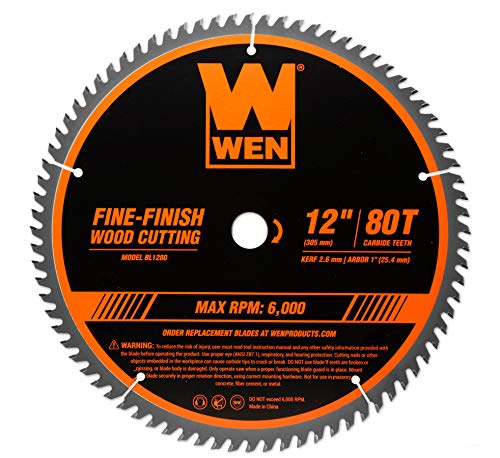
Overview: This blade is designed for fine finishes on a range of woods with a 12-inch diameter and a 1-inch arbor. It operates at up to 6000 RPM and features an ultra-thin 1/10-inch kerf, which helps reduce waste and deliver cleaner cuts. The 80-tooth configuration targets smooth crosscuts, especially in softwoods and harder species where tear-out can be a concern. The blade’s construction aims to balance speed and precision, making it suitable for cabinetry, trim work, and finishing tasks on miter and table saws.
Key features: 12″ diameter, 80 teeth, 1″ arbor, 6000 RPM rating, ultra-thin kerf (2.6 mm). Applications include fine crosscuts and precise rips with minimal chatter. Users often note improved edge quality when finishing plywood and MDF, though feed rate and stock type can influence results.
DEWALT Miter Saw Blade, 12 Inch, 100 Tooth

Overview: This DEWALT blade is engineered for extended life and finer finishes. With 100 teeth, the blade is optimized for clean, snag-free crosscuts and detailed finishing tasks on hardwoods and softwoods alike. The design includes a patented body slot to reduce vibration and an optimized tooth geometry aimed at higher accuracy. It’s a strong choice for cabinetmakers and hobbyists seeking a balance of speed and smoothness on table saws and miter saws.
Key features: 12″ diameter, 100 teeth, 1″ arbor, low-vibration body design, enhanced durability. Best for fine crosscuts where a pristine finish is essential, especially on veneered panels and hardwood stock. Durability and consistent edge quality often stand out in user reviews.
OA-BRES 12-Inch 100-Tooth ATB Blade

Overview: The OA-BRES blade uses an alternating top bevel (ATB) tooth design, offering crisp, clean cuts with a focus on finish quality. The blade’s 100 teeth pair with a 1-inch arbor to produce smooth crosscuts on both hardwoods and softwoods. It is crafted for durability with a robust alloy steel core and chrome-plated surface to resist corrosion and wear. The thin kerf aids cutting efficiency without sacrificing precision.
Key features: 12″ diameter, 100T ATB, 1″ arbor, chrome-plated surface, 4800 RPM max. Ideal for fine crosscuts and finish work on cabinetry, furniture components, and plywood surfaces where minimal tear-out is critical.
Diablo 12″ 80-Tooth Fine Finish Blade
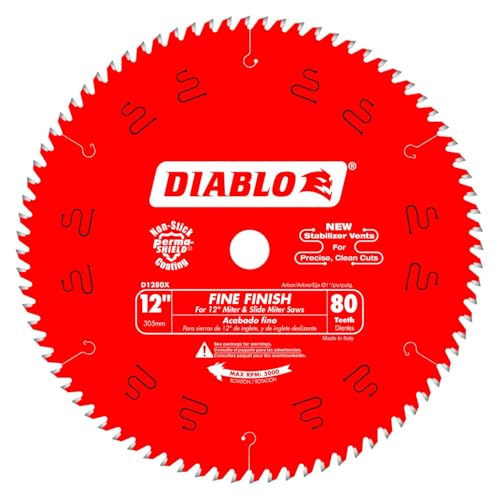
Overview: Diablo’s 12-inch blade is designed for fine finish crosscuts in both hardwoods and softwoods. The 80-tooth configuration leverages TiCo Hi-Density carbide for enhanced durability and cutting performance. The blade is well suited for tasks requiring precise edge quality and minimal tear-out, such as cabinet doors, panel edges, and precise miter joints. It’s a solid option for hobbyists and pro woodworkers who emphasize finish quality.
Key features: 12″ diameter, 80 teeth, 1″ arbor, TiCo Hi-Density carbide. Focused on smooth finishes with reduced tear-out and sustained edge life through demanding workloads.
CMT ITK 12-Inch 80-Tooth Fine Finish Blade

Overview: The CMT ITK blade is designed for fast, extra-clean crosscuts with 80 teeth. It’s compatible with radial arm saws, miter saws, and table saws, supporting both soft and hard wood cutting as well as plywood. The blade’s low kerf and precise grind minimize waste and maximize cut quality for cabinetry and trim work. The 0.110 kerf and 0.087 plate thickness contribute to a balanced cutting experience.
Key features: 12″ diameter, 80 teeth, 1″ bore, 0.110 kerf, 15° hook angle. Suitable for high-precision finishing tasks across various wood types and panel materials.
CMT 96-Tooth Industrial Fine Finish Blade

Overview: This blade focuses on fine finish crosscuts for solid wood, melamine, laminates, plywood, and chipboard. The 96-tooth, 40-degree ATB grind is designed to deliver glass-smooth miter cuts and minimal tear-out. It’s a versatile choice for shops dealing with mixed-material projects, from furniture components to cabinetry surfaces. Its fine finish construction supports cleaner edge lines on varying substrates.
Key features: 12″ diameter, 96 teeth, 40° ATB grind, 1″ bore. Best for fine finish projects requiring top-shelf edge quality across wood and engineered panels.
WEN BL1248 12-Inch 48-Tooth Blade

Overview: This blade features a 12-inch diameter and a 1-inch arbor with a 6000 RPM rating, designed for heavy-duty applications where quick stock removal is needed. The 48-tooth configuration makes it suitable for ripping and rough cuts, providing efficiency for larger stock or dimensional lumber. While not aimed at ultra-fine finishes, it offers robust performance for carpentry and framing tasks where speed matters.
Key features: 12″ diameter, 48 teeth, 1″ arbor, ultra-thin kerf variants, robust construction. Useful for rapid stock removal and initial rip cuts before finishing passes with finer blades.
Buying Guide
What to consider when selecting a 12-inch blade for a table saw:
- Tooth geometry: ATB (Alternating Top Bevel) teeth are common for finish cuts; Flat-Top Grind (FTG) blades are better for ripping; crosscut configurations (fine finishes) minimize tear-out on crosscuts.
- Number of teeth: Higher tooth counts yield smoother finishes but cut more slowly; 80–100 teeth are typical for fine finishes on veneered panels, while 40–48 teeth suit rougher ripping tasks.
- Kerf width: Thin kerf blades save material and reduce power requirements; standard kerf blades are more forgiving on older or less powerful saws.
- Material and coating: Hi-Density carbide blades resist wear and chipping; chrome plating and treated cores extend blade life in dense hardwoods and plywood.
- Arbor compatibility: Most 12″ blades use a 1″ arbor. Confirm your saw’s arbor size and any reducer rings needed for fitment.
- Usage mix: If your shop handles a variety of materials (hardwoods, softwoods, plywood, melamine), consider a blade with a balance of tooth geometry and durability to cover common tasks without frequent blade changes.
- Vibration and stability: Blades with robust carbide teeth and well-engineered bodies reduce chatter and improve cut quality in long crosscuts on table saws.
- Maintenance: Keep blades clean and sharp. Dull blades increase heat, scorch risk, and tear-out. Use blade guards and proper feed rates for best results.
Overview of selection strategies by use case:
- Fine finish crosscuts (cabinetry, trim): 80–100 teeth, ATB or FTG geometry, thin kerf for smooth edges.
- General purpose and detailed joinery: 60–80 teeth with balanced geometry for a mix of cuts.
- Ripping and stock removal: 40–48 teeth with strong body design to resist grab and kerf chatter, sometimes with higher rake angle for aggressive cutting.
- Durability and longevity: Look for Hi-Density carbide, chrome plating, and a robust carbide-to-core bond to extend blade life under frequent use.
Across the selected blades, users generally seek consistent finishes, minimal tear-out, and reliable performance across common table saw tasks. The best blade depends on your primary work: cabinetry and fine furniture benefit from high-tooth, fine-cut blades; framing and rough carpentry lean toward more aggressive, lower-tooth options. Always verify compatibility with your specific saw model and workflow before purchase.