When you need clean, precise cuts on metal with a 12-inch miter saw, choosing the right blade is essential. The following selections are designed for aluminum, steel, and other ferrous or non-ferrous metals, with attention to heat management, tooth geometry, and durability. Each blade is suited for clean finishes, reduced burrs, and longer life under demanding metal-cutting tasks.
Summary of chosen products:
- TOMAX 12-Inch 100 Tooth TCG Aluminum and Non-Ferrous Metal Saw Blade
- FOXBC 12 Inch Saw Blade for Aluminum Non-Ferrous Metal Cutting, 120T TCG
- PRETEC 12BLADEST 12-Inch Blade for Mild Steel, 60-Tooth
- EVOLUTION 12BLADEST Steel Cutting Saw Blade, 60-Tooth
- COMOWARE 12“ Circular Saw Blade, 100T TCG Metal Cutting Blade
TOMAX 12-Inch 100 Tooth TCG Metal Cutting Blade
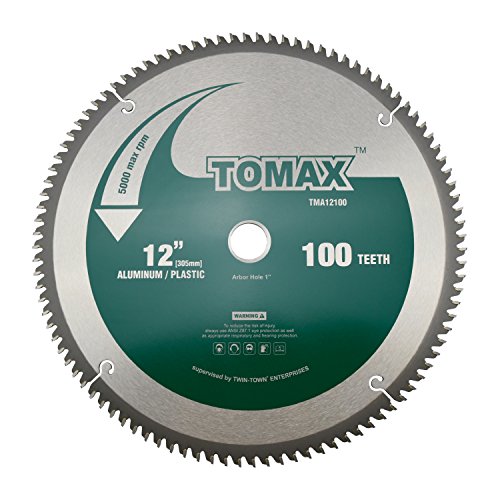
The TOMAX 12-Inch 100 Tooth blade is designed for cutting plastic, aluminum, and non-ferrous metals. Its construction-grade carbide teeth aim to maximize resistance and blade life, while an electrophoretic coating helps minimize rust and corrosion. This blade’s high tooth count supports finer, smoother cuts in non-ferrous materials and light metals, making it a versatile choice for miter saw work where clean edges matter. The 1-inch arbor ensures compatibility with standard 12-inch miter saws. Applications include aluminum extrusions, copper tubing, and other non-ferrous sections commonly encountered on metal fabrication projects.
Key features include:
- 100-tooth TCG design for refined finishes on non-ferrous metals
- Electrophoretic coating to reduce rust and corrosion
- Suitable for cutting plastic, aluminum, and non-ferrous metals
FOXBC 12 Inch Aluminum Non-Ferrous Metal Cutting Blade, 120T

This FOXBC blade is optimized for aluminum and non-ferrous metal cutting with a 120-tooth TCG configuration and a 1-inch arbor. The kerf is 0.095 inches, and the hook angle is -5 degrees, which helps with smoother cutting action and reduced resistance in thin-walled aluminum profiles, copper pipes, and brass plates. The blade is designed to handle thin (up to 1/8 inch), medium (3/32 to 1/4 inch), and thick (3/16 to 7/16 inch) aluminum extrusions and metals, delivering accurate results with less heat buildup and vibration thanks to laser-cut stabilizer vents that minimize noise and improve stability during cuts.
Highlights:
- 120-tooth TCG blade for fine, clean cuts in aluminum
- Laser-cut stabilizer vents to reduce vibration
- 1-inch arbor compatible with standard miter saws
FOXBC 12 Inch Aluminum Cutting Blade, 120-Tooth TCG
This 120-tooth FOXBC blade emphasizes an optimized kerf of 0.095 inches and a -5 degree hook angle to maximize precision on aluminum extrusions and copper components. It is built to resist chipping and wear, extending life in repeated cuts. The blade’s carbide teeth are designed for high-density cutting, and its 1-inch arbor accommodates most 12-inch miter saws, making it a practical upgrade for metal fabrication tasks that demand accuracy and consistency over many cuts.
12BLADEST Blade For Cutting Mild Steel, 12-Inch
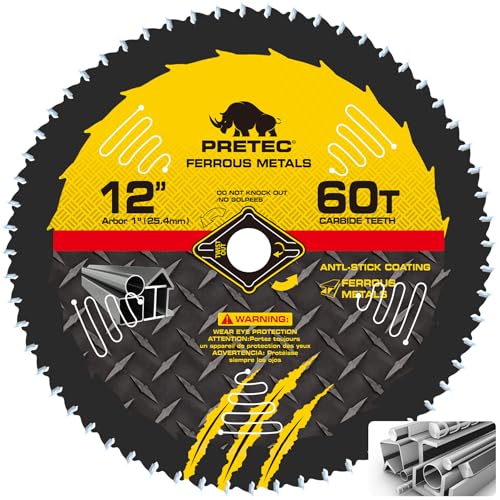
The PRETEC 12BLADEST blade targets mild steel cutting with a 60-tooth arrangement and a 1-inch arbor. It features a durable titanium carbide ceramic alloy composition and advanced brazing technology to resist wear, corrosion, and deformation under heavy use. The ultra-thin kerf of 1.8 mm supports efficient material removal, and the design emphasizes reduced heat buildup and smoother, burr-free finishes when cutting mild steel, angle iron, rebar, and similar ferrous materials. This blade is appropriate for consistent singulation tasks on mild steel components and metal framing.
Additional thoughts: this blade lineage includes a Triple Chip Grind (TCG) tooth geometry, which helps initiate clean scoring and maintain effective material clearance, improving life and performance with ferrous metals. The 1-inch arbor keeps compatibility with most 12-inch miter saws, while the carbide-tipped teeth provide durability under repeated cuts.
Evolution Power Tools 12BLADEST Steel Cutting Blade
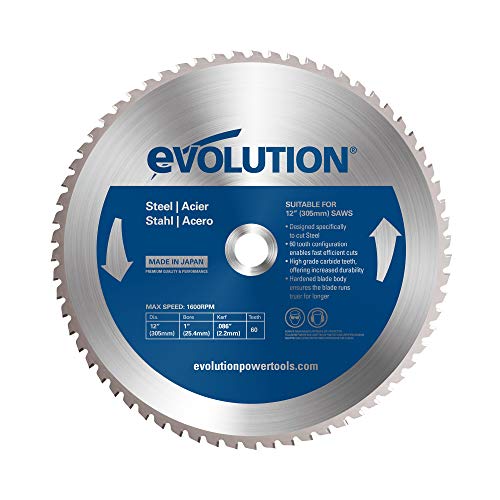
The Evolution 12BLADEST blade is designed for mild steel and ferrous metal cutting with a 60-tooth configuration. It is built to deliver minimal heat, sparks, and burrs, leveraging pre- brazed carbide teeth and Japanese carbide selection for enhanced durability and longevity. The blade is optimized for high material removal while maintaining controlled finishes, making it suitable for chop saw and miter saw applications where steady performance is required. It is not intended for galvanized, hardened, or high-carbon steels, which helps ensure predictable outcomes with typical mild steel profiles.
Features include:
- Designed for mild steel with 60 teeth
- Japanese carbide construction for durability
- Low heat and minimal burrs and sparks
COMOWARE 12” Metal Cutting Blade, 100T TCG

The COMOWARE 12” 100-tooth blade uses a TCG tooth configuration with a 1″ arbor and anti-vibration design. It features a TCT carbide-tipped structure with a 15-degree hook angle to promote precise scoring and efficient material removal for aluminum and other non-ferrous metals. The blade is engineered to minimize vibration and heat generation, supporting smoother finishes and longer life in metal-cutting applications. The anti-stick Teflon coating helps prevent galling and reduces residue on the blade and workpiece.
Key points:
- 100T TCG blade for non-ferrous metal cutting
- Anti-vibration and anti-stick coatings for cleaner cuts
- 1″ arbor standard for compatible miter saws
Buying Guide: Key Considerations For 12-Inch Metal Cutting Blades
Material type: Ferrous steels, mild steel, aluminum, and other non-ferrous metals each respond to different tooth geometry and carbide compositions. For aluminum, blades with more teeth and a refined grind reduce burrs and heat buildup. For mild steel, select blades designed for ferrous metals to minimize heat and ensure smoother finishes.
Tooth count and geometry: Higher tooth counts (e.g., 100–120T) yield smoother cuts but can cut more slowly. Lower tooth counts (60T) cut faster but may produce rougher edges on metals. Triple Chip Grind (TCG) teeth are popular for metal cutting because they balance speed and control, especially when paired with a stable hook angle.
Kerf and heat management: A thinner kerf reduces material waste and energy consumption, but it should be paired with stable teeth and good carbide quality to prevent warping on harder metals. Look for specialized coatings or vent designs that minimize heat buildup and vibration during prolonged cuts.
Arbor compatibility: Most 12-inch blades use a 1-inch Arbor. Verify compatibility with your miter saw’s arbor size and fastening method to avoid unsafe fit or wobble during cutting.
Durability and coatings: Coatings such as anti-rust or anti-stick can extend blade life when cutting metals prone to sticking or galling. Carbide-tipped teeth provide durability for repeated cuts, particularly in ferrous metals where heat and wear are common concerns.
Application scope: Some blades are optimized for non-ferrous materials (aluminum, copper) and others for ferrous metals (mild steel). If your work includes mixed metals, consider a blade designed to handle both with predictable results and minimal burrs.
Prices and availability: While not discussing specific prices, consider value based on expected life, performance, and your typical workload. High-quality blades with stable performance across several cuts can reduce downtime and improve project efficiency.