Best 100 Hp Air Compressor for Heavy-Duty Projects and Pros
Finding the right air compressor for heavy-duty tasks means balancing power, reliability, and maintenance needs. The following five models are the most relevant from the provided list for high-performance, large-scope projects. Each option is evaluated on pump strength, tank size, noise levels, and overall durability to help you choose the best fit for demanding shop work or professional use. Below is a quick summary table of the selected products.
| Product | |||
|---|---|---|---|
| Ingersoll Rand – 7.5 HP Two-Stage | Ingersoll Rand | 80-gallon | High PSI, continuous duty, durable cast iron, long pump life |
| Campbell Hausfeld 80 Gallon Vertical | Campbell Hausfeld | 80-gallon | 2-cylinder cast iron pump, 140 max PSI, strong flow |
| Klutch 60-Gallon Single-Stage | Klutch | 60-gallon | 3.7 HP motor, 135 PSI max, reliable oil-lubed pump |
| California Air Tools 10020C | California Air Tools | 10-gallon | Ultra quiet, oil-free, low RPM |
| Ingersoll Rand Twin-Stack P1IU-A9 | Ingersoll Rand | 4-gallon | Portable, low 79 dBA, dual couplers |
Klutch 60-Gallon Single-Stage Vertical Air Compressor
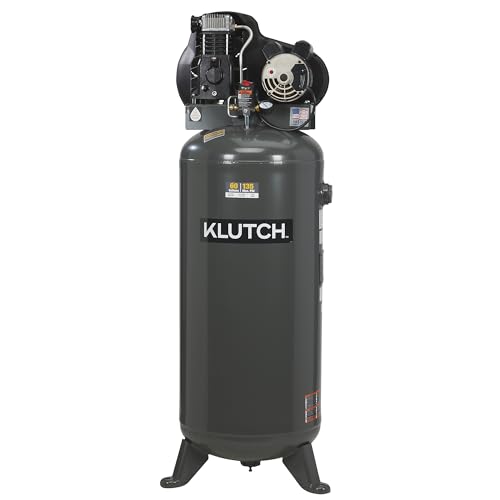
Powerful performance with a robust 3.7 HP dual-induction motor delivers 9.3 CFM at 90 PSI and a maximum of 135 PSI, ensuring consistent output for demanding tasks. The durable cast iron single-stage oil-lubricated pump with stainless steel valves enhances reliability for long-term use. This unit is well-suited for shop environments needing higher airflow without excessive noise or maintenance.
CAMPBELL HAUSFELD 80 Gallon Vertical Air Compressor
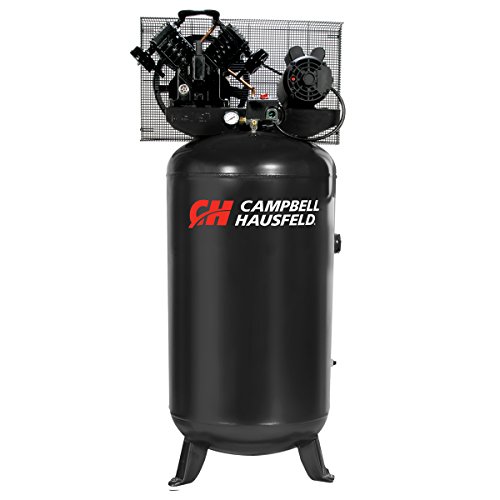
This 80-gallon vertical compressor is designed for heavy-duty tasks with a 5 HP motor, delivering up to 140 PSI and 16.0 CFM at 90 PSI. A two-cylinder cast iron pump provides durability and efficiency, making it a reliable option for extended shop sessions and continuous tool use. The vertical tank design helps save space in compact workshops.
Ingersoll Rand 7.5HP Two-Stage Air Compressor

A high-capacity system featuring a 7.5 HP two-stage design, this unit provides 175 psi maximum operating pressure with an 80-gallon ASME receiver. It’s engineered for continuous-duty operation, supporting demanding applications with a focus on long-term performance. Individual cast cylinders and simplified maintenance contribute to ease of service over time.
California Air Tools 10020C Ultra Quiet

Although smaller in tank size, this model emphasizes quiet operation with 70 dBA, driven by a 2.0 HP motor at 1680 RPM. It uses an oil-free dual-piston pump designed for over 3,000 hours of life and cleaner air, making it suitable for indoor use and environments where noise reduction is critical. The airy performance covers light-to-moderate tasks with energy efficiency.
Ingersoll Rand Twin-Stack P1IU-A9 Portable
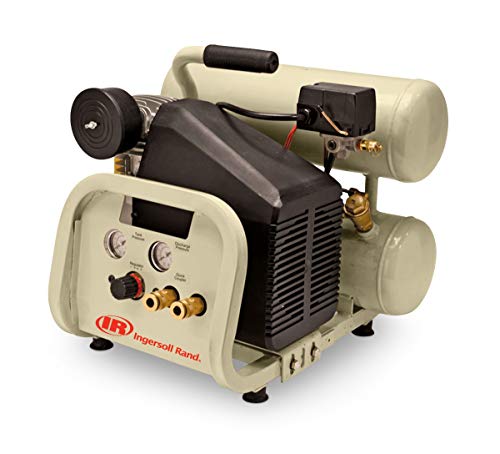
Designed for portability and ease of use, this model sits on a compact twin-stack framework with a light footprint. It offers a low noise profile (approximately 79 dBA), a maximum of 100% continuous duty at 3.2 CFM @ 90 psi, and dual quick-disconnect couplers to run multiple tools simultaneously. This makes it ideal for mobile professionals and DIY projects requiring mobility without sacrificing performance.
Buying Guide
- Power and duty cycle: For high-demand projects, look for machines with continuous-duty ratings and higher horsepower. Two-stage units and larger tanks support longer runtimes between refills.
- Tank size versus footprint: Large tanks (60–80 gallons) deliver longer tool runs, but require more space. Vertical designs help optimize shop space when floor area is limited.
- Airflow and pressure: CFM ratings at operating PSI indicate real-world output. Higher PSI can support tools with demanding air requirements but may consume more energy or wear components faster.
- Pump type and maintenance: Cast iron oil-lubed pumps tend to be durable for heavy use but require regular oil maintenance. Oil-free pumps reduce maintenance but may have different longevity characteristics.
- Noise considerations: Indoor use and noise-sensitive environments benefit from low dBA ratings. Oil-free and ultra-quiet designs often excel in noise reduction.
- Portability vs. stationary use: Portable units are ideal for job sites or small shops; stationary tanks are better for continuous, high-demand workflows.
- Ease of service: Access to replacement parts, pump design (single-stage vs. two-stage), and component layout influence long-term maintenance costs and downtime.
- Safety features: Look for thermal protection, safety valves, and reliable shutdown mechanisms to minimize risk during prolonged operation.
The models above span a range of configurations—from high-capacity, stationary systems to portable, quiet-duty units. When choosing, align the compressor’s airflow, tank size, and duty cycle with the specific tools you plan to run, the space you have, and how often you’ll use the compressor in demanding sessions.