Answering the top buyer question: these fiberglass push pull rods offer a low-friction, flexible way to pull electrical wires through walls and conduit with minimal snagging. They’re ideal for electricians, DIY homeowners, and professionals who need trusted wire pulling tools for tight spaces, turns, and long runs. The list below highlights five reliable kits with varying lengths, attachments, and durability to fit different projects and skill levels. A quick buying table follows to compare core specs at a glance.
| Product | Length | Best For | Key Benefit |
|---|---|---|---|
| FTIHTRY 45FT Kit | 45 ft | Long runs, multiple connections | Extended reach with 32 rods and 8 attachments |
| FTIHTRY 14FT Kit | 14 ft | Smaller spaces, quick jobs | Compact, easy to store case |
| Jameson 24′ Kit | 24 ft | Turns and bends | High strength, modular assembly |
| KOOTANS 50FT Kit | 50 ft | Visible tool tracking | Bright yellow glow rods, long reach |
| FTIHTRY 22FT Kit | 22 ft | Balanced length | Mid-range option with multiple attachments |
FTIHTRY 45FT Fiberglass Running Wire Kit
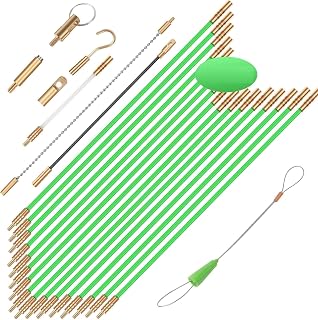
This 45-foot fiberglass fish tape kit provides long reach with 32 rods (each 1.4 ft) and eight attachments. Its low-friction design helps the tape glide through conduits without binding at turns or joints. The set emphasizes flexibility, rigidity, and insulation for durable performance in electrical work. Extension rods connect to achieve the full length. Best for electricians tackling long runs and complex routing.
Who this is for: professionals or DIYers planning extended pulls through walls or conduits. Why selected: the maximum length and diversified attachments support a wide variety of pulling tasks. Limitation: avoid forcing the rod if resistance is felt, to prevent bending or damage.
FTIHTRY 14FT Fiberglass Kit With Attachments

This 14-foot fiberglass kit includes 10 rods (1.4 ft each) and eight attachments, plus a plastic storage case. Its low-friction design reduces binding at turns and joints, making it suitable for smaller spaces or quick pulls. A green fish tape fastener helps keep wires connected during pulling. Best for tight spaces and lighter duty projects.
Who this is for: homeowners or techs working in compact areas. Why selected: compact kit with convenient case and attachable pieces. Caution: ensure one end is properly secured before pulling to avoid slips.
Jameson 7-36-23T Fiberglass Glow Rod Kit

Jameson’s kit includes three 6-foot rods and two 3-foot rods, assembling into 24 feet. It emphasizes high strength and flexibility to handle turns without breakage, aided by durable steel threaded ferrules that allow length customization. Best for crews needing longer, modular segments with reliable grip at joints.
Who this is for: professional electricians and industrial installers. Why selected: modular assembly with robust ferrules supports varied routes. Caution: heavier ferrules may require more careful handling in tight spaces.
KOOTANS 50FT Fiberglass Kit

This 50-foot kit uses high-quality fiberglass with 36 rods (1.4 ft each) and a 0.16 inch diameter. It features bright yellow rods for easy visibility, plus wear-, corrosion-, and oxidation-resistant properties. The kit can be extended to 50 feet by joining rods and includes a blend of attachments for varied pulling needs. Best for visibility and longer runs in challenging layouts.
Who this is for: technicians who value visibility and sturdy, long-reaching tools. Why selected: longest included length with bright coloring aids locating the rods. Limitation: avoid bending beyond recommended radii to prevent rod damage.
FTIHTRY 22FT Fiberglass Kit
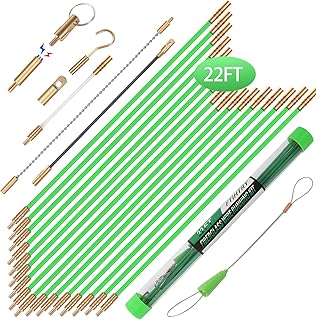
The 22-foot kit provides a middle ground between compact and long-reach solutions. It includes 16 rods (1.4 ft each) and eight attachments, with a lifting capability through turns and joints. Best for medium-length runs and mixed layout tasks where space and length balance matter.
Who this is for: contractors and competent DIYers needing flexible lengths. Why selected: balanced length with a strong set of attachments. Caution: avoid over-tightening with strong pulls to protect joints.
Buying Guide
What length do you actually need? Length determines how many rods you’ll connect and how far you can pull without reloading. For long runs through walls, choose 45 ft or 50 ft kits; for smaller spaces, 14 ft or 22 ft options may be more practical.
Attachments and versatility matter. Look for a kit with a full set of attachments (threaded brass connectors, magnetic connectors, eyelet rings, hooks, and pull rods). Attachments determine how you connect to wires, hooks, or fixtures mid-pull.
Material quality and durability. Fiberglass offers low friction and insulation, reducing binding and heat transfer. Green or bright color coding can help with visibility in complex runs. Consider wear resistance and corrosion resistance for longevity.
Storage and portability. A plastic storage case or compact carrying solution helps with organization and transport between jobsites. If you are moving between rooms or apartments, a lighter case can improve convenience.
Practical tips. Do not force rods through tight turns or joints; instead, maintain steady tension and guide the rods as you push. When extending, connect rods securely to avoid unthreading or wobble during pull.
FAQ
- What is a fiberglass push pull rod used for? It is used to pull electrical wires through conduits, walls, and tight spaces with reduced friction and controlled handling.
- Which length is best for my project? Long runs near walls or across rooms benefit from 45 ft to 50 ft kits; smaller spaces or quick tasks suit 14 ft or 22 ft kits.
- Are attachments important? Yes. Attachments such as brass connectors, magnetic connectors, and hooks expand pulling options and improve connection stability during pulls.
- Can I extend the rods beyond their listed length? Yes, by connecting rods end-to-end; follow manufacturer guidance to avoid over-extension and potential binding.
- Is visibility important for locating rods? Bright or colored rods help distinguish the rod set from wires and make tracking easier in complex installations.
- What precautions should I take when using these kits? Avoid forcing rods; use steady, guided pulls and inspect joints and ferrules regularly to prevent damage.