If you need a reliable extra wide miter box for large or intricate woodworking projects, this guide highlights five top options. These boxes are suited for DIYers, hobbyists, and professionals tackling baseboards, coving, framing, or moulding with wider workpieces. Each product is evaluated for stability, angle accuracy, and ease of use. A quick buying table follows to help compare key attributes at a glance.
| Product | Best For | Notable Strength | Potential Limitation |
|---|---|---|---|
| Draper Mega Mitre Box | Large-scale projects, coving, and wide boards | Durable recycled plastic; wide routing capacity | Bulkier footprint than compact boxes |
| Miter Box and Saw Set (12 inch) | Everyday tasks with versatile angles | Four cut angles; included reinforced saw | Not specifically “extra wide”; best for mid-size stock |
| CRAFTSMAN Mitre Saw Box CMHT20600 | Accurate miters with built-in safety stop | Cam pins and honeycomb base for secure cuts | Limited width compared to specialist wide boxes |
| Konvixon 4-in-1 Miter Box Set | Multi-material, light- to moderate-duty tasks | Five blades and four saw options for varied materials | Not for heavy-duty, thick stock |
| HAUTMEC 14 Inch Clamping Miter Box | Framing, trim, and moulding with clamps | ABS construction; built-in angles; anti-slip clamps | ABS is durable but may feel less premium than metal |
Draper Mega Mitre Box For Large Angles

Features: Durable recycled plastic construction; accepts 45°, 60°, and 90° angles with large-scale capacity. Includes two countersunk holes for secure bench mounting. Best for: woodworkers handling large coving, baseboards, or long stock where width and stability matter. Limitation: bulkier design may require more bench space. Use when the job demands sturdy, wide-angle cutting and repeatable accuracy.
Miter Box And Saw Set With 12-Inch Box
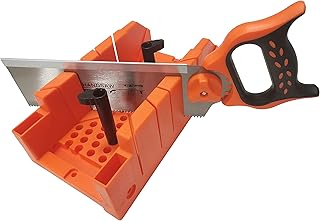
Features: Cam-shaped pins for secure positioning; vertical slots offer 45°, 22.5°, and 90°; bevel at 45°. Best for: daily, light- to mid-duty projects with a need for multiple angle options in a compact package. Better for: small to mid-size trim work rather than very wide boards. Caution: not optimized for very thick stock or heavy-duty framing.
CRAFTSMAN 12-Inch Mitre Saw Box
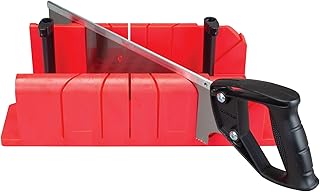
Features: Cam-shaped pins for accuracy; cuts 45° and 90° miters and 45° and 22.5° for octagonal shapes; built-in saw stop to prevent over-cutting. Best for: users seeking integrated saw box plus stop mechanism for dependable repetitive cuts. Choose this if you prioritize guarding against cutting into the box. Limitation: not explicitly marketed as an extra-wide model.
Konvixon 4-In-1 Miter Box Set

Features: Includes Japanese pull saw with dual-teeth; multiple blades for wood, metal, and plastics; 4-in-1 design with miter box and sawing tools. Best for: light- to mid-duty projects across wood and soft materials, including trim work and small frames. Better for: versatile materials. Caution: not designed for heavy lumber or thick stock; treat as a light-duty option.
HAUTMEC 14 Inch Clamping Miter Box
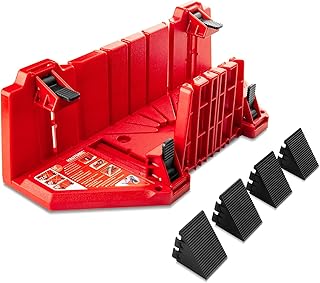
Features: Durable ABS construction; built-in 22.5°, 45°, and 90° cutting guide; four anti-slip clamps; base has four fastening holes for bench mounting. Best for: framing, moulding, and trim work where a stable, clamp-based setup is beneficial. Choose this if you want reliable clamping during precise cuts. Limitation: ABS may not feel as premium as metal under heavy-duty use.
Buying Guide: Key Purchase Considerations
- What stock width can you handle? If you regularly work with wide boards or coving, prioritize larger, stable bases and wide slots that accommodate broader stock.
- Do you need clamps or a stop? If practicality matters, choose a box with anti-slip clamps or a built-in stop to prevent over-cutting.
- What materials will you cut? Light-duty boxes with multi-material blades suit trim and plastics, while heavy-duty boxes with robust bases are better for hardwoods and molding stock.
- Is portability a factor? For small shops or transport, consider compact models, but be mindful of max cut width and stability.
- How important are angle options? Look for boxes offering common angles (45°, 90°, 22.5°) and 60° where needed for coving and frames.
Frequently Asked Questions
- What is an “extra wide” miter box best used for? It best suits wide workpieces like large baseboards, coving, and molding where stability and broader cutting slots improve accuracy.
- Can I use a standard miter box for wide stock? It may work for thinner pieces but can be unstable or insufficient for very wide boards.
- Do all miter boxes include a saw? Some sets include a saw, while others are sold as boxes only. Check product specifics before buying.
- Are clamping boxes more accurate than unmounted ones? Clamps reduce movement, increasing repeatable accuracy on long or complex cuts.
- Which angles are most common for trim work? 45°, 90°, and 22.5° are widely used; 60° is common for coving and certain moldings.
- What maintenance is needed? Keep slots clean, inspect pins for wear, and ensure clamps are secure for consistent results.