If you’re looking for the best saws to cut molding cleanly and accurately, you’ll want tools designed for precise miter cuts, comfortable handling, and stable workpiece control. This guide highlights five top options that are well suited for molding work, from compact hand saws to powered miters and versatile multi-tools. Each pick targets different buyer needs—compact hobby projects, professional trim work, or multi-material tasks—so you can choose based on your project size and preferred workflow. A quick buyer’s table follows to compare core features at a glance.
| Product | Best For | Key Benefit |
|---|---|---|
| RUITOOL Japanese Hand Saw | Fine finish cuts, flush work | Thin, flexible blade for flush cuts |
| Metabo HPT 10-Inch Miter Saw | Standard molding tasks, large work | High power, precise miter angles |
| GARTOL Miter Shears | Quick cuts for soft molding materials | Adjustable angles, spare blades |
| CRAFTSMAN Mitre Saw | Accurate miters on thicker materials | Cam pins and honeycomb base for stability |
| Seesii Mini Circular Saw | Extended material versatility | Laser guide, multi-material blades |
RUITOOL Japanese Hand Saw 6″ Ryoba

Best for: precise flush cuts and finish work when molding sits tight in corners or against walls. The 6″ SK5 blade is designed for fine cuts with high flexibility, which helps minimize tear-out in delicate moldings. This saw’s pull-tooth design offers clean trenches and minimizes effort on small profile work. The blade hardness, up to HRC60-63, supports repeated use with stable edge retention. Caution: not ideal for hardened or very dense materials where a heavy saw would be required.
Metabo HPT 10-Inch Miter Saw

Best for: professional or serious hobbyists needing powerful, accurate miters on larger molding pieces. This saw delivers up to 5,000 RPM without load and built-in accuracy features like an improved miter scale and secure clamping. Its 24-pound weight offers portability without sacrificing power, making it a solid choice for on-site trim work. Limitation: while portable, it’s not as compact as some mini tools, so consider storage space in small shops or vans.
GARTOL Miter Shears

Best for: quick, clean cuts in lightweight molding materials, such as PVC trunking or softwood quarter rounds. The 45°-135° adjustable angles and included spare blades make it easy to outfit for multiple profiles. The SK5 steel blade ensures sharpness and longevity. Caution: not suitable for hardwoods or thick trims beyond its 0.4-inch maximum cut thickness.
CRAFTSMAN Mitre Saw CMHT20600

Best for: stable, accurate miters on a wider range of molding materials. The cam-shaped pins and honeycomb base stabilize the workpiece, enabling precise cuts at multiple angles, including 45°, 90°, and auxiliary angles. A built-in saw stop adds safety against deep cuts into the mitre box. Caution: this tool is best used with stationary setups or sturdy stands for maximum accuracy.
JORGENSEN Oscillating Tool (70800)

Best for: versatile edge work or trimming around molding profiles where a straight blade isn’t ideal. The 5° oscillation angle and 16-piece accessory kit cover flush cuts, trimming, and detail work on a range of materials. Caution: oscillating tools can require more precise control for ultra-narrow moldings; choose a model with a comfortable grip and low vibration.
Seesii Mini Circular Saw with Laser
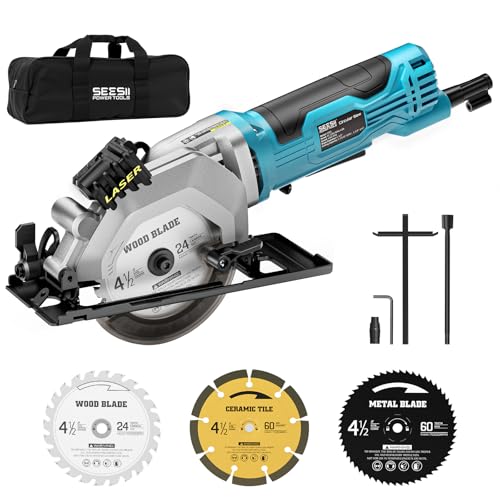
Best for: compact, multi-material cutting with improved visibility. The laser guide helps ensure straight molding cuts, and the included 3 blades expand versatility to wood, soft metal, tile, and plastic. Caution: smaller cutting depth means limit on thick moldings or dense composites; use for lighter profile work or flush cuts where depth isn’t a critical factor.
Buying Guide: Key Considerations For Selecting Saws For Molding
- Material compatibility: Choose tools with blades suited for wood, soft woods, PVC, or composites that you encounter in molding projects.
- Cut precision: For tight corners and flush joints, prefer saws with fine teeth, high blade hardness, and stable bases or guides.
- Angle versatility: Molding work often requires precise 45° and 90° cuts; select tools with reliable angle scales and repeatable settings.
- Portability vs stability: Hand saws and mini tools offer portability; larger miters provide power and stability for long runs. Match to job site access and workspace size.
- Blades and accessories: Spare blades, guides, and clamps extend cutting options; consider included accessories when evaluating value.
- User experience: Ergonomic handles and low-vibration designs reduce fatigue for extended molding sessions.
Frequently Asked Questions
- What is the best saw for moldings around tight corners?
RUITOOL 6″ Japanese hand saw offers flush-cut capability ideal for tight corners; for powered options, the Metabo HPT miters provide accurate angles with a strong clamp system. - Do I need a dedicated miter box or a miter saw?
A miter saw provides quicker, repeatable angled cuts for longer molding runs, while a miter box with a handsaw can be sufficient for small, precise jobs. - Are miter shears good for plastic and softwood trim?
Yes, GARTOL miter shears excel at quick, clean cuts in PVC and softwood—ideal for lightweight molding profiles. - Can a mini circular saw substitute for a full-size saw?
For compact spaces and light-duty molding, Seesii mini saws with laser guides are effective; for larger or thicker trim, a full-size saw is preferred. - What should I look for in a good molding saw?
Look for accuracy features (miter scale, locking clamps), blade quality, blade compatibility with your material, and ergonomic comfort. - Is a laser guide essential?
Not essential, but it helps with straight cuts and reduces marking errors, especially on long molding runs.