Whether you’re renovating a bathroom, updating kitchen tile, or finishing a minor backsplash fix, choosing the right grout and mortar removal tool saves time and protects surrounding surfaces. This guide highlights five reliable options well-suited for homeowners and DIY pros alike. Each tool excels in different scenarios—from tight corners to broad removal jobs—so you can pick the best fit for your project and hand comfort. The quick reference table below helps you compare core strengths at a glance.
| Product | Best For | Key Benefit |
|---|---|---|
| Coitak Tile Grout Saw Angled Grout Saw | Hard-to-reach grout lines | Angled head for tight spaces |
| Goldblatt Grout Removal Tool with Replacement Carbide Tip | Detail cleaning and corners | Carbide tip for durability |
| Saker Silicone Caulking Tool 3-in-1 | Caulk removal and seam finishing | Three-in-one design with stainless steel head |
| REETREE Grout Removal Tool | Versatile grout removal across joints | Eight sharp edges for efficiency |
| Firecore SDS Plus Floor Scraper | Heavy-duty floor and large-area removal | Wide blade with SDS-Plus compatibility |
Coitak Tile Grout Saw Angled Grout Saw
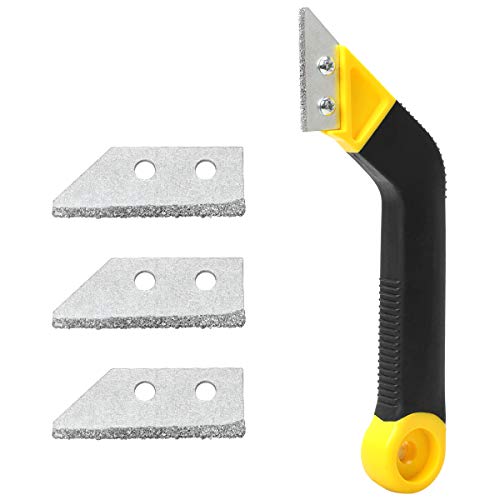
The Coitak grout saw uses a durable blend of plastic and hard metal, paired with a “diamond style” blade that minimizes effort during grout removal. The angled head targets tight corners and recessed joints that a standard straight tool might miss. An 8-inch ergonomic handle reduces hand fatigue during longer sessions, making it a practical choice for homeowners tackling bathroom and kitchen tiling projects. Best for: small to mid-size jobs with awkward angles where precision matters. Limitation: the plastic body is less suited for extremely heavy-duty demolition.
Goldblatt Grout Removal Tool with Replacement Carbide Tip

This tool centers on durability and detail. It features a triangular carbide tip with a sharp edge and corner designed to cut through grout efficiently while protecting tile edges. The included carbide tip replacement extends service life, and the connection between the tip, rod, and handle is engineered for stability. Best for: detail work in corners and narrow joints where precision is essential. Limitation: use cautiously to avoid scratching adjacent tiles.
Saker Silicone Caulking Tool 3-in-1

The Saker 3-in-1 tool combines an internal angle scraper, a flat angle scraper, and a silicone smoother. The stainless steel blade handles old caulk effectively, while the silicone smoothing pads help achieve a clean, professional seal. Best for: caulk removal and seam finishing in bathrooms and kitchens. Limitation: not primarily a grout removal tool, but very effective for pre- and post-removal work.
REETREE Grout Removal Tool
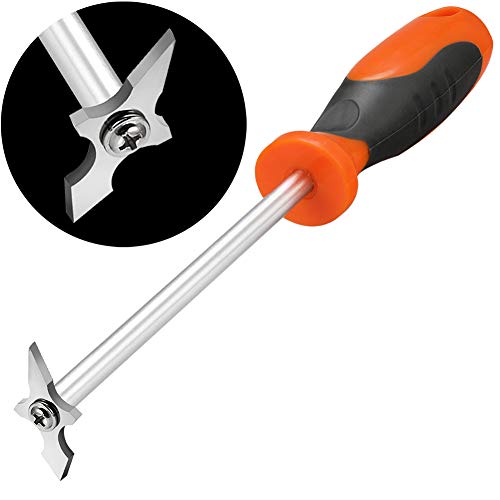
REETREE emphasizes versatility with eight sharp scraping edges across a single tool, designed to remove grout, thinset, mortar, caulking, and surface grime from tile joints and seams. It fits various tile seam widths and deeper joints for broad removal tasks. Best for: multi-angle scraping and large grout-lines. Limitation: may require some manual repositioning to utilize all edges effectively in small corners.
Firecore SDS Plus Chisel 3 Inch Wide

This chisel is designed for SDS-Plus rotary hammers, offering an angled working end and a hardened steel alloy for robust material removal. It is optimized for tile and thinset cleanup as part of larger renovation projects and pairs well with heavy-duty drills. Best for: quick, substantial material removal in tile and cement beds. Limitation: not ideal for fine, detail grout work in tight corners.
Goldblatt Trim Removal Tool

The Goldblatt trim removal tool is built for baseboards and trim work but doubles as a precision pry for tile-edge work. It uses a wide contact surface with a wedged center to reduce surface damage while lifting trim and related fixtures. Best for: precise removal without wall or surface damage. Limitation: not a dedicated grout removal tool, so use in combination with a grout-specific blade when needed.
Firecore SDS Plus Floor Scraper

Firecore’s floor scraper uses a 5-inch wide blade and SDS-Plus shank for heavy-duty material removal, including tile, mortar, and adhesives. The kit includes spare bolts and locknuts for secure blade attachment and ongoing reliability in demanding projects. Best for: large-area tile removal and cement-based substrates. Limitation: heavier tool requires more physical effort and appropriate drill compatibility.
Buying Guide: Key Considerations for Tile, Grout, and Mortar Removal
Tile projects vary widely in scale, joint width, and surface makeup. When selecting a grout removal tool, consider the following questions to guide your choice:
- What is the joint width and tile spacing? Narrow joints benefit from precision blades with good corner access, while wide joints may use broader blades for faster coverage.
- Is this a detailed, precision task or a demolition job? For detail work in corners, carbide tips and angled blades perform better; for bulk removal, floor scrapers and diamond-grit blades deliver efficiency.
- Will you use this tool with a drill or hammer? SDS-Plus compatible tools require compatible drills; ensure you have the right power tool to maximize performance.
- What surfaces need protection? Tools with cushioned or ergonomic handles reduce fatigue, and tools with protective tips minimize tile edge damage.
- Is replacement or maintenance available? Carbide tips or replaceable blades extend tool life and make ongoing projects more economical.
FAQ
- Q: What’s the best tool for tight grout lines? A: Angled grout saws and carbide-tip tools excel in narrow joints and corners, where straight blades struggle.
- Q: Do I need a power tool to remove grout? A: For most jobs, hand tools are sufficient, but larger areas or thick mortar benefit from SDS-Plus floor scrapers or rotary hammer compatibility.
- Q: How do I prevent scratching adjacent tiles? A: Use edging guards or choose tools with a softer backing and maintain a steady pressure to avoid slippage.
- Q: Can I reuse any replacement blades? A: Replacement carbide tips and blades extend tool life; follow manufacturer guidance for compatibility and secure mounting.
- Q: Are there tools suited for both grout removal and caulk removal? A: Some 3-in-1 tools cover caulk removal and finishing, but for pure grout removal, pair them with dedicated grout blades for best results.
- Q: How do I protect myself during removal projects? A: Wear eye protection, gloves, and a mask if dust is present; keep your work area well-ventilated.