Answering the question: for large-volume or heavy-duty concrete work, a 4 to 5+ cubic foot electric cement mixer is the right tool. This guide highlights five capable models suited for construction sites, farms, or DIY projects that require reliable bulk mixing. The best pick depends on mobility, drum capacity, and tilting features, so each option targets different job profiles such as on-site heavy work, easy transport, or quick setup. The buyer types best served by these picks include professional contractors, small- to medium-scale builders, and DIY enthusiasts upgrading from handheld mixing.
Summary table of selected products:
| Product | Drum Capacity | Key Strength | Best For | Notes |
|---|---|---|---|---|
| SPECRAFT Electric Cement Mixer, 4.9 Cu.Ft Portable Concrete Mixer | 4.9 cu ft | Wheelbarrow-style transport | Site teams needing easy mobility | Low-profile drum with 22.4″ opening |
| SPECRAFT Electric Cement Mixer, 4.9 Cu.Ft Stand and Wheels Concrete Mixer | 4.9 cu ft | Stand with wheels and foot-pedal tilt | Controlled tilting and stable operation | 550W motor, convenient controls |
| YARDMAX YM0115 4.0 Cu. Ft. Concrete Mixer | 4.0 cu ft | High durability, easy cleaning | Lightweight but sturdy for quick jobs | IP45 motor/gear box washdown |
| LDHTHOPI 5.3 Cu.Ft Portable Concrete Mixer | 5.3 cu ft | 360° tilting and sturdy build | Heavy-duty mixing with easy dumping | 450W motor; robust steel |
| BILT HARD 4 Cu.Ft Electric Cement Mixer | 4.0 cu ft | Durable poly drum | Small to mid-size projects with mobility | Hardened drum with rust resistance |
SPECRAFT Electric Cement Mixer, 4.9 Cu.Ft Portable Concrete Mixer

The SPECRAFT 4.9 cu ft portable mixer uses a high-torque 375W motor capable of 29.5 RPM, making it suitable for concrete, mortar, and stucco. Its wheelbarrow-style frame supports easy transport around a jobsite or farm, reducing operator strain. The large 140L drum with a 22.4″ opening supports consistent mixing of heavy or dry materials without clogging. This model is best for teams that need mobility and straightforward operation at multiple work zones, including agricultural settings or small commercial projects.
Who it’s best for: contractors and farm workers who require quick relocation between work areas and a robust, wheeled mixer for frequent transfers. Caveat: the wheelbarrow design may be less stable on uneven ground without proper support.
SPECRAFT Electric Cement Mixer, 4.9 Cu.Ft Stand and Wheels Concrete Mixer
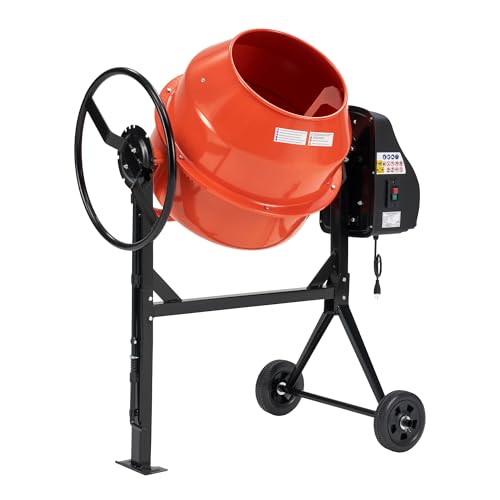
This vertical mixer variant adds a stand, wheels, and a foot-pedal design for controlled tilting and pouring. A one-button start and a sealed drum minimize leaks, while the large 4.9 cu ft drum maintains efficient batch sizes. The stand-wheels setup suits sites where height-adjustable pouring and stable, upright operation are priorities. It is a clear choice for operators who value precise tilt control and reduced spill risk during material transfer.
Who it’s best for: crews needing a stable, controlled pour with easy tilt and spill prevention. Limitation: the vertical design may be less portable in tight spaces compared to wheelbarrow models.
YARDMAX YM0115 4.0 Cu. Ft. Concrete Mixer

The YARDMAX YM0115 emphasizes ease of maintenance with a solid steel drum, IP45 wash-down certified motor and gear box, and a factory-assembled drive box for quick setup. The one-person assembly can be completed in under thirty minutes, making it suitable for individuals or small crews who need a straightforward mixer with reliable cleaning and durable construction. It is best for simple, fast-to-deploy projects on smaller sites.
Who it’s best for: solo operators or small teams seeking a durable, easy-to-clean mixer with quick setup. Caution: slightly smaller drum capacity than the 4.9 cu ft models means more batches for larger projects.
LDHTHOPI 5.3 Cu.Ft Portable Concrete Mixer

The LDHTHOPI model offers a 5.3 cu ft drum with a 750W (1 HP) copper motor running around 30 RPM. A spring-assisted tilting frame provides smooth 360° rotation for even mixing and straightforward dumping. The build emphasizes a rugged steel frame with powder coating for rust resistance, plus a cast-iron toothed ring for durability. This mixer suits larger batches where tilt ease and long-term durability are important.
Who it’s best for: mid- to large-scale projects that require faster batching and easy dumping. Limitation: heavier unit may be harder to move on very uneven terrain.
BILT HARD 4 Cu.Ft Electric Cement Mixer

The BILT HARD 4 cu ft mixer features a 500W motor at 1680 RPM and a drum capacity of 4.0 cu ft with 2.3 cu ft mixing capacity. The poly drum resists dents and rust, and the powder-coated steel frame adds durability. This option balances portability and capacity, making it suitable for homeowners and small contractors working on modest jobs. It offers practical versatility with reliable performance for mortar, stucco, and light concrete tasks.
Who it’s best for: homeowners and small crews needing a balanced mix of mobility and capacity. Caution: for very large batches, you may want a larger drum or commercial-grade option.
Buying Guide
What drum size do you need? Larger drums (4.9–5.3 cu ft) save time on bigger jobs but add weight and may reduce portability. If you move the mixer around a lot, prefer wheelbarrow-style or stand-and-wheel designs for easier transport and pour control.
What motor power matters? A higher wattage motor generally handles heavier mixes more reliably, yet you should balance motor power with drum size and expected workload. Consider your material types—concrete, mortar, stucco, or feed—and choose a motor capable of maintaining steady RPM for consistent batching.
Tilting and dumping: Look for tilting mechanisms that are easy to operate, with secure locking or spring-assisted action. Dumping should be smooth to minimize spills and cleanup. Stand-based configurations often improve pouring accuracy on level ground.
Durability and maintenance: A powder-coated steel frame, rust-resistant drums, and easy-clean features reduce long-term wear. A sealed drum helps prevent leaks, and a simple cleaning routine speeds up post-job maintenance.
Portability vs. capacity: For larger, on-site projects, prioritize a mixer with wheels or a wheelbarrow-style frame. For tasks requiring precise pours or frequent restarts, a stand mixer with a tilting drum can offer better control and efficiency.
FAQ
- What drum size should I choose for DIY projects? A 4.0–4.9 cu ft drum is typically sufficient for DIY projects and small to mid-sized jobs, offering a good balance between batch size and portability.
- Is a stand with wheels better than a wheelbarrow mixer? Stand-and-wheel designs provide stable tilting and easier pouring, while wheelbarrow mixers excel in mobility on uneven sites. Choose based on site layout and transport needs.
- How important is motor power? Motor power affects the mixer’s ability to handle heavy or dry mixes. Higher wattage helps maintain consistent rotation and reduces clogging, especially with dense concrete.
- What maintenance helps extend life? Regularly clean the drum after use, check seals for leaks, and inspect the frame for signs of wear or rust. A rust-resistant coating and sturdy frame extend lifespan.
- Can these mixers mix seeds or feed as well? Several models advertise multipurpose use, including seeds or feed. Verify each product’s stated capabilities and ensure the drum materials and seals are suitable for non-constructive materials.