Answering common buyer questions, inline air tool oilers provide automated lubrication for pneumatic tools, prolonging life and reducing wear. This guide targets budget-conscious hobbyists, professional mechanics, and workshop owners who want consistent lubrication without manual dripping. The top five picks below balance ease of use, visibility, and compatibility. A quick summary table follows to compare key details at a glance.
| Product | Best For | Key Benefit | Notes |
|---|---|---|---|
| Beduan Automatic Mini In-Line Oiler | General purpose tools | Transparent reservoir for easy refills | 1/4″ NPT, solid metal and polycarbonate |
| MASITE PCWJ Mini In-Line Oilier | Precision lubrication | Clear housing for oil level visibility | 2-pack, compact length |
| THB 1/4″ Mini Lubricator | Lightweight setups | Wall mounting bracket and decent capacity | 52 CFM, 150 PSI |
| Angoily 6Pcs In-Line Oiler Set | Garage or shop with multiple lines | Automatic continuous oiling | Compact aluminum design |
| ARO Ingersoll Rand L36121-100-VS | Standard systems | Polycarbonate bowl and guard | 1/4″ NPT, reliable for daily use |
Beduan Automatic Mini In-Line Oiler

The Beduan oiler uses a galvanized steel body with a tough one-piece polycarbonate reservoir. It features a transparent, see-through design so you know when to refill. The unit has 1/4″ NPT threaded input/output connections and a solid metal construction paired with high-impact clear plastic. Best for: general-purpose spray tools and hobbyist kits where quick installation and reliability matter. Caution: ensure correct orientation to prevent backflow and frequent refills in high-use environments.
MASITE PCWJ Mini In-Line Oilier

The MASITE PCWJ unit is a precision 1/4″ NPT inline oiler with a compact 58mm length and a clear housing, allowing accurate oiling with visible levels. It’s designed for universal 1/4″ NPT threads, making it easy to integrate with standard air compressor systems and pneumatic tools. Best for: users who want clear oil level monitoring and straightforward installation. Caution: the compact size may limit oil capacity for continuous heavy-duty use.
THB 1/4″ Mini Lubricator

The THB in-line oiler offers a 150 PSI maximum input pressure and a 52 CFM flow rate. It includes a wall-mounting bracket and a drain capacity of 15ml with a 30ml oil capacity. Best for: compact setups where mounting flexibility and moderate lubrication are needed. Caution: limited oil capacity means more frequent top-ups for high-use tools.
Angoily 6Pcs In-Line Oiler Set

This Angoily set includes six units designed to continuously feed a fine oil mist into tools, reducing friction and preventing rust. It uses standard 1/4″ male/female threads for easy integration between hose and tool lines. Best for: workshops with multiple pneumatic lines or when building a centralized lubrication system. Caution: aluminum construction, while lightweight, may require extra care to avoid dents in busy environments.
ARO Ingersoll Rand L36121-100-VS Lubricator

The ARO lubricator provides 1/4″ NPT connections with a standard adjustment option and a polycarbonate bowl with a guard. It’s designed for reliability in busy shop environments and can handle typical daily use. Best for: users who want a robust, daily-use lubricator that’s easy to service. Caution: bowl visibility depends on lighting; ensure adequate illumination for accurate oil level checks.
OZXNO Automatic Mini Inline Oiler
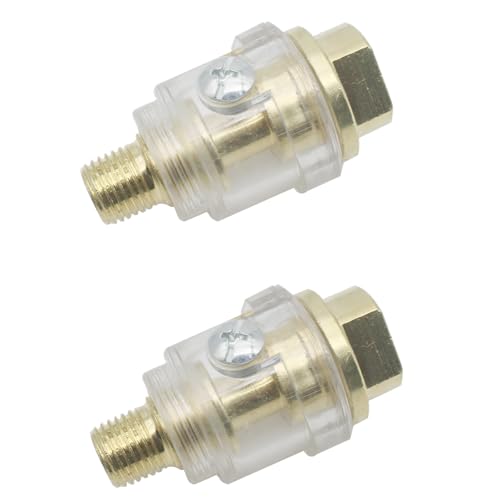
OZXNO offers a two-pack set featuring 1/4″ NPT oilers with a compact 58 x 34 x 12 mm footprint. Made of copper-plated iron and plastic, they allow quick oiling with a transparent cover to view oil levels. Best for: lightweight, space-constrained installations. Caution: metal-plastic construction may require careful handling to prevent wear in rough environments.
NANPU 1/4″ NPT Lubricator Filter Regulator Combo

The NANPU combo unit combines filter, regulator, and lubricator in one 0-125 PSI unit with a gauge, brass 5-micron filter element, and a poly bowl with semi-auto drain. Best for: systems needing protection from moisture and particulates while lubricating. Caution: integration may require compatible gauge fittings and space for the larger unit.
Buying Guide: Inline Oilers For Pneumatic Tools
- What’s your primary use? For hobby projects, compact units with clear reservoirs are usually enough. For workshop-heavy use, consider sets or multi-unit configurations to cover multiple tools.
- What connections do you need? Most inline oilers use 1/4″ NPT threads. Verify inlet/outlet compatibility with your hoses and tools.
- Oil capacity and visibility: Clear housings help track oil levels. Larger capacity handles longer runs between refills; smaller units fit tight spaces.
- Material and durability: Aluminum and brass bodies resist heat and wear; polycarbonate bowls provide visibility but can be more prone to impact damage.
- Maintenance: Look for units with simple drain options and easy access to the oil reservoir. Automatic lubricators reduce manual maintenance but require periodic refilling.
- Best for your setup: Choose best-for standard systems when you need reliable daily lubrication; better-for multi-line workshops for efficiency; choose this if space is tight; avoid this if the unit’s capacity is insufficient for your tool load.
FAQ
- What is an inline air tool oiler used for? It delivers a controlled amount of lubrication to pneumatic tools during operation, reducing wear and preventing rust.
- How do I know which oiler to buy? Consider the thread size, oil reservoir visibility, and compatibility with your tools. A 1/4″ NPT option is standard for most hobby and professional tools.
- Can I use any oil in these oilers? Use oils specified for pneumatic tools or recommended by the tool manufacturer. Avoid heavy oils that may clog lines.
- Do I need to maintain the oiler daily? Some models are automatic and require periodic refills; others need more frequent checks depending on usage.
- Is a multi-pack oiler set better than a single unit? Yes for systems with multiple tools or lines, a kit can improve efficiency and simplify maintenance.
- Are inline oilers compatible with all compressors? In most cases, yes, as long as the threads match and pressure ratings are within the unit’s spec.