Answering the common buyer question: which 8 inch concrete hole saw offers reliable cutting for tough materials while remaining practical for everyday use? This guide compares five solid options, highlighting the best use cases, limitations, and who should buy each. It’s ideal for electricians, contractors, DIY homeowners, and remodelers drilling through concrete, stucco, brick, and similar substrates.
| Product | Best For | Depth / Capacity | Notes |
|---|---|---|---|
| HLOFIZI 8 Inch Carbide Grit Hole Saw | Recessed lighting in plaster or stucco ceilings | 1-1/2″ cutting depth | Carbide grit for abrasive materials; long life |
| DaduoRi 8 Inch Wet Core Drill Bit | Thick concrete walls and deep cores | 14″ drilling depth | Wet core drilling; diamond grit coating |
| MaxTool 8-1/16″ TCT Hole Saw CT00Y57R804 | Tough abrasive materials; quick, wide holes | 2.25″ cutting depth | Carbide tipped teeth; versatile across materials |
| REKCKRUL 6″ Concrete Hole Saw Set | Concrete and stone with SDS Plus compatibility | 2.0″ depth (typical with 6″) | Dust bag included; water cooling recommended |
| Jamiikury 8″ Diamond Hole Saw | Glass, tile, porcelain, ceramic with precision | 2.0″ (approx. total length) | Diamond coating; water cooling recommended |
HLOFIZI 8 Inch Carbide Grit Hole Saw

Best for installing 8″ recessed lighting in ceilings with plaster, stucco, drywall, or cement board. The 8″ hole saw uses a tungsten carbide grit edge designed for long life and efficient cutting through abrasive materials. Depth of cut is 1-1/2 inch, and the arbor accepts a 7/16″ shank (fit 1/2″ chuck). Choose this if you need a robust, low-maintenance option for rough substrates. Caution: performance may vary on extremely dense stone without proper cooling.
DaduoRi 8 Inch Wet Core Drill Bit
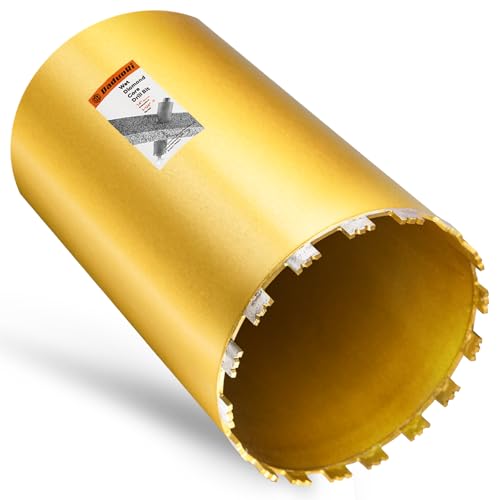
Best for thick concrete walls, footings, and slabs where deep drilling is required. The 14″ drilling depth and diamond grit coating enable precise cuts through concrete, masonry, and rebar-reinforced material. This is a top pick for professionals needing deep cores and reliable performance in wet conditions. Limitation: relies on water cooling; dry use is not recommended.
MaxTool 8-1/16″ TCT Hole Saw CT00Y57R804

Best for contractors tackling tough drilling projects across asphalt, brick, concrete, gypsum, limestone, tile, and MDF. The carbide tipped teeth deliver durability and long blade life, with a 2.25″ deep cut for larger holes in a single pass. Choose this for versatile, heavy-duty use. Caution: ensure proper alignment to avoid wander on very hard surfaces.
MaxTool 8-1/16″ TCT Hole Saw CT00Y57R804A

Best as a complete set for immediate use on tough projects. Includes an 8-1/16″ carbide tipped hole saw, sturdy arbor, and a precision ground pilot drill. The 2.25″ depth supports large holes efficiently across multiple materials. Caution: ensure the pilot drill is correctly aligned to prevent off-center holes.
MaxTool 8-1/4″ Diamond/TCT Hole Saw

Best for mixed tasks requiring diamond and carbide performance on asphalt, brick, concrete, and tile across heavy-duty jobs. The 2.25″ depth matches typical large-hole needs, with a robust carbide edge for longevity. Caution: data indicates broad material compatibility; confirm substrate before selecting abrasive vs. diamond edge.
REKCKRUL Professional 6″ Concrete Hole Saw

Best for SDS Plus hammer drill users drilling pipes, vents, and electrical conduits in concrete and stone. It includes SDS Plus adapters and a dust bag to reduce mess. The 6″ size is ideal for smaller installations but may require multiple passes for very large holes. Caution: deeper holes may need longer bit lengths or multiple passes for clean cores.
Archer PRO 8” Diamond Turbo Core Drill Bit

Best for fast drilling in concrete and masonry with turbo diamond teeth. The 14″ drill depth and 1-1/4″ to 7 arbor allow use in core drill stands and both dry and wet use. Choose this when speed and deep cores are priorities. Caution: wet use is recommended to maximize blade life and reduce heat buildup.
Jamiikury 8″ Diamond Hole Saw

Best for cutting through glass, tile, ceramic, porcelain, and marble with diamond-coated edge. This is suitable for precision work on delicate surfaces. Use water cooling to extend life; dry drilling is not advised. Limitation: mainly intended for non-structural, non-reinforced materials or soft stone.
Buying Guide
- Material compatibility: Choose carbide grit for plaster, stucco, and cement board; diamond edge for hard stone or tile; wet cores for deep concrete with cooling.
- Depth and diameter: Match depth to target hole size; deeper bits drill thicker materials but require more power and cooling.
- Power and compatibility: Ensure your drill or hammer drill accepts the arbor size (most 1/2″ chuck or SDS Plus adapters) and check RPM compatibility.
- Cooling: Wet core bits reduce heat and extend life; dry drilling is usually not recommended for diamond or carbide-coated bits.
- Installation context: For recessed lighting, aim for stable, level cuts; for masonry drilling, plan dust control and debris management.
FAQ
- Q: Do I need water cooling for 8 inch diamond hole saws? A: Yes, water cooling helps reduce heat and wear on diamond edges, especially for through-hard materials.
- Q: Can I use standard drill chucks with SDS Plus bits? A: Some kits include adapters; verify shank compatibility with your drill.
- Q: What material is best for a carbide grit hole saw? A: Abrasive substrates like plaster, stucco, drywall, and cement board.
- Q: Are deep-cut hole saws necessary for all projects? A: Not always; for small conduits or pipes, shallower cuts may suffice, saving time and power.
- Q: How should I avoid wandering holes? A: Mark the hole center, use a pilot drill, and apply steady, light pressure with a stable drill stand if available.