When building cabinets, furniture, or panel edges, a reliable biscuit joiner speeds up alignment and strengthens joints. This guide highlights five dependable biscuit joiners that suit hobbyists and pros alike. Each product is evaluated for common wood projects, ease of use, and notable strengths. Read on to choose the best-fit tool for edge-joining, panel alignment, and durable biscuit joints.
Product Comparison At A Glance
| Product | Best For | Key Benefit |
|---|---|---|
| WEN JN8504 8.5-Amp Plate and Biscuit Joiner | Pro or serious hobbyist edge joins | Adjustable fence and standard biscuit slots |
| AOBEN Biscuit Cutter Plate Joiner | Versatile joint variety and dust control | Wide compatibility with multiple joints and 8.5A motor |
| Ecarke Cordless Biscuit Joiner | Woodsworking without cords | 0-90° angle, 6 depth settings, Makita 18V compatibility |
| Porter-Cable 5562 Plate Joiner | Compact, classic joiner | Reliable materials and straightforward size compatibility |
| DEWALT 20V MAX XR Biscuit Joiner (Tool Only) | Professional cordless versatility | Brushless motor and precise adjustments |
WEN JN8504 8.5-Amp Plate and Biscuit Joiner
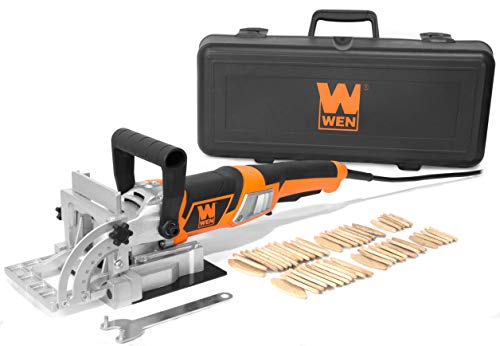
The WEN JN8504 is an 8.5-amp plate joiner designed for edge-joining panels and aligning boards. It offers an adjustable fence to create biscuit slots at various heights and angles, plus pre-set stops for standard #0, #10, and #20 biscuits. Best for serious DIYers and woodworkers who need repeatable slot depth and alignment control, especially when building cabinet frames or panel exteriors. A possible limitation is the weight for extended use, which may require a sturdy work surface or stand for long sessions.
AOBEN Biscuit Cutter Plate Joiner 8.5 Amp

The AOBEN joiner combines an 8.5A motor with a 4-inch tungsten carbide blade to handle a variety of joints, including corner, mitre, frame, center wall, butt, and more. It supports boards up to typical biscuit sizes and includes a dust-drawing system for a cleaner workspace. This model is ideal for users who need a versatile tool that can manage multiple joint types and quick slot preparation. A potential caveat is heavier weight, which can affect portability for small shops or on-site work.
Ecarke Cordless Biscuit Joiner Tool

The Ecarke cordless joiner runs on Makita 18V batteries, offering cordless freedom for workshops without power outlets or on-site projects. It features an 11,000 RPM motor for fast, precise cuts and 0-90° angle adjustment with six depth settings. Best for users who value mobility and the ability to cut biscuits in tighter spaces. A limitation is reliance on compatible battery packs and the absence of batteries in some kits, so plan for power options accordingly.
Porter-Cable 5562 Plate Joiner Biscuits Size 20

Porter-Cable’s 5562 plate joiner focuses on dependable performance with a compact design and durable Beechwood components. It’s a straightforward choice for woodworkers who want a proven, reliable option for aligning panels and creating strong joints. The main consideration is that it might lack some of the advanced digital fine-tuning features found on higher-end models, so users who need ultra-precise control may prefer a tool with more modern adjustments.
DEWALT 20V MAX XR Biscuit Joiner (Tool Only)

The DEWALT 20V MAX XR joiner delivers a brushless motor for consistent cutting and a dual rack-and-pinion fence for accurate alignment. It includes tool-free adjustments for depth, height, and bevel, with a depth selection knob to choose between biscuit sizes #0, #10, and #20. Best for pro workshops or advanced DIY projects where cordless convenience and precise control are needed. A potential limitation is that biscuits must be purchased separately, and battery management becomes part of the workflow.
Buying Guide: Key Considerations For Wood Biscuit Joiners
What joint types do you need?
If you mainly build panel edges, a joiner with reliable depth and spacing adjustments is critical. For varied projects, a model offering multiple joint configurations (corner, mitre, frame) provides flexibility.
Power and portability: corded vs cordless
Corded joiners offer steady power for longer sessions, while cordless versions enable on-site work and mobility. Consider battery availability and all-day capacity when choosing cordless options.
Adjustability and precision
Look for models with an adjustable fence, depth settings, and clear preset stops for standard biscuit sizes. A dual rack-and-pinion fence helps maintain accuracy through multiple cuts.
Dust management and workspace cleanliness
Dust collection or a simple bag helps keep lines clear for accurate slot placement. A cleaner work area improves visibility and cut quality.
Compatibility and accessories
Ensure the joiner supports standard #0, #10, and #20 biscuits. Some tools also offer compatibility with extra joints or blades. Check for included dust bags, fences, and replacement blades when comparing models.
Which model fits your skill level?
Beginner users benefit from preset stops and straightforward depth settings. More advanced woodworkers may prioritize speed, depth range, and the ability to execute complex joints efficiently.
FAQ
- What is a biscuit joiner’s main benefit? It aligns boards quickly and creates strong, durable joints with evenly spaced slots.
- Can I use a biscuit joiner for plywood? Yes, with careful depth settings and appropriate blade width to avoid tear-out.
- Are cordless biscuit joiners as capable as corded? Modern cordless models offer comparable performance for many tasks, with added mobility.
- What biscuits sizes should I stock? Common sizes are #0, #10, and #20; many joiners pre-set for these.
- Do I need a dust bag? Dust management helps maintain cut accuracy and keeps the workspace clean.
- Is a fence important? Yes; a good fence ensures consistent slot depth and alignment across joints.