The best 35mm Forstner bit kits and hinge jig sets streamline concealed hinge installation for cabinets and furniture. This guide highlights five top options that deliver precise, clean pocket holes and flush hinges. Ideal buyers include hobby woodworkers, DIY homeowners, and cabinet installers who want reliable accuracy without specialized tools. Below is a quick summary table of the featured products to compare core details at a glance.
| Product | Key Benefit | Best For |
|---|---|---|
| Bestgle 35mm Concealed Hinge Jig Kit | 50% faster drilling and precise flat-bottom holes | Home woodworkers and DIY cabinet installers |
| IRWIN Marples 1-3/8″ Forstner Bit | Efficient, clean flat-bottom holes | Any woodworking project needing precise hinge holes |
| YAKAMOZ 35mm Concealed Hinge Jig Kit | Adjustable depth and fast waste removal | Professional-grade hinge installations |
| Mesee Hinge Jig Drill Bits Set | Carbide bit and guide plate for accurate positioning | Budget-friendly hinge projects with good accuracy |
| Milescraft 1342 Euro Hinge Jig | Edge alignment knobs and pre-drill pilot holes | Framed or frameless cabinet doors |
Bestgle 35mm Concealed Hinge Jig Kit

The Bestgle kit combines a hinge drill guide with a 35mm Forstner bit for flat-bottom holes. It is built from engineering plastic to keep the tool lightweight yet durable. The kit promises faster drilling compared to traditional methods and is designed for straightforward home-use installations. Best for buyers who want a simple, all-in-one jig that reduces setup time and delivers reliable hinge holes.
Best for: Home hobbyists and DIY cabinet installers who value ease of use and speed. The kit’s plastic construction can be lighter in busy workshop contexts, and the included 35mm bit targets standard concealed hinge holes. A potential limitation is that long-term heavy use may benefit from a sturdier metal framework.
IRWIN Marples 1-3/8″ Forstner Bit
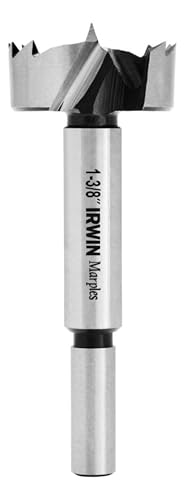
The IRWIN Marples 1-3/8″ Forstner bit is designed for efficiency in drilling flat-bottomed and pocket holes. It uses an ultra-sharp knife-edge design to cut smoothly through both hard and soft woods. This bit is well-suited for building hinge pockets that require clean, consistent results, making it a strong choice for professional or serious hobby projects.
Best for: Woodworkers who need reliable, high-precision holes across various woods. Limitation: The bit is a standard Forstner bit without a dedicated hinge jig, so precision depends on the user’s jig setup and drilling technique.
YAKAMOZ 35mm Concealed Hinge Jig Kit

The YAKAMOZ jig kit emphasizes adjustable depth (15-40mm) and precise positioning for cabinet doors and furniture. Its Forstner bit features an arc-curved double-edge design for rapid waste removal, enabling faster drilling with smoother cuts. The center spur helps maintain accuracy and reduces wandering.
Best for: Professional-grade hinge installations where precise control of depth is critical. Limitation: More features mean a slightly steeper learning curve for first-time users who need basic functionality.
Mesee Hinge Jig Drill Bits Set

The Mesee kit includes a 35mm Forstner bit, a hinge jig locator, and a guide template designed to accurately locate hinge holes. The bit is carbide alloy for sharp, efficient cutting, and the kit is built with a lightweight yet sturdy plastic frame. This combination supports precise hinge placement for cabinets and drawers.
Best for: Budget-conscious buyers seeking an all-in-one template plus bit solution. Limitation: Plastic construction may be less durable under heavy, repeated use compared with metal systems.
Milescraft 1342 Euro Hinge Jig

The Milescraft 1342 provides a metal drill guide with edge alignment knobs to position cup holes consistently from the door edge. It supports pre-drilling in four common locations and includes a 1/16″ bit for pilot holes. The robust metal construction helps ensure long-term accuracy for framed or frameless cabinet doors.
Best for: Installers who require repeatable alignment and durable construction. Limitation: The setup may be more complex for casual DIY projects, and cost can be higher than plastic alternatives.
Buying Guide: Key Considerations For Forstner Bits And Hinge Jigs
- What size should you choose? For concealed hinges, 35mm (1-3/8″) is the standard diameter. Ensure the jig or bit accommodates this size for consistent results.
- Material durability: Metal jigs and carbide-tipped bits tend to last longer and resist wear, especially with hardwoods. Plastic jigs are lighter and cheaper but may wear sooner with heavy use.
- Depth control: A built-in depth stopper prevents over-drilling. This is crucial to protect the door panel and ensure hinge mounting is accurate.
- Centering and wobble prevention: Look for a center spur or double-edged design to reduce wandering during drilling. This improves placement accuracy for hinge holes.
- Ease of use: For beginners, a guided jig with clear marking and straightforward assembly reduces setup time and errors.
- Compatibility: Ensure the jig or bit is compatible with your drill chuck size and supports common hinge templates used in cabinet work.
- Project type: For frequent hinge installations, investing in a durable, precise jig may be worthwhile. Occasional projects can benefit from economical kits.
Frequently Asked Questions
- What is the standard hinge hole size for cabinet doors? Answer: The standard is 35mm (1-3/8 inch) for concealed hinges.
- Why use a depth stopper with a Forstner bit? Answer: It prevents drilling too deep, protecting the door and ensuring consistent hinge mounting.
- Is a center spur necessary for accuracy? Answer: It helps prevent walking and improves hole roundness, especially on challenging woods.
- Can I use any Forstner bit with a hinge jig? Answer: Yes, but ensure the bit diameter matches the hinge hole requirement and the jig’s design for precise results.
- Which option is best for beginners? Answer: A kit that combines a hinge jig with a 35mm Forstner bit and clear instructions, like the Bestgle or Mesee kits, offers a gentle learning curve.
- Do metal jigs outperform plastic ones? Answer: Generally, yes for durability and long-term accuracy, though plastic options can be sufficient for light-duty tasks.