Looking for a reliable reverse ogee edge profile to enhance furniture, cabinetry, or decorative millwork? This guide highlights five top options that balance sharp edges, wear resistance, and ease of use. Each pick targets different project needs, from detailed edgings on doors to large-radius profiles on furniture legs. Ideal buyers include hobby woodworkers, professional cabinetmakers, and DIY remodelers seeking durable carbide bits with consistent cuts.
| Product | Best For |
|---|---|
| Yonico Ogee Router Bits Edge Forming 1/4-Inch Radius | Fine edge work and decorative moldings on small to medium projects |
| Amana Tool 55341 Reversible Ogee | Precision edging for window sash, rails, and intricate profiles |
| Newdeli Ogee Rail and Stile Set | Cabinet doors, frames, and raised panel accents |
| Freud 99-003 Double Fillet Ogee | Complete decorative profiles with Quadra-Cut performance |
| Yonico Classical Roman Ogee | Classical ogee edge for furniture and millwork |
Yonico Ogee Router Bits Edge Forming 1/4-Inch Radius

- Cutting depth 1/2″, cutting height 5/8″, 1/4″ shank
- Adds an ogee edge to surfaces or creates small moldings
- Premium C3 micro-grain tungsten carbide blades for sharper, longer-lasting edges
Best for: Small to mid-size projects that require a clean ogee edge with a distinct radius. The 1/4″ shank supports common routers and is suitable for detailed edging on furniture and cabinet doors. Caution: Smaller shank means reduced stability on aggressive passes; work in shallow passes when possible.
Amana Tool – 55341 Reversible Ogee

- Diameter 1-3/8″, Radius 1/8″, Cutting height 21/32″
- Reversible for flexible routing on both sides of workpiece
- Suitable for precise ogee profiles on rails and window sashes
Best for: Projects that need precise ogee contours with a compact radius. This bit is well-suited for sash work and rail accents where repeatable, symmetrical profiles are critical. Caution: Not ideal for very deep cuts in hard hardwoods without multiple passes.
Newdeli Ogee Rail and Stile Set
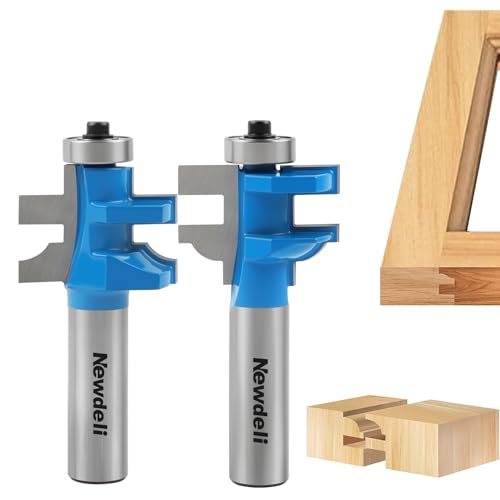
- Ogee rail and stile set with 1/2″ shanks; carving up to 3/8″ depth
- Solid hardened steel body with heat-resistant coating; anti-kickback design
- Versatile for cabinets, doors, frames, and boxes; suitable for various wood types
Best for: Cabinetmakers and millworkers needing a complete ogee set for doors and frames. Use this set when durability and anti-kickback performance improve safety during long runs. Caution: Contains multiple bits; plan bit changes to maintain consistent profiles across pieces.
Freud 99-003 Double Fillet Ogee

- Overall diameter 1-5/8″, 1/2″ shank; large radius 11/64″
- Quadra-Cut design for clean, decorative profiles
- Bearing diameter 5/8″ with four cutters for smooth finish
Best for: Projects requiring broad ogee contours with a refined finish, such as table edges and raised panels. Caution: Larger diameter demands adequate spindle speed and clearance to avoid tear-out on narrow stock.
Yonico Classical Roman Ogee

- Adds classical roman ogee edge; 9/16″ radius with 1/2″ shank
- Premium C3 micro-grain tungsten carbide blades
- For use on table-mounted and handheld routers
Best for: Classic furniture details and traditional cabinetry where a refined ogee accent is preferred. Caution: The larger radius may require slower feeds to prevent burning on soft woods.
Akylin 5Pcs Classical Ogee Bit Set

- Five-piece set with 1/4″ shank; cutting depths from 5/16″ to 5/8″
- Durable tungsten carbide tips; heat-resistant coating
- Ideal for decorating furniture, cabinetry, frames, and millwork
Best for: Budget-conscious shoppers who want a range of ogee profiles in one kit for versatile projects. Caution: Confirm compatibility with your router’s collet if using larger cutters or deeper cuts.
Whiteside 3226 Ogee Bit

- Radius 1/4″, large diameter 1-1/2″, cutting length 5/8″
- 2-3/8″ overall length; 1/2″ shank; includes bearing
- Creates S-curve ogee profiles with precise transitions
Best for: Furniture edges, table profiles, and raised panel doors needing a flowing S-curve. Caution: Longer bits can deflect on long, unsupported cuts; use steady feeds and support the workpiece.
Buying Guide: Key Considerations For Choosing The Right Reverse Ogee Bit
- Profile depth and radius: Choose a bit with the correct depth and radius to match your molding profile. Larger radii produce more pronounced ogee curves; smaller radii create subtler edges.
- Shank size and router compatibility: Most bits in this list use 1/4″ or 1/2″ shanks. Verify your router’s collet size and horsepower to avoid overloading the bit or the tool.
- Material and blade quality: Carbide-tipped blades provide longer life and cleaner cuts. Look for premium micro-grain carbide for sharper edges and wear resistance.
- Stock type and cut depth: Hardwoods require slower feeds and multiple passes; softer woods can handle deeper cuts per pass. Consider anti-kickback designs for larger bits.
- Set vs. single bit: Sets offer versatility for matching multiple profiles across a project, while individual bits are ideal for targeted uses on specific tasks.
- Safety and maintenance: Keep cutters sharp, use proper feeds, and apply finish-friendly coatings to reduce heat and wear. Avoid cutting non-wood materials with these profile bits.
Frequently Asked Questions
- What is a reverse ogee router bit used for?—It creates an ogee edge profile with an inverted or mirrored curvature, often used to mimic traditional moldings on furniture and cabinetry.
- What shank size should I choose?—Choose based on your router’s collet. Common options are 1/4″ and 1/2″ shanks for balance between control and rigidity.
- Can I cut deep with ogee bits in hardwoods?—Yes, but use multiple shallow passes to reduce tear-out and heat buildup.
- Are these bits suitable for doors and frames?—Yes, many are designed for rails, stiles, doors, and raised panels, providing durable edges for millwork.
- Is a bit set better than a single bit?—A set offers a wider range of ogee profiles for diverse projects, while a single bit is economical for one recurring task.
- How do I maintain cut quality?—Keep bits sharp, use appropriate feed rates, and support long cuts to prevent deflection and burn marks.