The best 10-inch finish saw blades deliver ultra-clean cuts for fine woodworking, cabinetry, and trim. This guide highlights five top options suited for different buyers—from hobbyists to professional finish carpenters. Each blade is evaluated for kerf width, tooth geometry, durability, and vibration control to help you pick the right one for your saw and project.
| Product | Best For |
|---|---|
| Diablo D1060X 10″ Fine Finish | Hardwoods and fine cabinetry; high impact resistance for demanding jobs |
| WEN BL1060 60-Tooth | Budget-friendly fine finish for soft/hardwoods; precise cuts |
| DEWALT DWA11080 80-Tooth | Longer blade life and higher finish quality; reduced vibration |
| FOXBC 80-Tooth Ultra Finish | High-quality finish with low vibration; durable for frequent cuts |
| TOYAKI 120-Tooth Miter Blade | Ultra-fine finish and smooth edges for trim and miter work |
Diablo Fine Finish Saw Blade for Wood

Diablo’s 10″ fine finish blade features 60 Hi-ATB teeth for smooth, razor-like cuts. Its shock-resistant design reinforces carbide tips to withstand high-impact cutting, making it suitable for demanding cabinetry and trim tasks. Best for professionals or serious hobbyists who need clean edges on hardwoods and plywood. Caution: high precision blades can be sensitive to dullness; regular sharpening is recommended to maintain finish quality.
WEN BL1060 10-Inch Fine-Finish Blade
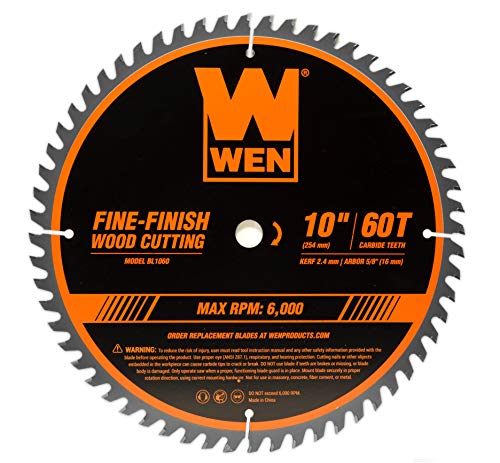
WEN’s BL1060 blade weighs in with a 10-inch diameter, 60 teeth, and a 5/8″ arbor. Its ultra-thin 1/10-inch kerf reduces material waste while delivering clean, precise cuts on both hard and softwoods. Best for budget-conscious woodworkers who still demand quality finish work. Better for softwoods and smaller projects; heavy hardwoods might require a tougher blade for extended use.
DEWALT 10-Inch Fine Finish 80-Tooth Blade
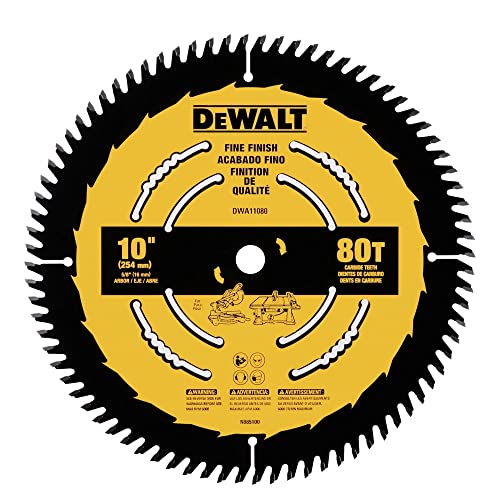
DEWALT’s DWA11080 delivers up to three times longer life with optimized tooth geometry for increased accuracy and better finish quality. The patented body slot design helps minimize vibration for smoother cuts. Best for pro setups where consistent, long-lasting finish work matters. Limitation: higher tooth count can slow cutting speed on very dense materials compared with lower-tooth blades.
FOXBC 80-Tooth Ultra Finish Blade

FOXBC’s 80-tooth blade uses high-density tungsten carbide and a 0.098″ kerf for fast, smooth, and clean cuts with reduced chatter. Best for finish carpentry where edge quality is paramount. Choose this if you need a robust blade for frequent fine finish work; caution: the higher tooth count may slow aggressive ripping tasks.
TOYAKI 120-Tooth Fine-Finish Blade
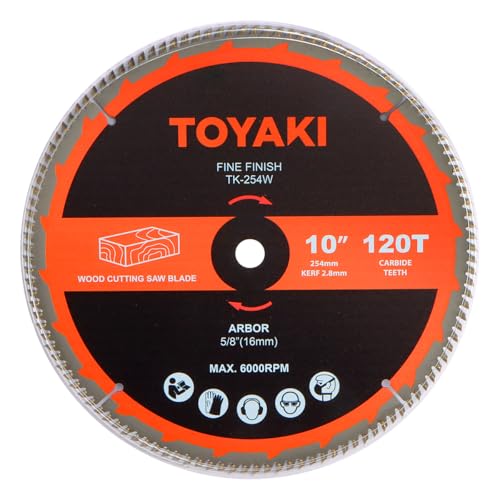
TOYAKI’s 120-tooth blade is designed for ultra-fine finishes in miter and table saw work. The 5/8″ arbor and precise tooth pattern reduce vibration and deliver consistent cuts with minimal tear-out. Best for trim, cabinet making, and fine inlays. Limitation: extremely high tooth count can be less efficient on very dense woods or fast rip cuts.
Buying Guide
Key factors to consider when selecting a 10-inch finish blade:
- Tooth count and geometry: Higher tooth counts (60–120) produce finer finishes but cut more slowly. ATB (Alternating Top Bevel) teeth are common for smooth edges.
- Kerf width: Thinner kerfs reduce material waste and saw load; common finishes blades use 0.098″ to 0.110″ kerf.
- Arbor size: Ensure compatibility with your saw’s arbor (most finish blades use 5/8″ in the U.S.).
- Durability and construction: Carbide-tipped blades with reinforced tips and vibration-reducing bodies offer longer life and cleaner cuts.
- Vibration management: Blades with expansion slots or advanced body designs minimize chatter for a smoother finish.
- Material suitability: Some blades excel on hardwoods, plywood, or laminates; consider your typical projects.
- Maintenance: Sharpening or replacing blades as teeth dull helps maintain edge quality and reduces tear-out.
Frequently Asked Questions
- What is the difference between 60T and 80T finish blades?
– 60T blades cut faster and are better for rougher finishes or harder woods, while 80T blades offer a finer finish with less tear-out in typical cabinetry work. - Can I use a 10-inch finish blade on a miter saw or table saw?
– Yes. Most 10-inch blades are designed for both miter and table saw use, provided the arbor and blade height are compatible. - Why does a blade with more teeth feel slower?
– More teeth require more cutting action and slower feed when cutting dense materials, but produce smoother edges. - Should I choose a blade with a thicker kerf?
– A thicker kerf increases material waste and saw load but can be more durable in heavy-duty tasks; thinner kerfs reduce waste and effort. - Is vibration reduction important for finish cuts?
– Yes. Reduced vibration yields cleaner edges and less post-cut sanding, especially on laminates or plywood.