Answer: For cutting glass tile, choose blades designed for glass, ceramic, and tile that deliver clean edges with minimal chipping, whether you work wet or dry. This guide highlights five top options, suited for DIY projects and professional tiling alike, and explains who should choose each blade based on material, thickness, and cutting style. The top picks balance precision, durability, and ease of use to help you select the right blade for your project.
| Product | Brand | Best For | Why Selected |
|---|---|---|---|
| ZORUNNA Glass Cutting Disc (4-1/2″) | ZORUNNA | Glass, Jade, Crystal, Wine Bottles | Thin, precise cuts; heat-resistant with reduced vibrations. |
| ONEGOTOOL 4-1/2″ Tile Cutter Disc (3 pcs) | ONEGOTOOL | Porcelain, Ceramic, Glass | Durable, smooth cuts with low resistance; economical pack. |
| EDiamondTools 7″ Diamond Blade (Glass Mosaic) | EDiamondTools | Glass Mosaic, Ceramic Tiles | Continuous rim minimizes chipping; good for mosaic work. |
| QEP 7-Inch Glass Tile Diamond Blade | QEP | Wet cutting, glass tile | Wet-cut design for clean, cooler cuts at high RPM. |
| ZORUNNA 4.5″ Diamond Blade (Indestructible Disc) | ZORUNNA | Porcelain, Ceramic, Glass Tiles | Ultrathin for precision; dual-use wet/dry cutting. |
ZORUNNA Glass Cutting Disc for 4-1/2″ Angle Grinder

Best for: Hobbyists and DIYers cutting glass, crystal, or wine bottles as part of decorative tile projects. This disc uses diamond high-manganese steel with advanced brazing to improve heat resistance and minimize vibrations, aiming for faster, straighter cuts.
Why selected: The combination of heat resistance and reduced vibration supports clean, uniform cuts with less wear on the blade. It is suitable for both dry and wet cutting, giving users flexibility on different jobs.
Limitations: As with many thin-cut discs, cutting through very thick, dense materials may require careful feed pressure to avoid wandering along the cut line.
ONEGOTOOL 4-1/2×7/8 inch Tile Cutter Disc (3 PCS)
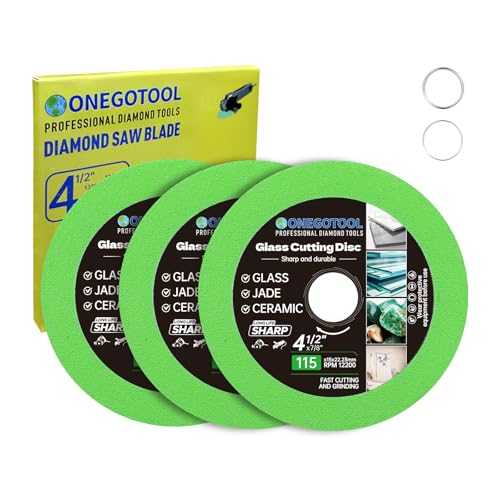
Best for: Contractors and serious DIYers needing multiple discs for extended tile projects. The three-pack emphasizes durability and long cutting life for porcelain, ceramic, and glass.
Why selected: The blade features high-quality diamond particles for extended lifespan and smoother cuts with minimal chipping. The ultra-thin design lowers cutting resistance, promoting effortless operation.
Limitations: The set assumes standard 4-1/2″ grinders; ensure your tool fits a 7/8″ arbor if required for your model.
EDiamondTools 7″ Diamond Saw Blade for Glass Mosaic
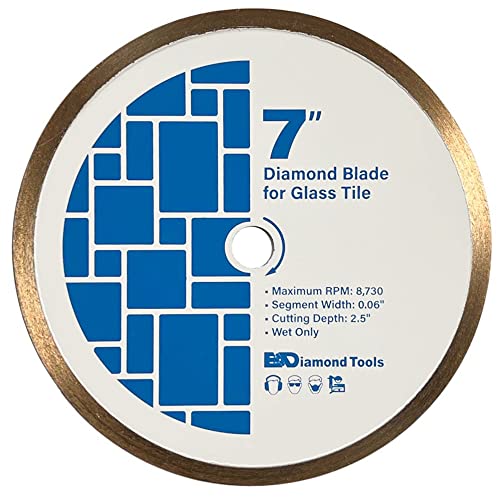
Best for: Glass mosaic tile projects and delicate tile work where edge quality matters. A continuous rim minimizes chipping and provides smoother results on glass surfaces.
Why selected: Designed for smooth cuts with minimal edge damage, making it preferable for mosaics or intricate layouts where a clean edge is critical.
Limitations: As a larger blade, it requires an appropriate grinder setup and adequate RPM to maintain cut quality and blade life.
QEP 6-7007GL 7-Inch Glass Tile Diamond Blade

Best for: Wet cutting with a tile saw where precision and a clean finish are essential. This blade features a 7 mm high rim and 5/8-inch arbor compatibility for many tile saws.
Why selected: The wet-cut capability helps manage heat, reducing blade wear and minimizing edge cracking in glass tile work.
Limitations: Requires a compatible wet saw setup; using dry cutting can increase edge chipping with glass tiles.
ZORUNNA 4-1/2 Inch Diamond Blade (Indestructible Disc)

Best for: Projects requiring a robust blade capable of cutting porcelain, ceramic, and glass with consistent performance and minimal wobble.
Why selected: This blade emphasizes an ultrathin design and compatibility with various cutting tasks, offering precision for delicate tile edges while maintaining safe operation.
Limitations: Being ultrathin, users should maintain steady feed pressure and avoid aggressive plunging to prevent edge chipping or blade overheating.
Buying Guide: Key Considerations for Glass Tile Blades
- Blade type: For glass tile, select blades with diamond segments and low resistance designs to reduce chipping and achieve clean edges.
- Cutting method: Wet cutting generally yields cooler operation and smoother edges; dry cutting is possible but may require more careful handling and may increase dust and chipping risk.
- Blade thickness: Ultralthin blades provide precision but may be more prone to warp if not used correctly. Thicker blades offer durability for tougher materials but can cut slower.
- Arbor compatibility: Check arbor size (commonly 5/8″, 7/8″) and fitment with your angle grinder or tile saw. Some packs include multiple discs to match common arbors.
- Material compatibility: Ensure the blade is suitable for glass, ceramic, porcelain, and tile combinations you plan to cut. Some blades excel at glass mosaics, others at porcelain slabs.
- Coolant and dust: Blades designed with advanced cooling or dust-reduction features help maintain performance and a cleaner workspace.
- Usage context: Professional contractors may prioritize durability and long life; DIY users may prefer value packs and blades that are easy to mount and control.
Frequently Asked Questions
- What blade is best for glass tile cutting?
– A diamond blade with a continuous or fine-rim edge specifically designed for glass and tile provides the cleanest cuts and minimizes chipping, especially when used with a wet-cut setup. - Is wet cutting necessary for glass tiles?
– Wet cutting helps manage heat and reduces dust, often resulting in smoother edges and longer blade life; dry cutting is possible for less demanding tasks but may increase edge chipping. - Can I use a ceramic blade on glass tile?
– It’s generally better to use blades designed for glass or glass-ceramic blends; ceramic-only blades may not provide the same edge quality and consistency on glass tiles. - How do I prevent chipping on glass tiles?
– Use a blade with a fine or continuous rim, apply steady feed pressure, avoid aggressive plunging, and consider using a guide or fence to keep the cut true. - What maintenance helps blade life?
– Keep blades cool with water or other coolant when wet cutting, avoid overheating, and clean the blade after use to remove dust and debris that can dull the edge. - Are multi-pack blades more cost-effective?
– Yes, for ongoing projects, multi-pack options can offer cost efficiency and ensure you have compatible blades ready for different cutting tasks.