Looking for reliable all-thread anchors for wood? This guide highlights top wood-friendly threaded rod anchors that install quickly and hold securely in wooden structures. Best for DIYers, contractors, and professionals who need dependable mounting for overhead or vertical installations. Each option is chosen for concrete-wood compatibility, ease of install, and clear applicability in common woodworking scenarios. The following selections help you compare options by size, application, and installation method to match your project needs.
TRUCFUSION 3/8″ Vertical Rod Anchor for Wood
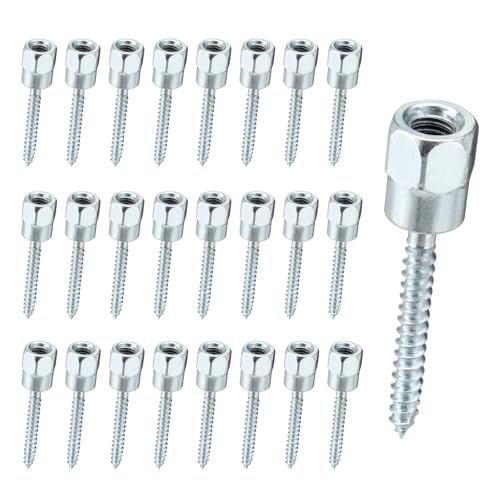
Best for: vertical structuring where a strong, corrosion-resistant anchor is needed. This fit uses a 3/8″ rod fitting with a 1/4″ screw and 2″ screw length, designed to fasten threaded rods into wood and vertical concrete surfaces. Made from galvanized carbon steel for rust resistance and durability in high-pressure environments. The kit includes 25 anchors, suitable for repeated installations in budget-conscious projects.
Why selected: Designed specifically for vertical installations in wood, offering a straightforward, robust solution with corrosion resistance. The 2″ screw length provides a solid bite in wood members and aligns with standard 3/8″ rods for common framing tasks.
Caution: Ensure pilot holes are appropriate for wood grade and avoid over-tightening, which can strip the hole in softer woods.
Sammy’s 8009925-25 Vertical Rod Anchor Super Screw

Best for: overhead wood structures where speed and ease of installation matter. Features a 3/8″ screw with a 2-1/2″ length and 3/8″ rod fitting, providing strong hold in wood framing. Noted for economical, time-efficient setups compared to traditional methods, with a zinc finish for basic corrosion resistance.
Why selected: Strong all-around performance for overhead wood mounting, combining a longer screw with a compatible rod fit. It’s a practical pick when you need reliable anchorage without additional hardware.
Caution: Assembly relies on precise alignment; misalignment can reduce grip or require rework on dense wood.
Sammy’s 8003957-25 Vertical Rod Anchor ¼” x 2″
Best for: lighter-duty vertical wood installations where space is limited. This anchor uses a 1/4″ screw with a 2″ length and a 1/4″ rod fitting, offering a compact option for smaller projects. The zinc finish adds basic corrosion resistance suitable for indoor use.
Why selected: Small footprint and straightforward install suit projects like cabinet mounting or lightweight framing where larger anchors are unnecessary.
Caution: May not be ideal for high-load requirements or heavy moisture exposure; consider location and load before use.
Sammy’s 8002957-25 Vertical Rod Anchor ¼” x 1″

Best for: ultra-compact, over-head wood projects with light loads. It features a 1″ screw length, 1/4″ screw diameter, and 1/4″ rod fitting. The small size makes it ideal for tight spaces in cabinetry or trim installations.
Why selected: When every inch counts, this anchor provides a reliable hold without bulk. Suitable for lightweight fixtures that do not require deep engagement with wood.
Caution: Not recommended for heavy loads or high vibration; verify load requirements before use.
CONFAST 3/8″ Threaded Rod Anchor For Wood

Best for: versatile vertical wood anchors that accommodate a range of wood thicknesses. This anchor is designed for center-of-wood installation to optimize holding values, with wide compatibility across different wood types and thicknesses. It supports efficient installation compared to traditional methods.
Why selected: The center-install design helps maximize grip in varying wood densities. A single fastener type that works across multiple job sizes can simplify inventory and project planning.
Caution: Ensure proper center placement to achieve the best results; incorrect alignment can reduce holding power.
Buying Guide
- What size should I choose? Start with the rod fitting diameter you need (commonly 3/8″ or 1/4″). Then select a screw length that reaches sufficient wood engagement without risking splitting the member.
- Vertical vs horizontal applications Pick vertical anchors for overhead or upright mounting and horizontal anchors for wall or shelf applications. The product notes usually indicate the intended direction.
- Wood type and load Softer woods may require longer screws or larger anchors for a secure bite. Heavier loads call for anchors with higher shear values or multiple fasteners.
- Corrosion resistance Consider galvanized or zinc finishes if the installation is in a damp or exterior environment to extend life and maintain holding power.
- Ease of installation Look for center-of-wood or center-mline designs that provide consistent performance with minimal drilling and fewer steps.
- Cost and quantity Boxed sets offer value for multiple anchors. For one-off projects, a single, purpose-built anchor may be preferable to large kits.
Quick Reference Table
| Product | Key Size | Best For | Notes |
|---|---|---|---|
| TRUCFUSION Vertical Rod Anchor | 3/8″ rod, 1/4″ screw, 2″ length | Vertical wood and vertical concrete | Galvanized, 25 pcs |
| Sammy’s 8009925-25 | 3/8″ rod, 3/8″ screw, 2-1/2″ | Overhead wood structures | Economical, Zinc |
| Sammy’s 8003957-25 | 1/4″ rod, 1/4″ screw, 2″ | Overhead wood, light loads | Compact, Zinc |
| Sammy’s 8002957-25 | 1/4″ rod, 1/4″ screw, 1″ | Compact spaces | Lightweight, Zinc |
| CONFAST 3/8″ Anchor | 1/4″ x 2″ screw | Center-of-wood installations | Widely compatible |
FAQ
- Are these anchors suitable for exterior use? Some are galvanized or zinc-coated for basic corrosion resistance, but confirm environmental exposure before outdoor use.
- Can I use these with any standard 3/8″ or 1/4″ threaded rod? Yes, most are designed for common rod diameters, but check the specified rod fitting diameter on each product.
- What is the typical load range for wood anchors? Load depends on wood type, thickness, and installation method; use manufacturer guidelines and avoid overloading beyond rated capacity.
- Is center-of-wood installation necessary? Center installations tend to maximize holding values in many woods, but follow product instructions for best results.
- Do these require special tools? A standard drill, screwdriver, and compatible rod wrenches are typically sufficient; some models may need a pilot hole.
- When should I opt for a larger screw length? Choose longer screws to achieve deeper engagement in thicker or denser wood, improving pull-out resistance.