Answering the search for a reliable walk behind floor saw, these models are ideal for concrete cutting, asphalt work, and controlled depth. The top picks suit different job sizes: seasoned pros needing durability, mid-range users seeking portability, and indoor projects requiring electric power. This guide highlights who each saw is best for, plus practical comparisons to help you choose.
Summary of chosen products:
- CORMAC CQ480 — Best for crews needing a rugged, gas-powered 20″ blade saw with strong vibration control.
- CORMAC CQ480H — Best for users preferring a GX390 engine and robust frame for straight cuts.
- Stark USA 6.5HP Walk-Behind — Best for small-to-medium projects with easy water management and depth control.
- SKIL 7″ Walk Behind Worm Drive Saws (SPT79A-10) — Best for lightweight, portable, dust-controlled cutting systems.
- HOC EDCO DS20E 20 Inch Electric Walk-Behind — Best for indoor or emission-free cutting with deep capacity.
Cormac CQ480 Walk Behind Floor Saw

The Cormac CQ480 is a gas-powered floor saw designed for cutting concrete or asphalt with a maximum 20″ blade. It includes a 1 x 20″ concrete blade and features a reinforced steel box frame to reduce vibrations, promoting straighter cuts and extending blade life. The saw offers an easy crank to adjust cutting depth and a water tank to manage dust and cooling during operation. Best for heavy-duty projects where vibration control and straight cuts matter most.
Who it’s best for: Contractors needing a durable, high-capacity gas saw for repetitive outdoor cutting tasks. Why selected: sturdy box frame and vibration reduction support precise cuts in tough materials. Caution: heavier to maneuver on tight sites due to size and weight.
Cormac CQ480H Walk Behind Floor Saw
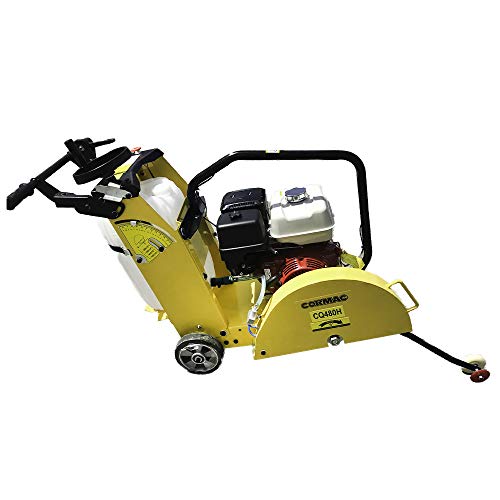
The CQ480H variant uses a GX390 gasoline engine with a water tank and a 20″ blade. It emphasizes strength, durability, and performance, with a reinforced steel box frame to minimize vibrations and maintain blade efficiency. A rigid frame helps prevent warping, and the depth is adjustable via an easy crank. This model is best for operators who prioritize consistency and longer blade life in demanding environments.
Who it’s best for: crews cutting large concrete slabs or asphalt with a need for stable, straight cuts. Why selected: engine choice and frame design optimize vibration control and longevity. Caution: GX390 power setup may require regular maintenance familiarity.
Stark USA 6.5HP Walk-Behind Concrete Saw
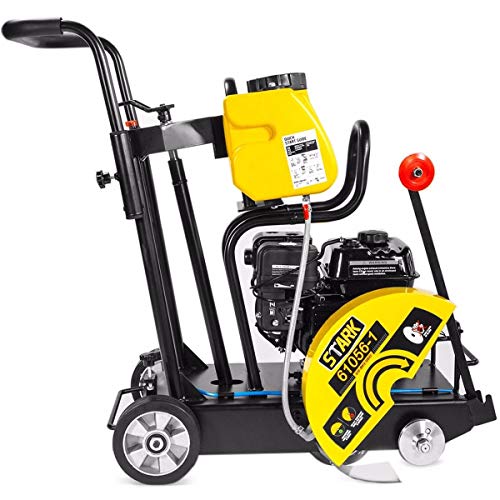
This model targets smaller jobs like sidewalks and driveways, offering good weight distribution, stability, and maneuverability. It includes a removable water tank for consistent blade cooling and a saw position guide to help ensure straight cuts. The rotating depth handle allows quick adjustments during work. Best for smaller crews needing a reliable, portable gas saw.
Who it’s best for: operators performing compact projects with a focus on ease of handling. Why selected: optimized for smaller sites with good depth control and water delivery. Caution: may be less suitable for large-scale highway cuts due to size and power range.
SKIL 7″ Walk Behind Worm Drive Saws (SPT79A-10 & SPT4004)

The SKIL 7″ worm drive saw offers a complete cutting system with worm drive power and durability. Features include an adjustable folding handle for optimal height, a two-finger trigger for reduced fatigue, and a wet/dry dust management system for cleaner cuts and longer tool life. This option suits users prioritizing portability and a self-contained dust management approach.
Who it’s best for: contractors needing a lightweight, travel-friendly saw with efficient dust control. Why selected: portability and ergonomic controls are clear advantages. Caution: smaller blade diameter limits maximum cut depth compared to larger models.
HOC EDCO DS20E 20 Inch Electric Walk-Behind

The DS20E is an electric walk-behind saw delivering 7.5 horsepower equivalent performance with a 20-inch blade capacity and up to 7 3/4 inches of maximum cutting depth. Its electric design reduces emissions, making it suitable for indoor use or sites with ventilation constraints. Best for indoor demolition or enclosed spaces where fumes are a concern.
Who it’s best for: indoor operators and environments requiring zero-emission operation. Why selected: electric power provides cleaner operation and stable power delivery. Caution: electric models may depend on available electrical supply and require proper cable management for safety.
Buying Guide
Key purchase considerations help align a walk behind saw with project needs:
- Power source: Gas engines deliver mobility for outdoor sites; electric models suit indoor or emission-sensitive spaces.
- Blade size and cutting depth: Larger blades and higher max depth expand capability for thick concrete; smaller blades offer portability for tight spaces.
- Frame and vibration control: A reinforced frame and vibration-reducing design improve blade life and user comfort on long jobs.
- Water management: Integrated water tanks help cool blades and suppress dust; consider maintenance and replacement water supply on-site.
- Portability vs. durability: Heavier machines favor durability and straight cuts on large tasks, while lighter units excel in maneuverability for sidewalks and driveways.
- Depth adjustment: Easy-to-use cranks or handles enable quick depth changes without interrupting workflow.
- Indoor vs outdoor use: Electric saws are best indoors; gas-powered models are generally better for outdoor, dust-prone environments.
- Maintenance considerations: Engine model, spare parts availability, and user familiarity influence long-term reliability.
Frequently Asked Questions
- What is a walk behind floor saw best used for? It is designed to cut concrete or asphalt in flat surfaces such as floors, slabs, sidewalks, and road sections.
- How do I choose blade size? Larger blades cut deeper and faster on thick materials; smaller blades offer better control in tight spaces.
- Is an electric walk behind safer indoors? Yes, electric models produce no direct emissions, making them more suitable for enclosed work areas with ventilation considerations.
- What maintenance is required? Regularly check blade condition, water supply, engine or motor oil, and replace worn components as needed.
- Can these saws cut through rebar or steel reinforcement? Generally, floor saws are designed for concrete and asphalt, and encountering steel can damage blades; use appropriate blade types and follow manufacturer guidance.
- Do these units require special permits? Regulations vary by location; check local construction and safety codes before operation on public projects.