Finding a reliable 10,000-watt generator involves balancing starting power, runtime, fuel type, and portability. This guide reviews five popular models, highlighting key features to help you choose for home backup, RV use, or job sites. Each product section includes essentials like starting watts, run time, and ease of use. Use the buying guide to compare capabilities, fuel sources, and safety features before making a purchase.
| Product | Brand | Fuel Type | Key Strength |
|---|---|---|---|
| Generac GP8000E | Generac | Gasoline | Electric start and long runtime |
| Westinghouse 10000 Peak | Westinghouse | Gasoline | Remote start and transfer-ready |
| A-iPower AP10000E | A-iPower | Gasoline | Digital control panel |
| Generac Guardian 10kW | Generac | Natural Gas or Propane | Automatic whole-house backup |
| Westinghouse 12500 Peak | Westinghouse | Gasoline/Propane | Dual fuel with multiple outlets |
Generac GP8000E 10kW Portable Generator

The Generac GP8000E delivers strong starting capacity through PowerRush Advanced Technology, supporting heavy electrical loads with ease. It features an electric start powered by an included battery, eliminating manual cranking. This unit is suitable for emergency power, home backup, and RV use. Its OHV engine and large steel fuel tank provide extended runtime, with up to 11 hours at 50% load. Reviewers commonly note the balance of portability and power for outages or recreational use, along with a durable frame for field or garage storage.
Westinghouse 10000 Peak Watt Portable Open Frame

This model provides 7600 running watts and 10000 peak watts with less than 3% THD, making it capable of supporting essential appliances during outages. It offers remote electric start with multiple starting options, including a key fob and push button. A 5.28-gallon tank yields up to 12 hours of runtime, and the unit includes transfer switch-ready outlets plus additional GFCI and 120/240V options. A digital hour meter and a safety CO sensor help manage maintenance and operation in real-world conditions.
A-iPower 10,000-Watt Electric Start Generator

Powered by a 420cc OHV engine, this generator offers 10,000 starting watts and 8,000 running watts, making it suited for large appliances and demanding loads. Its control panel includes a digital monitor for voltage and runtime, with outlets configured for 120V and 240V use. The unit is designed for mobility, featuring durable wheels and a folding handle for transport. The versatility of the outlets supports RV or home backup scenarios, and the overall layout aims to simplify quick setup during outages or outdoor events.
Generac Guardian 10kW Home Standby

This standby generator is designed for automatic home backup with a 100 Amp transfer switch and an aluminum enclosure for outdoor installation. It supports whole-house protection during outages and can run on natural gas or liquid propane, reducing the need for frequent tank refills. Remote monitoring via Generac’s mobile link Wi-Fi connectivity adds convenience, while a 5-year limited warranty provides long-term assurance on performance and reliability in severe weather or extended outages.
Westinghouse 12500 Peak Watt EFI Dual Fuel
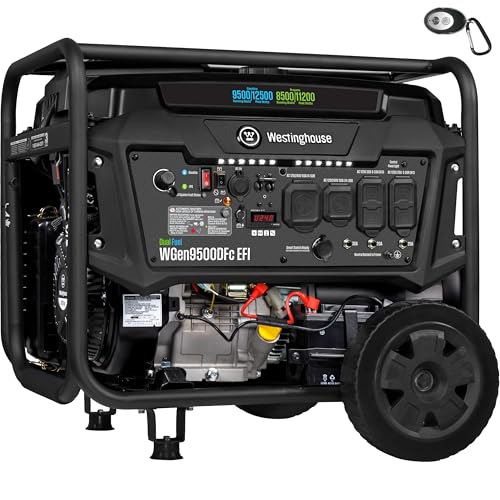
This dual-fuel model offers substantial peak and running wattage with flexibility across gasoline and propane. It includes multiple outlets, transfer switch readiness for home backup, and a CO sensor for enhanced safety. The 457cc Westinghouse engine is paired with a durable frame, designed to withstand rugged use while maintaining manageable noise levels. The dual-fuel capability is particularly useful for households seeking fuel versatility and long runtimes during outages or remote work sites.
Buying Guide: Key Purchase Considerations
- Power needs: Match starting watts with peak loads and running watts to ensure critical appliances run smoothly without overloading the generator.
- Fuel type and availability: Gasoline is common, but propane, natural gas, or dual-fuel options can improve fuel stability and storage risk management.
- Portability vs. standby: Portable units offer flexibility for events or RV use, while standby generators provide automatic operation during outages but require setup for permanent installation.
- Run time and fuel capacity: Look for larger tanks or efficient engines to maximize hours between refueling during emergencies.
- Safety features: CO sensors, low-oil shutdown, and covered outlets reduce risk during operation in homes or campsites.
- Outlets and transfer readiness: Ensure the generator provides the necessary 120V/240V outlets and that transfer switches are compatible with your home’s electrical system.
- Noise and durability: Consider decibel levels and frame construction for comfort in use around neighbors and for long-term reliability in harsh environments.
- Warranty and service: A solid warranty and accessible service networks help protect the investment and simplify maintenance.
- Warranty and monitoring options: Wi-Fi or remote monitoring adds visibility into performance and maintenance needs from away.