Discover top solar generators designed to power homes, cabins, or emergency backups with clean, renewable energy. This guide reviews five strong options, highlighting capacity, recharge speed, and practicality for daily living and off-grid scenarios. Each model balances portability with household support, helping homeowners compare performance and longevity across brands.
| Product | Brand | Capacity (Wh) | Output (W) | Notable Feature |
|---|---|---|---|---|
| Jackery Solar Generator 1000 V2 | Jackery Store | 1070 | 1500 | 1-hour fast charging with LifePO4 battery |
| Portable Solar Generator, 300W | ZeroKor Store | 280 | 300 | 60W solar panel included, multiple outlets |
| Anker SOLIX C1000 Gen 2 | Anker Store | 1024 | 2000 | Ultra-fast recharge, LiFePO4 |
| Jackery Explorer 300 | Jackery Store | 293 | 300 | Compact and versatile for outdoors |
| Jackery HomePower 3600 Plus | Jackery Store | 3584 | 3600 | Expandable home backup system |
Jackery Solar Generator 1000 V2 with 200W Solar Panel

The Jackery Solar Generator 1000 V2 combines a 1,500W continuous AC output with a robust 1,070Wh LiFePO4 battery and a light 23.8 lb frame. It supports heavy appliances like refrigerators and AC units while remaining portable for outdoor use. The unit features a 3,000W surge peak and a Foldable handle for easy transport, making it suitable for homes seeking a dependable off-grid power reserve and emergency backup. One-hour fast charging via auxiliary charging modes emphasizes rapid readiness, with Battery Life Preservation through ChargeShield 2.0 technology. The system is designed for long life, with a stated lifespan exceeding 10 years and sustained capacity after thousands of cycles.
Portable Solar Generator, 300W Portable Power Station

This compact 300W portable power station includes a foldable 60W solar panel. It supplies multiple outlets (two 300W AC outlets, DC, and USB ports) plus an SOS flashlight, offering versatility for camping, RVs, or temporary outages. While rated for about 300W of sustained output, it’s best suited for charging small devices or running low-wattage equipment. The integrated solar charging capability, along with wall and car charging options, enables flexible recharging in off-grid environments. Pros include portability and a broad array of outlets; caution is advised for high-wattage appliances to avoid overloading the unit.
Anker SOLIX C1000 Gen 2 Portable Power Station
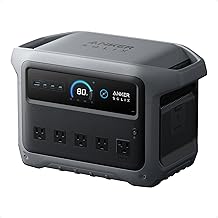
The Anker SOLIX C1000 Gen 2 provides a substantial 2,000W continuous output (3,000W peak) and a 1,024Wh LiFePO4 battery. Ultra-fast charging reaches a full recharge in about 49 minutes via HyperFlash, with the option to add a solar panel for off-grid resilience. Its compact design enhances portability for home backup, travel, or remote work setups. The device supports powering multiple devices with reliable, cleaner energy and emphasizes safety and longevity through LiFePO4 chemistry and thermal management. It is well-suited for users needing rapid readiness and strong simultaneous-output capabilities.
Jackery Explorer 300

The Explorer 300 delivers 293Wh of lithium battery capacity with two Pure Sine Wave AC outlets for stable, safe 300W output. Weighing about 7.1 pounds, it emphasizes portability without sacrificing reliability for outdoor activities, camping, or emergency power. It supports multiple recharge paths, including wall outlets, car adapters, and the Jackery SolarSaga 100 panel, enabling flexible recharging when access to grid power is limited. It’s a practical option for light household use, charging essentials, and keeping devices powered during short outages or travel.
Jackery HomePower 3600 Plus Portable Power Station

The HomePower 3600 Plus is designed for home backup with a 3,600W continuous AC output that can scale in parallel to 7,200W, supporting essential home loads like pumps, heaters, and dryers. Its 3,584Wh capacity is expandable up to 21kWh per unit, potentially reaching 43kWh with multiple units, which supports longer outages. The unit is built for safety with high-temperature resistant battery cells and a long lifespan of up to 6,000 cycles. Its plug-and-play design aims for straightforward integration into home setups, offering reliable power during emergencies, RV use, or off-grid needs.
Buying Guide: Key Considerations For Choosing A Home Solar Generator
When selecting a solar generator for home use, consider these factors to balance performance, longevity, and cost.
- Capacity and output: Match the watt-hour rating with the number and type of appliances you intend to run. Higher wattage outputs support heavier loads like refrigerators, air conditioners, and pumps.
- Battery chemistry and lifespan: LiFePO4 batteries typically offer longer life and better safety than standard lithium-ion options, affecting long-term value.
- Recharge speed: Fast-charging capabilities reduce downtime during outages. Some units offer rapid wall charging and optional solar charging integration.
- Solar compatibility and expandability: Check if the system supports additional panels or parallel expansion to scale power for larger homes.
- Portability vs. home use: Home backup systems may be larger and heavier but provide higher continuous output, while portable models excel for RVs, cabins, or outdoor activities.
- Safety features and certifications: Look for overcharge protection, thermal management, and safety certifications to ensure reliable operation in varying climates.
- Warranty and service life: Long warranties and documented cycle counts indicate durability and confidence in product longevity.
- System integration: Some models offer app-based monitoring, smart charging, and compatibility with existing solar setups for seamless operation.
- Noise and heat: Consider cooling requirements and noise levels, especially for indoor or living-area use during extended outages.
- Price versus value: Compare capacity, reliability, and expandability to determine total cost of ownership across several years of use.