Best Portable Generators for Home Backup and On‑The‑Go Power
When power outages strike or you need reliable off‑grid power, a portable generator is essential. This guide highlights five top options that balance power, versatility, and ease of use. Each model supports different fuels, run times, and safety features to fit various homes, RVs, and work sites across America.
Summary of selected products:
| Product | Brand | Fuel Type | Key Features |
|---|---|---|---|
| Westinghouse 14500 Peak | Westinghouse | Gas/Propane/Natural Gas | Tri‑fuel, remote start, long runtime, transfer switch ready |
| WEN 11000/ Dual Fuel | WEN | Gas/Propane | Dual fuel, electric start, 120V/240V, wheel kit |
| Generac GP8000E | Generac | Gas | PowerRush tech, long runtime, electric start |
| WEN 8000 Dual Fuel | WEN | Gas/Propane | Dual fuel, CO watchdog, transfer‑switch ready |
| WEN 6800 Dual Fuel | WEN | Gas/Propane | Inverter design, 240V output, EV charging support |
Westinghouse 14500 Peak Watt Tri‑Fuel Generator

This Westinghouse unit provides robust power with tri‑fuel capability, enabling operation on gasoline, propane, or natural gas. With 14,500 peak watts on gasoline and respectable running watts, it’s suited for larger homes or serious outdoor work. A heavy‑duty 550cc engine underpins durability, and a long runtime on a full tank supports extended outages. The transfer switch readiness adds a layer of integration with home electrical systems, helping to isolate essential circuits during a blackout.
Fuel flexibility is a major advantage here. The generator runs up to 19 hours on a 9.5‑gallon tank (gasoline) and can stretch to about 7 hours on a standard 20‑lb propane cylinder. The design includes a fuel gauge for easy monitoring, and the included heavy‑duty frame supports stability in outdoor environments. This model is built for serious backup power while remaining portable enough for weekend campsite use.
WEN 11,000‑Watt Dual Fuel Portable Generator (DF1100T)
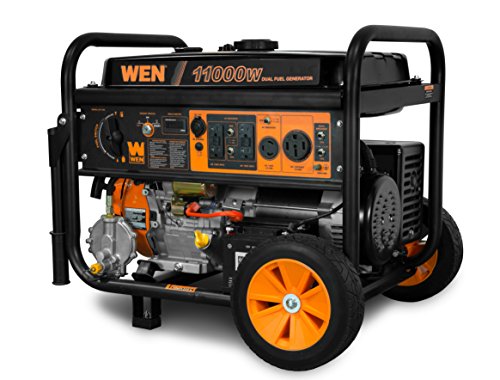
The WEN DF1100T offers seamless switching between gasoline and propane, letting users pick the fuel that’s most available. With 11,000 surge watts on gasoline and 8,300 running watts, plus 120V/240V output, this unit is well‑suited for transfer switches and broader backup power needs. The electric start simplifies operation, powered by a 457cc OHV engine. It is designed for portability with wheels and a robust frame while delivering dependable power for emergency loads or remote work sites.
Generac GP8000E Portable Gas Generator

Generac’s GP8000E emphasizes rapid,Remote electric start with PowerRush technology, delivering up to 40% more starting capacity. This makes it capable of handling heavy electrical loads during outages or while powering RVs and job sites. A large steel fuel tank with a built‑in gauge supports extended runtimes, and the electric start feature eliminates manual cranking. The unit is designed for durability and is backed by Generac’s reputable PowerRush performance ethos, making it a reliable long‑term option for emergency power and recreation.
With 49‑state compliance and a sturdy frame, it fits a wide range of U.S. environments. In practice, users gain a balance of start reliability, steady output, and maintenance visibility thanks to the built‑in gauge and updated technology that helps manage load and runtime effectively.
WEN 8000‑Watt Dual Fuel Portable Generator (DF8000X)

This WEN model provides dual‑fuel versatility with 8,000 surge watts and 6,500 running watts from gasoline, and higher outputs on propane. A notable feature is the CO Watchdog sensor, which automatically shuts the unit off if dangerous carbon monoxide is detected, adding a critical safety layer for indoor or semi‑indoor use in well‑ventilated spaces. The unit is designed for transfer switches and RV compatibility, making it a practical option for home backup and mobile power needs.
WEN 6800‑Watt Dual Fuel Portable Generator (DF680iX)

The DF680iX offers 6,800 surge watts on gasoline and 6,000 surge watts on propane, with 5,100 and 4,500 running watts respectively. It also features a bonded‑neutral 240V configuration to support Level 2 EV charging in certain setups. A CO Shutdown Sensor helps protect occupants during operation, which is important for homes, campsites, and small business uses where ventilation may vary. The unit emphasizes portable power with electric start and a practical design for lighter backup scenarios and vehicle charging support.
Oxseryn 4400 Watts Inverter Generator
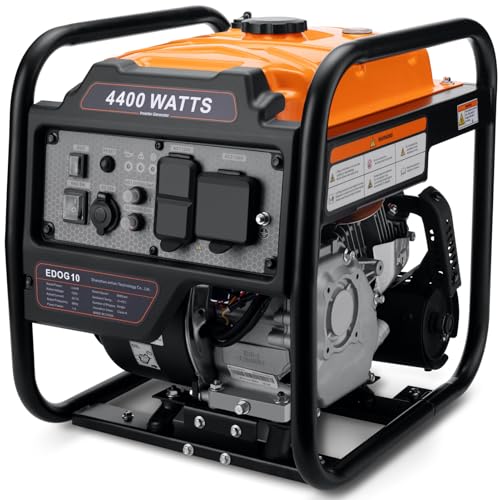
Oxseryn focuses on a compact, quiet inverter design with 4,400 peak watts and 3,400 running watts. Its ECO mode supports efficient operation for longer runtimes, and the unit includes multiple outputs (two 120V AC ports, one 12V DC port, and an RV outlet) to accommodate diverse needs. This model is well suited for RV trips, camping, and emergency home backup where noise and fuel efficiency matter, while still delivering reliable power for essential devices.
WEN 4,750‑Watt Dual Fuel Portable Generator (DF475T)

The DF475T provides a compact, affordable option for basic backup needs with dual fuel operation. It switches between gasoline and propane through a simple dial, supporting 1‑phase 120V and 240V outputs for transfer switches and emergency shading. An electric start powered by a key simplifies operation, and the 224cc engine keeps noise and fuel use reasonable for smaller households or weekend campers seeking dependable, portable electricity.
Champion Power Equipment 12,500‑Watt Tri Fuel

Champion’s Tri‑Fuel design handles natural gas, propane, or gasoline, making it versatile for differing fuel availability. It includes hoses for natural gas and propane so you can run immediately after setup. The unit carries an Electric Start with a battery, plus IntelliGauge for tracking voltage, frequency, and run time, contributing to maintenance scheduling. The built‑in CO Shield auto shutoff enhances safety during operation in enclosed or semi‑enclosed spaces while delivering strong power for home use and RV enjoyment.
Buying Guide: Key Considerations For Choosing A Portable Generator
- Fuel flexibility: Dual‑fuel or tri‑fuel models provide resilience in fuel shortages or fuel cost spikes, ensuring you have options during outages or remote work sites.
- Power output and electronics safety: Match wattage needs to essential circuits and appliances. Look for CO sensors, auto shutoff, and clean inverter outputs for sensitive electronics.
- Start method: Electric start offers convenience, especially during adverse weather or in cold climates. A manual backup start can be useful as a fail‑safe.
- Run time and fuel capacity: Larger tanks extend runtime. Consider the typical outage duration and whether you’ll need continuous operation or periodic re‑fueling.
- Noise and portability: Inverter or open‑frame models vary in noise. Wheels, handles, and overall weight influence how easily you can move the generator to and from storage or work sites.
- Safety and compliance: CO detectors, EPA compliance, and 50‑state or 49‑state certifications affect usability in different regions.
- RV and transfer switch compatibility: If you plan to power a home or RV with a transfer switch, verify 120V/240V capability and proper outlets for your electrical setup.
- Maintenance and availability of parts: Choose brands with accessible service networks and readily available replacement parts and supplies.
- Budget vs. needs: Higher wattage and tri/fuel configurations offer versatility but weigh against cost and fuel logistics. Align features with actual use scenarios such as home backup, camping, or job sites.
Choosing the right portable generator involves balancing starting power, continuous running watts, fuel options, and safety features. For urban homes, prioritize models with 120V/240V versatility and CO monitoring. For rural properties or RVers, tri‑fuel capabilities and long runtimes may justify larger units. In all cases, verify that the unit aligns with your transfer switch plans and electrical panel capacity to ensure safe and reliable operation during power interruptions.